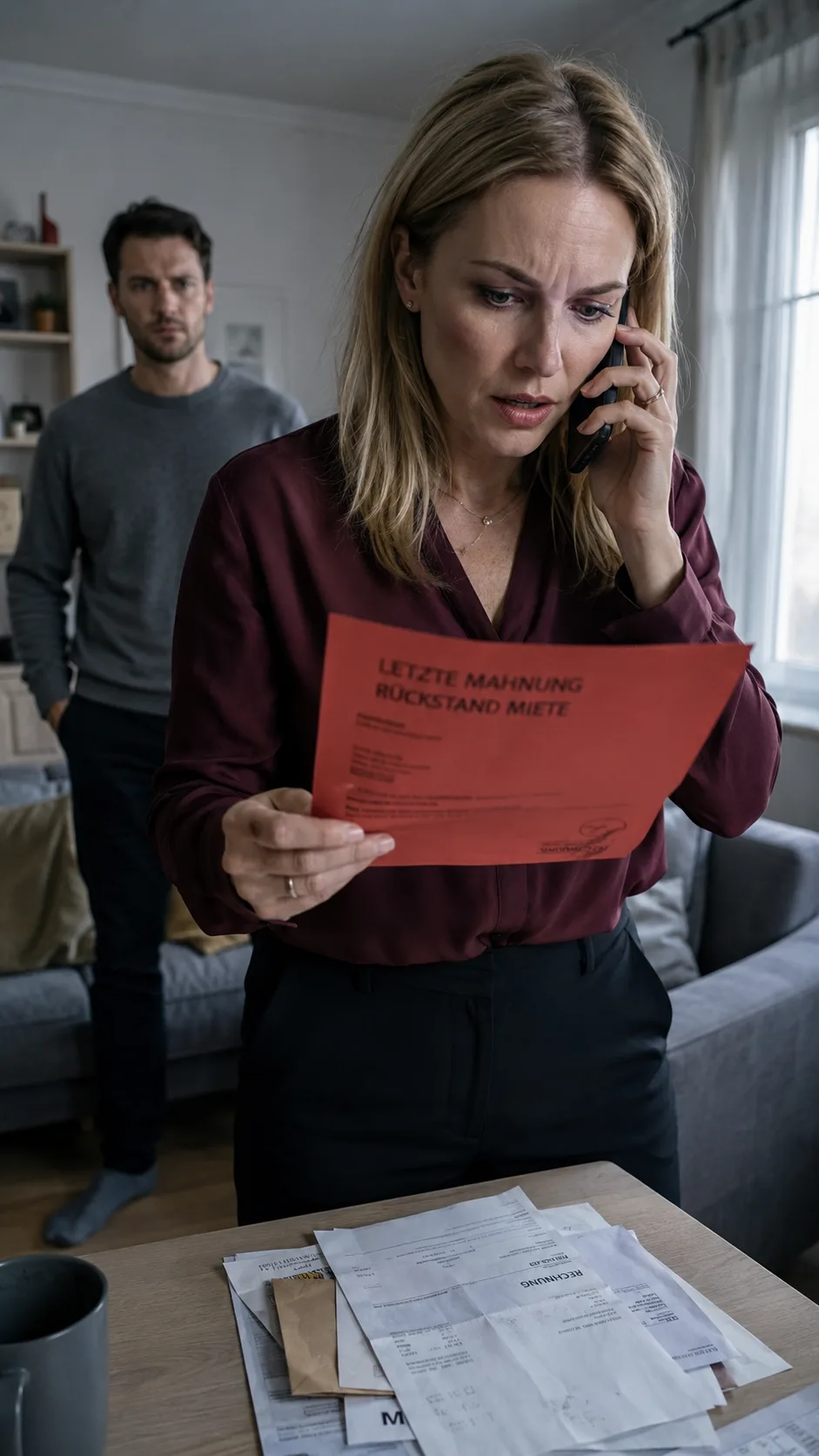
Max sat on Renate’s sofa with his head in his hands.
Chapter 2
Max sat on Renate’s sofa with his head in his hands.
Lena paced across the rug like an animal trapped in a cage. Beside them stood a gray-suited stranger who was calmly reading Renate’s bank statements.
“What is happening in my house?” Renate demanded.
Lena turned with exaggerated relief. “Thank God you’re here. This is Dr. Fischer. We asked him to help with your situation.”
“My situation?”
Max finally looked up. “Mom, you canceled every transfer. You blocked our access to your accounts. You stopped answering us. We’re worried.”
Dr. Fischer extended his hand, but Renate ignored it and gathered the papers from the table.
“You had no permission to enter my home or touch these.”
Lena softened her voice. “Renate, loneliness can affect people at your age. Sudden confusion is common.”
The word confusion landed harder than the wedding insult.
Renate understood immediately. They were not there to reconcile. They were building a case to take control of her money.
“I am not confused,” she said. “I am clearer than I have been in years. Leave.”
Dr. Fischer placed a folder on the table. Inside was a power of attorney granting Max and Lena control over her finances.
“This would only be temporary,” he explained.
Renate dropped the unopened folder into the trash.
Lena’s face twisted. “Everything you have will belong to us one day anyway. We’re only speeding up the process.”
For one terrible second, the room became silent.
There it was—the truth, naked and ugly.
To them, Renate was already dead. Her pension, her house, and the savings her late husband had left were merely an inheritance they believed had arrived too slowly.
“Out,” Renate said.
Max stood. “You can’t abandon us. We have rent, car payments, and credit cards. We made plans based on your support.”
“You made plans based on my money.”
Dr. Fischer warned that
the family could petition the court for guardianship if Renate’s decisions appeared irrational.
Renate opened the front door.
“Then hire every lawyer you can afford,” she said. “But you will do it with your own money.”
Before leaving, Max turned back. “You’ll end up alone. No one will take care of you.”
Renate’s voice trembled, but she did not look away.
“I am already alone, Max. The difference is that now it is my choice, not your neglect.”
The following morning, Renate visited Mr. Weber, the attorney who had handled her late husband’s estate. After hearing everything, he leaned back in his chair.
“What they attempted may qualify as elder financial abuse,” he said. “We document every payment, change your locks, secure your accounts, and revise your will.”
Together, they calculated the total.
Thirty-six months of rent: $18,000.
Food and household supplies: $7,200.
Furniture, medical expenses, repairs, loans, gifts, and
emergencies brought the sum to $33,400.
Renate stared at the number.
She had skipped vacations, delayed dental work, canceled salon appointments, and eaten cheap meals so two healthy adults could live comfortably.
That afternoon, she changed the locks and installed security cameras. She opened a new bank account and removed Max from every financial document.
Then she did something that felt almost rebellious.
She went to a salon.
When her stylist finished, Renate barely recognized the woman in the mirror. Her silver hair was neatly shaped. Her shoulders were straight. The fear in her eyes had been replaced by something stronger.
“You look free,” the stylist said.
“I finally learned to say no.”
That evening, she cooked herself a proper dinner, opened the expensive tea she had been saving for guests, and sat beside the window without checking her phone. The quiet no longer felt like punishment. It felt like ownership. Every room in the house belonged to her again, including the future she had nearly surrendered.
At home, Renate met Eleanor Brooks, an older neighbor who had heard the confrontation. Eleanor listened to the entire story and then confessed that her own daughter had once treated her the same way.
“When I stopped paying,” Eleanor said, “they threatened me, blamed me, and called me selfish. Six months later, my daughter found work and apologized. Whether your son changes is his responsibility. Living your life is yours.”
For the first time, Renate realized she was not the only mother who had confused financial rescue with love.
But Max and Lena did not disappear.
They drove past her house. They called from unfamiliar numbers. They returned with strangers and were removed by police after Mr. Weber obtained a temporary restraining order.
Then a social worker arrived.
She said someone had reported that Renate was paranoid, isolated, refusing medical help, and making dangerous financial decisions. Max and Lena had transformed every act of self-protection into evidence of mental decline.
Mr. Weber arrived with bank records and documentation.
“Would you consider it normal,” he asked the social worker, “for a thirty-five-year-old man to need his seventy-one-year-old mother to pay his rent?”
The case was closed that afternoon.
Renate hoped the humiliation would finally stop.
Instead, a month later, Mr. Weber came to her home carrying court papers.
Max and Lena had formally petitioned to have her declared mentally incompetent. They had submitted statements from neighbors, a pharmacist, and a psychiatrist who had never properly examined her.
If they won, Max could become her guardian.
He could control her accounts.
He could sell her home.
He could decide where she lived and how much of her own money she was allowed to spend.
Renate’s hands shook as she read the petition.
Her son had not merely chosen his wife over her.
He was asking a judge to erase her independence because she had stopped paying his bills.
Mr. Weber placed one hand over the documents.
“They have started a war,” he said.
Renate slowly lifted her eyes.
“Then we finish it.”
To be continued… Click “PART 3” to read the final part: 👉 PART 3 👈
Chapter complete
You have reached the end of this chapter.
Continue reading
A few more worlds to get lost in after this chapter.