My mother posted the first photo at 9:14 in the morning, and I knew from the angle that my brother had taken it.
Chapter 1
My mother posted the first photo at 9:14 in the morning, and I knew from the angle that my brother had taken it.
He always tilted the camera slightly downward when he wanted people to look smaller.
The picture showed my parents standing beside a black SUV packed with matching cream suitcases, the expensive kind with gold wheels that looked ridiculous on airport floors. My mother wore her wide-brimmed hat and the linen dress she saved for vacations with people she wanted to impress. My father stood beside her in sunglasses, one hand resting on the roof of the car, chin lifted like he was posing for a retirement ad.
The caption said: Family beach week begins.
I stared at the word family until the screen dimmed.
My coffee sat untouched beside my elbow. The mug had a chipped handle. Grandma had bought it from a roadside pottery stand fifteen years ago and told me imperfect things were harder to replace.
I tapped the screen awake.
There were already comments.
Have the best
time!
Gorgeous family!
Where are you going?
My aunt Patricia had commented with three heart emojis and a palm tree.
Then my brother Brandon wrote, Some people just don't fit the vibe.
No name.
He never needed one.
I set the phone facedown on the table and listened to the refrigerator hum in my apartment. The sound had been getting louder for weeks. I kept meaning to call the landlord, but the thought always arrived while I was brushing my teeth or walking to my car or paying a bill that was due yesterday.
My family thought my apartment explained me.
Small. Practical. Not worth showing off.
They had said it in different ways over the years. My mother called it “your little place” even after I had lived there for five years. My father asked whether the neighborhood was “safe enough” every time he visited, though he had only
come twice and stayed both times near the door. Brandon once looked around my kitchen and asked if I was “still doing the struggling artist thing,” even though I had never been an artist.
I handled insurance claims for a regional medical network.
Nothing glamorous.
Nothing that looked good in photos.
Grandma understood that better than anyone.
She used to say work that kept other people standing rarely looked elegant from the outside. Then she would sit at my kitchen table, remove her pearl earrings, and ask if I had eaten anything besides toast that day.
After she died, the family started speaking about her in polished sentences.
Beloved matriarch.
Generous soul.
A woman of grace.
They used those words at the memorial and in the post my mother pinned to her profile. Nobody mentioned the mornings Grandma sat in my passenger seat with her shoes off because her ankles
had swollen. Nobody mentioned the pharmacy runs, the folded blankets, the way she refused to let anyone but me wash her hair after the hospital made her scalp smell like antiseptic.
Those things had no place in a tribute post.
My phone buzzed again.
Another photo.
This one showed Brandon at the airport lounge, leaning back with a mimosa, his sunglasses hooked into the collar of his shirt. Behind him, my cousins waved at the camera. My mother’s hand appeared in the corner of the shot, her rings catching the light.
The caption said: Finally, a real vacation with the people who matter.
I put the phone down.
Not gently.
The mug rattled against the table.
I had known something was coming for two weeks. My mother had asked if I was “busy this month” in the family group chat. When I answered that I could move things around if there was a plan, she never replied. The next day, Brandon changed the subject by sending a meme about people who needed invitations to feel included.
Everyone laughed.
I did not.
A week later, my father called and asked whether I could check in on the plumber at his house because he and my mother had “a thing.” He never named the thing. He only said it in the voice he used when he expected me to say yes before he finished talking.
I said I had work.
He paused for two full seconds.
Then he said, “You always did make life harder than it needs to be.”
I had learned not to defend myself to people who enjoyed making me do it twice.
So I said, “Okay.”
He hung up first.
By the time the beach photos started, everything made sense in the old familiar way. They had planned around me. They had enjoyed planning around me. They had turned my absence into part of the trip.
I opened the post again and looked past the faces.
Palm trees. Blue sky. A private driveway. A white stone gate at the edge of the frame.
My fingers tightened around the phone.
I knew that gate.
Not from my parents’ posts.
From a county records office on a Tuesday afternoon two years earlier.
Grandma had called me that morning and asked if I still had half a tank of gas.
“Where are we going?” I asked.
She said, “Somewhere with bad coffee and excellent paperwork.”
She wore her navy coat even though it was warm outside. Her pearl earrings were clipped perfectly to her ears. Her lipstick was careful but slightly uneven at the corner, and she kept pressing one hand to her purse as if checking whether it was still there.
Inside the purse was a black leather folder.
She refused to let me carry it.
At the records office, the clerk recognized her.
“Mrs. Whitmore,” he said, standing straighter.
Grandma smiled the way she did when men mistook age for softness.
“Mr. Sanders,” she said. “I need the final transfer recorded today.”
The clerk glanced at me.
I looked at Grandma.
She did not explain.
She only reached over and squeezed my wrist once under the counter. Her fingers were thinner than they had been the month before. Her nails were painted pale pink, the color she called “respectable but not dead.”
The clerk slid papers toward me.
“Sign here, Ms. Emma.”
I signed where he pointed.
Grandma watched the pen move like every letter mattered.
No one talked in the car afterward until we reached the stoplight near the old bakery. It had been closed for years, but Grandma still turned her head toward it every time, as if the windows might light up again.
“What did I sign?” I asked.
She kept both hands folded on top of the folder.
“A correction.”
“To what?”
“To a mistake I should have fixed before your grandfather died.”
The light turned green.
I drove.
She looked out the window.
“Some people think inheritance is about blood,” she said. “It is not. It is about who shows up when there is no camera.”
I did not know what to say.
So I said nothing.
At her house, she made tea and told me not to mention the office to my parents. The kettle screamed too long before she took it off the stove. Her hands shook while she poured.
“Emma,” she said, “you are going to be treated differently one day. When that happens, do not rush to correct anyone. Let them finish showing you who they are.”
I wanted to ask whether she was sick again. I wanted to ask what mistake she meant. I wanted to ask why her eyes looked so tired.
But she placed the black leather folder in the bottom drawer of her writing desk and turned the key.
Then she asked if I wanted honey.
That was Grandma.
One door closed.
Tea served.
After she passed, my mother took the pearls before the funeral home returned Grandma’s coat. Brandon took the watch from Grandpa’s old dresser. My father told everyone he would handle the estate because “paperwork confuses Emma.”
The lawyer corrected him in private.
I knew because Mr. Keene, Grandma’s attorney, called me the next morning and asked me to come to his office alone.
He gave me a copy of the deed transfer. A beach house in Cape Arden, purchased by my grandparents twenty-eight years earlier under a private family trust, transferred fully and legally into my name two years before Grandma’s death.
Not my father’s.
Not my mother’s.
Mine.
I sat in Mr. Keene’s office with the deed on my lap and the air conditioning clicking too loudly above us.
“Your grandmother was very clear,” he said.
I looked at the owner line until the letters blurred slightly.
Emma Whitmore.
My name looked strange on that kind of paper.
“She wanted them notified after probate?” I asked.
“No,” Mr. Keene said.
He removed his glasses and folded them slowly.
“She wanted the property records updated immediately, but she left the timing of disclosure to you. Her exact words were, ‘Emma will know when they need to know.’”
I took the deed home in a yellow envelope and put it in the bottom drawer of my desk.
I did not go to the beach house.
Not once.
Grandma had loved that place, but the thought of walking through rooms where my family had spent summers without me made my stomach close around itself. I paid the taxes. I kept the property manager. I approved maintenance. I let the house stay quiet.
Until my father requested the house through the old family portal.
Mr. Hale called me three weeks before the photos appeared.
“Ms. Whitmore,” he said, “your father has submitted a family-use request for Cape Arden.”
I was standing in the cereal aisle at the grocery store, holding two brands of oatmeal and pretending the cheaper one had enough servings.
“My father?” I asked.
“Yes. He listed eight guests. Dates beginning July eighteenth.”
I put the oatmeal back on the shelf.
“Did he say I was included?”
A pause.
“He listed family guests only.”
That was a careful answer.
Mr. Hale had worked for my grandparents long enough to know when silence was kinder than detail.
I looked down at my cart. Bananas. Laundry detergent. The cheaper oatmeal after all.
“Approve nothing yet,” I said.
“Understood.”
For three weeks, I waited to see if anyone would mention it.
My mother called once to ask whether I still had Grandma’s soup tureen because she wanted it for a fall luncheon. Brandon sent me a link to a job posting in another state with a laughing emoji and the message, Fresh start? My father texted that the plumber had left mud by the back door and that I should have been there to watch him.
No one mentioned Cape Arden.
No one asked whether I wanted to come.
The morning of the trip, Mr. Hale called again.
“They are on their way,” he said.
I was at my desk at work, reviewing a claim that had been filed under the wrong patient code. My coworker Maya had left a granola bar beside my keyboard because I had forgotten lunch the day before.
“Have they been told?” I asked.
“Not yet.”
“Wait until they arrive.”
Mr. Hale said nothing.
Then, “Mrs. Whitmore gave me similar instructions once.”
My throat moved before I found words.
“She did?”
“She said people understand locked doors better than warnings.”
I looked at the blue claim form on my monitor.
“Then lock the door.”
At 11:42, my cousin Vanessa posted a video from the driveway.
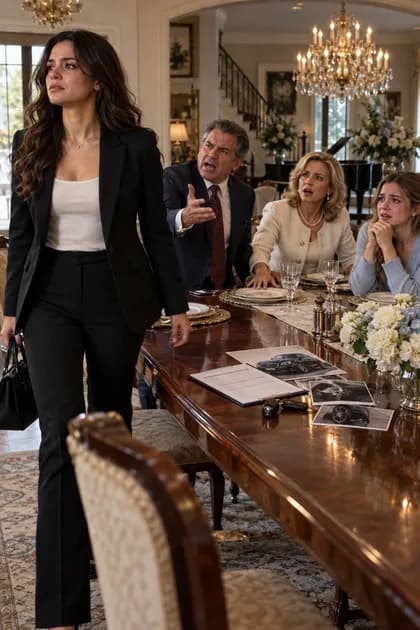
The camera bounced as she walked, laughing breathlessly. The beach house filled the frame behind her, all white stone and glass and sun. My mother walked ahead, holding her hat down with one hand. Brandon dragged his suitcase over the stone path and said something about choosing the biggest room before anyone else got inside.
My father stood at the front, already annoyed that no one was there to greet him with open doors.
The video ended with him pressing the doorbell twice.
At 11:49, another clip appeared.
This one had no caption.
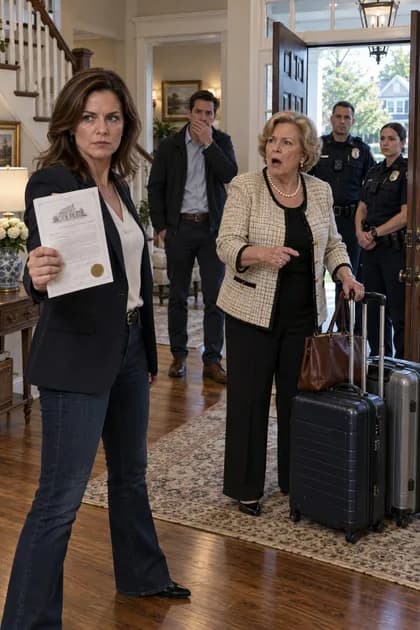
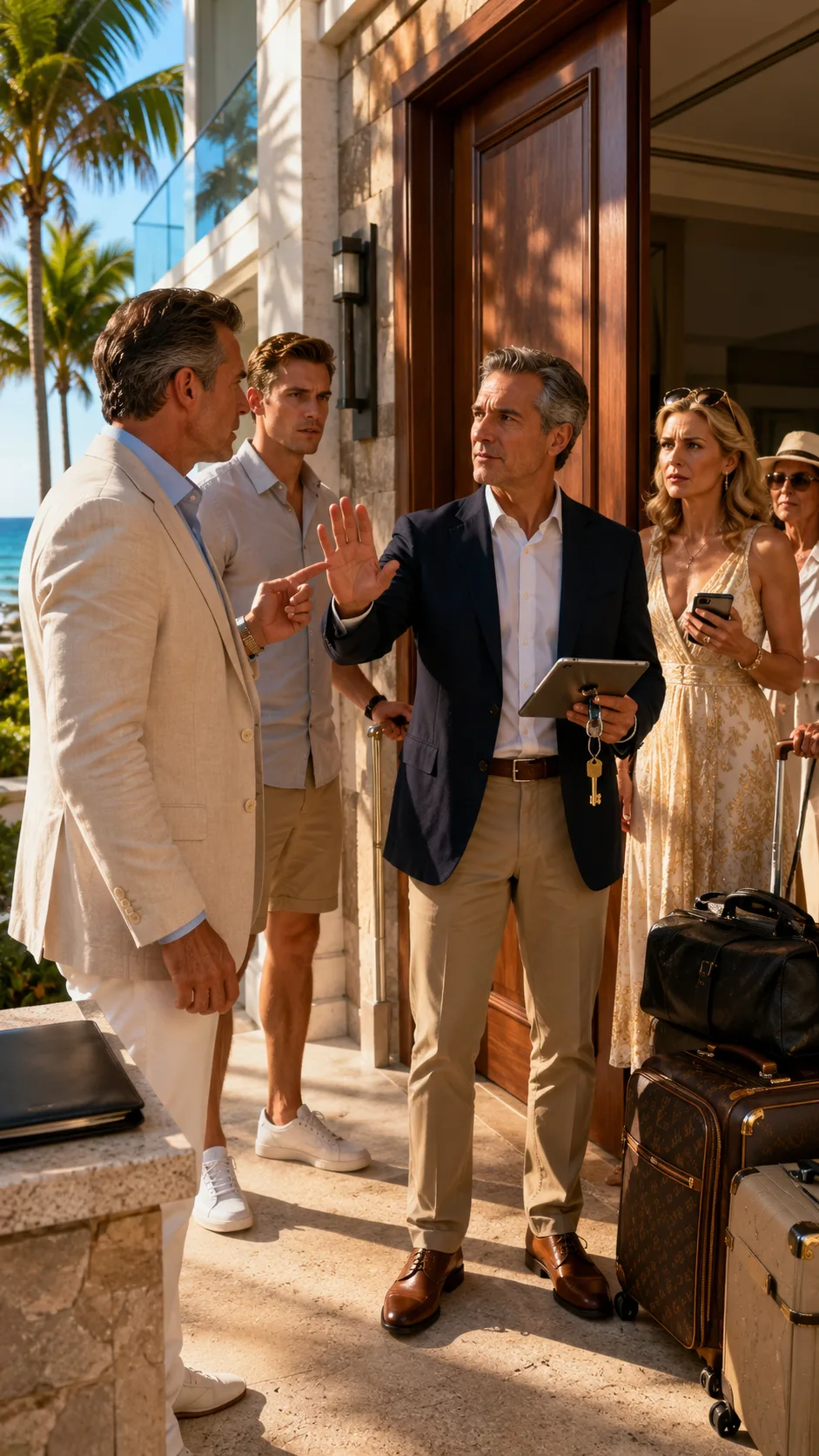
Mr. Hale stood at the door.
He looked exactly the same as he had on the maintenance reports he emailed twice a year. Navy blazer. White shirt. Salt-and-pepper hair. Calm face. Tablet in his left hand. Brass key looped around two fingers.
My father said, “We have a reservation.”
Mr. Hale checked the tablet.
“No approved access for today.”
Brandon laughed once, the way he did when he wanted witnesses to know someone else had made a mistake.
“Check under Whitmore.”
Mr. Hale did not look up.
“I did.”
My mother stepped closer, her phone still angled toward the scene. She probably thought it was a funny inconvenience. Something to post later with a caption about luxury problems.
My father removed his sunglasses.
That was the first crack.
He only removed them when he wanted someone to see his eyes before he raised his voice.
“Do you know who I am?” he asked.
Mr. Hale looked at him then.
“Yes, Mr. Whitmore.”
The answer landed too evenly.
My aunt Patricia stopped smiling behind them.
Brandon reached toward the handle.
Mr. Hale lifted one hand.
Not fast.
Not dramatic.
Just enough.
Brandon stopped before touching the door.
My father took half a step forward. His shoulders squared. He still believed the scene belonged to him because scenes had always belonged to him when money, last names, or volume were involved.
“Step aside,” he said. “We rented this house.”
I watched the clip at my desk with one hand over the bottom of my phone, as if covering the screen could keep anyone at work from seeing the family I had come from.
Mr. Hale said, “Your access was never approved.”
My mother’s phone lowered a little.
Brandon looked at my father.
My father’s mouth moved before sound came. He was choosing which version of authority to use.
“My mother arranged this,” he said.
The clip shook. Vanessa must have shifted her weight. Someone whispered, “What’s going on?”
Mr. Hale turned slightly toward the small stone table by the door.
The black leather folder lay there.
I knew it before the camera focused.
Same texture. Same brass corner guard. Same kind of folder Grandma had carried into the records office with both hands.
My father saw it too.
Not because he knew what was inside.
Because wealthy families know the look of paperwork that can ruin lunch.
Mr. Hale placed the brass key beside the folder.
The sound was small, but the phone caught it.
A clean click against stone.
“Then she changed the deed,” Mr. Hale said.
Nobody laughed after that.
My father reached toward the folder.
Mr. Hale moved it back by two inches.
Not enough to seem rude.
Enough to make the line visible.
“Sir,” he said.
One word.
My father’s hand stayed suspended over the table. His fingers curled, then opened.
My mother said, “Richard, what is he talking about?”
He did not answer her.
Brandon’s hand dropped from the door handle. His face changed first around the mouth, the smugness thinning into something flatter.
Mr. Hale opened the folder.
The deed copy came out in a cream sheet, protected inside a clear sleeve. He placed it on the entry table beside the brass key and turned it so the owner field faced the family.
My mother lowered her phone completely.
But Vanessa was still recording.
The cousins behind her had gone quiet. A suitcase rolled slightly on the uneven stone and bumped against another with a dull little knock.
My father looked down.
He read the first line.
Then the second.
His jaw shifted.
Mr. Hale placed one finger on the owner field.
“The property owner is listed here,” he said.
My aunt Patricia leaned in from behind my mother.
Brandon’s face angled toward the paper.
My father looked up at Mr. Hale, and for the first time in the entire video, he did not look offended.
He looked interrupted.
“Read it out loud,” Brandon said.
He meant it as a challenge. His voice still had some of the old confidence left, but it cracked at the edge of the last word.
Mr. Hale did not look at him.
He looked at my father.
Then at my mother.
Then back at the deed.
“The owner is Emma Whitmore.”
The driveway held still around the sentence.
My phone felt too warm in my hand.
At my desk, the claim form on my monitor blurred behind the reflection of my own face. Maya walked past with a stack of files, slowed when she saw me, then kept walking. She knew enough not to ask.
On the video, my father’s hand dropped from the table edge.
My mother stared at the deed, then at the phone in her own hand, as if only then remembering every photo she had posted.
Brandon said, “Emma?”
Just my name.
Nothing else.
Mr. Hale picked up the brass key and held it against his palm.
“Ms. Whitmore gave specific instructions,” he said. “No entry without her written approval.”
My father found his voice in pieces.
“There must be some mistake.”
Mr. Hale closed the folder with two fingers.
“There is not.”
A gull cried somewhere beyond the gate. It sounded absurdly normal.
My cousin Vanessa lowered the phone then, but not before catching the last thing that mattered: my mother turning away from the door, not toward my father, not toward Brandon, but toward the driveway, where the luggage stood in a neat expensive row with nowhere to go.
By 12:15, the video had spread through the family.
By 12:22, my mother called me.
I let it ring.
The first voicemail was sharp.
“Emma, call me immediately. There is a misunderstanding at the house.”
The second came four minutes later.
“This is not how family handles things.”
The third was my father.
“You need to call Mr. Hale and authorize access. Now.”
He still said authorize like it tasted wrong.
Brandon texted first.
Really?
Then, You let us stand outside?
Then, Grandma would be disgusted.
I looked at that last one for a long time.
Grandma, who had sat beside me in a records office with her hands folded over a black leather folder.
Grandma, who had watched everyone else take the loud pieces of her life and left me the quiet key.
Grandma, who knew exactly what they would do when a door did not open for them.
I typed one sentence.
Grandma signed the deed herself.
I did not send it immediately.
My thumb hovered over the arrow.
Then I deleted it.
Not because it was untrue.
Because it was more explanation than he had earned.
Instead, I opened the email from Mr. Hale and read the message he had sent after the family left the driveway.
All guests have departed the property. No damage. Gate secured.
Attached beneath it was a still image from the security camera. My father walking away first. Brandon behind him, dragging his suitcase too fast so it tilted on one wheel. My mother standing for a moment longer near the entry table, looking back at the door.
I saved the image.
Then I texted Mr. Hale.
Thank you. Please keep the house closed this weekend.
His reply came within a minute.
Of course, Ms. Whitmore.
That was the first time anyone connected to that house had called me by the name on the deed in writing.
I sat back in my chair.
The refrigerator hum of the office vending machine buzzed through the wall. Someone laughed near the copier. A pen rolled off my desk and landed by my shoe.
The world did not change shape.
It only shifted its weight.
That evening, my mother came to my apartment without calling first.
I saw her through the peephole, still wearing the cream-and-gold dress from the photos. The hat was gone. Her makeup had settled into the fine lines near her mouth. She held her phone in one hand and her purse in the other.
I opened the door with the chain still on.
Her eyes moved past my shoulder into the apartment.
The old habit.
Assess the room. Find the weakness. Begin there.
“Emma,” she said. “Take the chain off.”
“No.”
Her mouth tightened.
“We need to talk about what happened today.”
“You can talk from there.”
She glanced down the hallway as if a neighbor might hear.
That mattered to her.
Good.
“Your father is beside himself,” she said.
I waited.
She adjusted the strap of her purse.
“Brandon is embarrassed.”
I waited again.
My mother looked at the chain between us.
“That house belonged to your grandmother.”
“Yes.”
“It was meant for the family.”
“It still is.”
Her eyes snapped back to mine.
I said nothing else.
She took a breath through her nose, slow and controlled, the way she did before turning a request into a debt.
“You should have told us.”
“You should have invited me.”
The sentence sat between us without decoration.
My mother blinked once.
Then she looked away.
For a second, the hallway light caught the side of her face and made her look older than I was used to. Not softer. Just older.
“We assumed you wouldn’t want to come,” she said.
“No. You hoped I wouldn’t know.”
Her fingers tightened around the phone.
She did not deny it.
That was the closest she came to honesty.
The next morning, my father sent an email.
Not a text.
An email, with a subject line: Cape Arden Property Matter.
He wrote like he was addressing a contractor.
Emma,
Your mother and I believe emotions ran high yesterday. Regardless of any paperwork your grandmother may have signed near the end of her life, the beach house has always functioned as a family property. We expect you to act responsibly and allow reasonable family use going forward.
We can discuss terms.
Dad
I read it twice.
Then I forwarded it to Mr. Keene.
His response arrived before lunch.
Do not reply substantively. I will handle future property communications if you wish.
I wrote back, Please do.
That afternoon, Brandon posted nothing.
My mother removed two photos from her page.
My father’s original post stayed up for another day, but the comments changed. People asked why the family had been turned away. Someone said they had seen Vanessa’s video before it disappeared. Aunt Patricia posted a vague quote about gratitude and then deleted it twenty minutes later.
The internet did not destroy them.
It did something worse.
It made them unable to control the version.
A week later, I drove to Cape Arden alone.
Mr. Hale met me at the gate.
He did not overdo the welcome. He simply opened the gate, stepped aside, and handed me the brass key.
The same one from the video.
It was heavier than I expected.
The house smelled like cedar, salt, and rooms that had been cleaned too well. White sheets covered the sofas. The kitchen counters shone. In the pantry, someone had left a small tin of the tea Grandma used to drink, though it had expired three years ago.
I walked through slowly.
The staircase still had the dent on the third step where Brandon had dropped a fishing cooler one summer. The hallway still had the framed watercolor of the dunes that my mother hated because the colors were “muddy.” In the back bedroom, the curtains moved slightly in the ocean breeze.
Grandma’s room was at the end.
I had not been inside since I was twenty.
The furniture was covered. The mirror was clean. On the writing desk sat a small envelope with my name written in Grandma’s narrow, slanted hand.
Mr. Hale stood by the door.
“She asked me to place it here when you came,” he said.
“When did she give it to you?”
“After the transfer.”
I touched the edge of the envelope.
He stepped back.
“I’ll be downstairs.”
The paper was thick.
Inside was one page.
Emma,
If you are reading this in the house, then you waited long enough.
I am sorry for the summers you spent being useful instead of included. I saw more than they thought I saw. I heard more than they meant for me to hear. I did not always stop it. That belongs to me.
This house was never meant to reward the loudest person in the family.
It was meant to shelter the one who kept showing up.
Use it well. Or sell it. Or let it sit empty until you decide what kind of peace you want.
Do not mistake access for love.
And do not hand anyone a key because they know how to knock hard.
Grandma
I sat at her desk until the light changed on the floor.
The ocean kept moving beyond the windows, bright and indifferent.
When I went downstairs, Mr. Hale was waiting near the entry table.
“Would you like the house opened for the season?” he asked.
I looked toward the front door.
For years, that door had belonged to everyone except me. Then it belonged to paper. Then to a video. Then to a sentence spoken by a man in a navy blazer while my family stood outside with their luggage and their phones.
Now the key sat in my hand.
“Not for them,” I said.
Mr. Hale nodded once.
“For you?”
I looked at the covered furniture, the polished floor, the sunlight crossing the hall in long clean lines.
“Yes,” I said. “For me.”
That evening, I posted one photo.
No selfie.
No caption about victory.
Just the brass key lying on Grandma’s chipped pottery mug, the ocean blurred in the background.
My mother saw it.
Brandon saw it.
My father probably did too.
None of them commented.
The next summer, I invited Maya and her two daughters for a weekend. We bought cheap beach towels from a discount store and ate sandwiches on the back steps because none of us wanted to change out of wet swimsuits. One of the girls spilled orange soda on the patio stone and froze like she expected the house to punish her.
I handed her a paper towel.
“It’s just a floor,” I said.
She smiled with half her mouth and kept eating.
At night, after everyone had gone to bed, I walked to the front door and checked the lock.
The driveway was empty. No cream suitcases. No staged photos. No voices demanding entry.
Only the gate.
Only the key.
Only my name where it belonged.
Chapter complete
You have reached the end of this chapter.
Continue reading
A few more worlds to get lost in after this chapter.