The Daughter Who Got Nothing Owned Everything
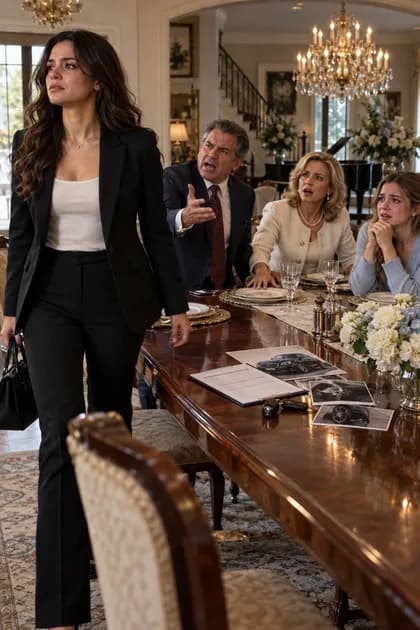
At Thanksgiving dinner, my sister Olivia raised her crystal glass, smiled like a queen, and announced to the entire family, “Mom and Dad are giving me the house.
Chapter 1
The Daughter Who Got Nothing Owned Everything
At Thanksgiving dinner, my sister Olivia raised her crystal glass, smiled like a queen, and announced to the entire family, “Mom and Dad are giving me the house.
Lily gets nothing.”
Everyone cheered.
My uncle clapped so loudly his fork jumped beside his plate. My aunt laughed and wiped her mouth with a napkin, already congratulating Olivia as if she had just won an award. My cousins exchanged impressed looks. My mother sat at the head of the table with her hands folded neatly in her lap, smiling with the exhausted pride of a woman who believed the family had finally made the right choice.
And my father?
My father stared at his plate.
That was how I knew.
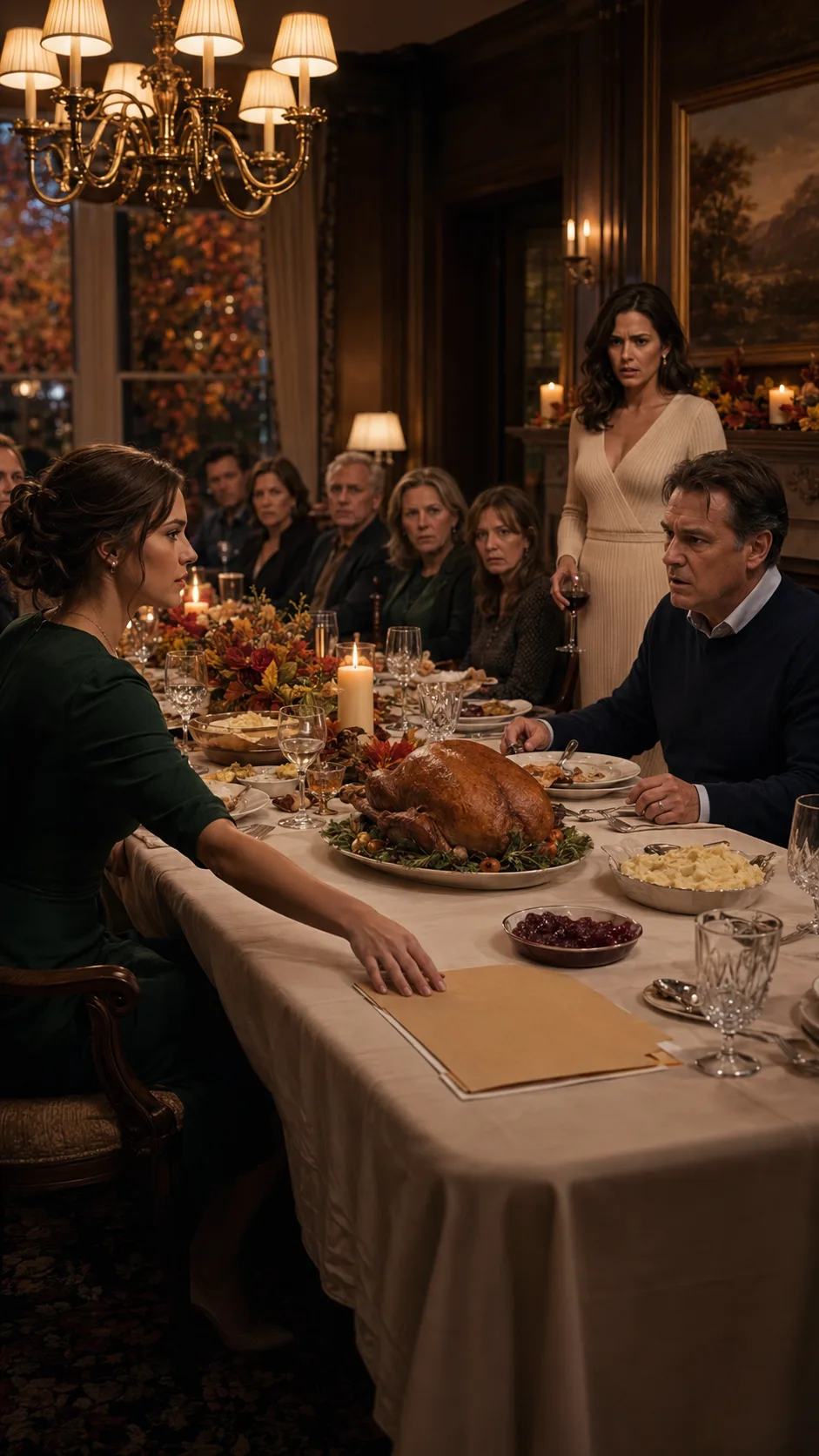
The dining room glowed beneath a golden chandelier. The turkey sat in the center of the table, carved and steaming. Bowls of mashed potatoes, cranberry sauce, green beans, and sweet potatoes crowded the linen cloth. Outside the tall windows, dry November leaves scraped against the porch in the wind.
It should have felt warm.
It felt staged.
Olivia stood
near the fireplace in a cream sweater dress, her hair curled perfectly over one shoulder. She had always known how to perform for a room. Since we were children, she could cry first, smile first, accuse first, and by the time anyone looked at me, the story had already been written.
She was the devoted daughter.
I was the one who left.
That was the family myth.
Olivia lifted her chin and looked directly at me across the table.
“Don’t look so shocked, Lily,” she said. “It’s only fair. I stayed. I took care of Mom and Dad. You moved away and only showed up when it was convenient.”
A few relatives nodded.
My mother looked down.
My father’s hand tightened around his fork.
I slowly set my napkin beside my plate.
“Is that what we’re calling it?” I asked.
The room became quieter, but Olivia only laughed.
“What else
would we call it?” she said. “You weren’t here. I was. I kept this family together.”
I looked at the walls of the house I grew up in. The framed school photos. The old grandfather clock near the hallway. The worn wooden cabinet where Mom still kept chipped holiday plates. The house looked exactly the same as it had when I was sixteen, except everything felt smaller now.
Maybe because I finally knew what it cost to keep it standing.
Three years earlier, my father called me at 12:43 in the morning.
I remembered the exact time because I had been awake, working late in my apartment, when my phone started buzzing across the desk. Dad never called that late. At first, I thought someone had died.
His voice was not the voice I knew.
It was thin. Shaking.
“Lily,” he whispered. “I made a mistake.”
The bank was ten
days away from auctioning the house.
At first, I thought I had misheard him. This house had been in our family for decades. My parents had always acted proud, stable, comfortable. They hosted holidays. They donated to church fundraisers. They sent expensive gifts to relatives. My mother wore pearls to brunch and talked like money was something polite people never worried about.
But behind the perfect curtains, everything had collapsed.
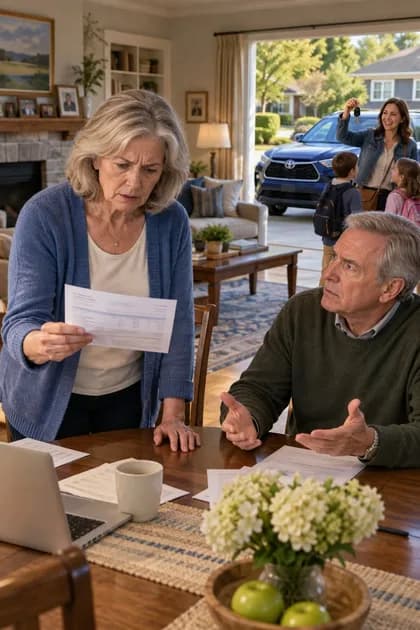
Dad had borrowed against the house. Then borrowed again. A bad investment. Medical bills. Olivia’s failed business idea. Credit cards. Late taxes. Penalties. Interest.
And no one knew.
Not my mother.
Not Olivia.
Not the cheering relatives now sitting around the table, acting like Olivia had earned a crown.
I sent the first payment that week.
Then another.
Then another.
At first, Dad promised it would be temporary. “Just until I fix things,” he said.
But the problem was never fixed. It only became more expensive.
For thirty-six months, I paid the arrears, the property taxes, the insurance, and the repairs. I skipped vacations. I worked weekends. I took side contracts. I ignored Olivia’s posts from the back patio where she posed with coffee and wrote captions like, “Nothing like home when you’re the daughter who stayed.”
I never corrected her.
Not once.
Because I wasn’t doing it for applause.
I was doing it because my parents would have nowhere to go.
But I was not stupid.
After the third emergency transfer, I hired an attorney.
Dad and I signed an agreement. Quietly. Legally. Clearly.
My parents would have the right to live in the house for the rest of their lives.
But the equity I was buying would be mine.
Dad cried when he signed.
I didn’t.
By then, I had learned that tears were expensive in this family. Everyone wanted yours, but no one wanted to pay for what caused them.
So I smiled through Thanksgiving.
I smiled when Olivia bragged about “sacrificing” her twenties by living rent-free in the largest bedroom upstairs.
I smiled when Aunt Sarah said, “Well, Olivia always was the family girl.”
I smiled when my mother said, “Lily has her own life. She doesn’t need the house.”
And I smiled when Olivia finally said the sentence she had probably practiced in the mirror.
“You get nothing.”
That was when I turned to my father.
“Dad,” I said calmly, “do you want to tell them? Or should I?”
His fork slipped from his hand and struck the porcelain plate with a sharp metallic clatter.
Every head turned.
Olivia’s smile froze.
“What does that mean?” she demanded.
My father opened his mouth, but no sound came out.
My mother’s face went pale. “Lily, please.”
“No,” I said. “Olivia chose the audience. She can stay for the show.”
I reached down beside my chair and lifted my handbag onto my lap. Inside was the folder I had almost left at home. Part of me had hoped I wouldn’t need it. Part of me had known Olivia too well.
The folder landed on the table with a soft thud.
No one moved.
Olivia stared at it like it was a snake.
“What is that?” she asked.
“The truth,” I said.
I opened the folder and removed the first stack of documents.
“Three years ago, this house was ten days away from foreclosure.”
Aunt Sarah gasped.
My uncle lowered his glass.
Olivia laughed once, sharp and false. “That’s ridiculous.”
I placed the first bank notice on the table and slid it toward the center.
“Read it.”
She didn’t.
So my cousin Mark picked it up.
His eyes moved over the page. His expression changed.
“It says final notice,” he said quietly.
The room shifted.
Olivia snatched the paper from him. Her eyes scanned it, and for the first time all night, she had no performance ready.
“That doesn’t prove anything,” she said. “People get notices. Dad handled it.”
“Yes,” I said. “Dad handled it by calling me.”
My father closed his eyes.
I placed the next documents down one by one.
Wire transfer receipts.
Tax payment confirmations.
Insurance records.
Repair invoices.
Thirty-six months of proof.
“Eighty-six thousand dollars,” I said. “That’s what I paid to keep this roof over your head.”
The room went dead silent.
Olivia looked at my parents.
“Tell her she’s lying.”
My mother covered her mouth with trembling fingers.
Dad finally looked up.
“She’s not lying,” he said.
It was barely more than a whisper, but it cracked through the room harder than a shout.
Olivia staggered back half a step.
“No,” she said. “No. That’s impossible. You would’ve told me.”
Dad’s face looked older than it had five minutes before.
“You were here, Olivia,” he said. “But you weren’t paying attention.”
Her mouth opened.
Nothing came out.
I removed the final document.
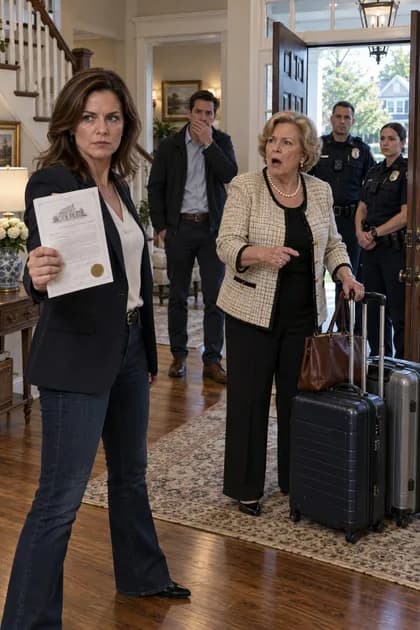
The quitclaim deed.
This time, I did not slide it gently.
I turned it around and placed it where everyone could see my name.
“My payments were not gifts,” I said. “They were not loans. Dad and I signed a legal agreement. Mom and Dad have a life estate. They can live here safely for the rest of their lives.”
Olivia stared at the document.
Her eyes stopped on my signature.
Then on Dad’s.
Then on mine again.
I continued.
“But ownership of the house belongs to me.”
The silence broke.
Olivia screamed.
Not cried. Not argued.
Screamed.
“You stole my house!”
I stood very still.
“Your house?” I asked.
She pointed at me, her hand shaking. “You manipulated them! You waited until they were desperate and took advantage!”
I looked around the table.
At every relative who had cheered five minutes earlier.
At my mother, who still couldn’t look directly at me.
At my father, whose shame had finally become visible enough for everyone to see.
Then I looked back at Olivia.
“You lived here for three years without paying rent,” I said. “You let Mom and Dad pay for your food, your car insurance, your phone, and your failed business while telling everyone you were the caretaker.”
Her face twisted.
“I was here!”
“Yes,” I said. “You were here. That’s the problem.”
My aunt cleared her throat, but no words followed.
Olivia turned to our mother.
“Mom,” she said. “Do something.”
My mother’s lips trembled.
“I didn’t know it was this bad,” she whispered.
Olivia’s eyes widened.
“You’re taking her side?”
“No,” Mom said, barely audible. “I’m realizing she was the only one who didn’t abandon us.”
That sentence landed heavier than any document.
Olivia stepped back like the floor had moved beneath her.
For once, no one rushed to comfort her.
No one told me I was being dramatic.
No one said I should let it go because family is family.
Family had been the weapon they used on me for years. That night, I finally took it out of their hands.
I gathered the documents back into the folder, leaving the deed on the table.
“Mom. Dad,” I said, “you’re staying here. Nothing changes for you. I’ll keep paying the taxes and maintenance. You’ll be safe.”
My father’s eyes filled, but he nodded.
My mother pressed both hands to her mouth.
Then I turned to Olivia.
“But you won’t be staying.”
The color drained from her face.
“What?”
“You have until January first to move out.”
She laughed again, but this time it sounded broken. “You can’t kick me out. I’m their daughter.”
“And I’m the owner.”
The room went completely still.
I picked up my coat from the back of my chair.
Olivia’s voice followed me.
“You’re evil.”
I paused near the doorway.
For a second, I looked back at the chandelier, the table, the relatives, the beautiful meal going cold. Three years of silence sat behind me. Three years of payments. Three years of being called selfish by people who never asked who was keeping the lights on.
Then I looked at my sister.
“No,” I said. “I’m done being useful to people who call me nothing.”
No one stopped me.
Outside, the November air was cold enough to sting my face. The porch light flickered above me. From inside, I could hear Olivia’s voice rising again, demanding explanations, demanding loyalty, demanding a house she had never saved.
I walked down the steps slowly.
For the first time in years, my hands felt light.
I had not lost my family home.
I had not been written out.
I had not gotten nothing.
I had simply waited long enough for everyone else to say their lie out loud.
Then I brought the receipt.
THE END.
Chapter complete
You have reached the end of this chapter.
Continue reading
A few more worlds to get lost in after this chapter.