The bailiff said my name wrong the first time.
Chapter 1
The bailiff said my name wrong the first time.
Not badly. Not enough for anyone else to care. Just one small wrong syllable in a room where every syllable mattered.
I sat with both hands under the table, fingers locked together so tightly my knuckles had gone pale. The courtroom smelled like old wood, copy paper, and coffee that had been sitting somewhere too long. A ceiling vent clicked every few minutes above the judge’s bench. Someone behind me kept clearing his throat and stopping halfway, like even a cough might be used as evidence.
My son, Ethan, sat three chairs away from me.
Not beside me.
Not on my lap.
Not close enough for me to reach.
That was the first cruelty of the morning, and no one had called it cruelty because it had come stamped with procedure.
He was six years old, wearing the gray sweater I had ironed at 5:18 that morning with my hands
shaking over the sleeves. The collar of his white shirt had folded under on one side. I noticed it the second they brought him in, and I had to stop myself from standing up to fix it.
A mother knows small things first.
A collar. A loose shoelace. The way a child grips the edge of a chair when he is trying not to ask for help.
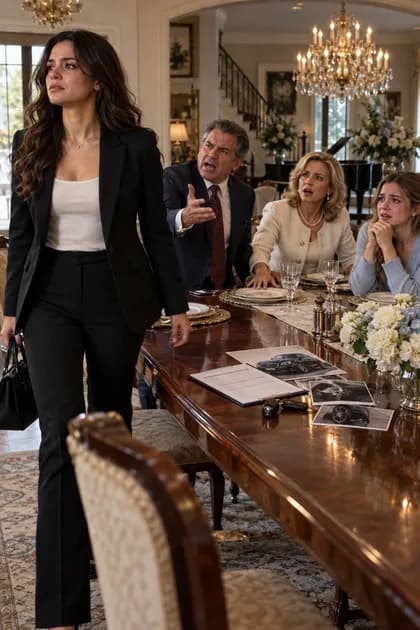
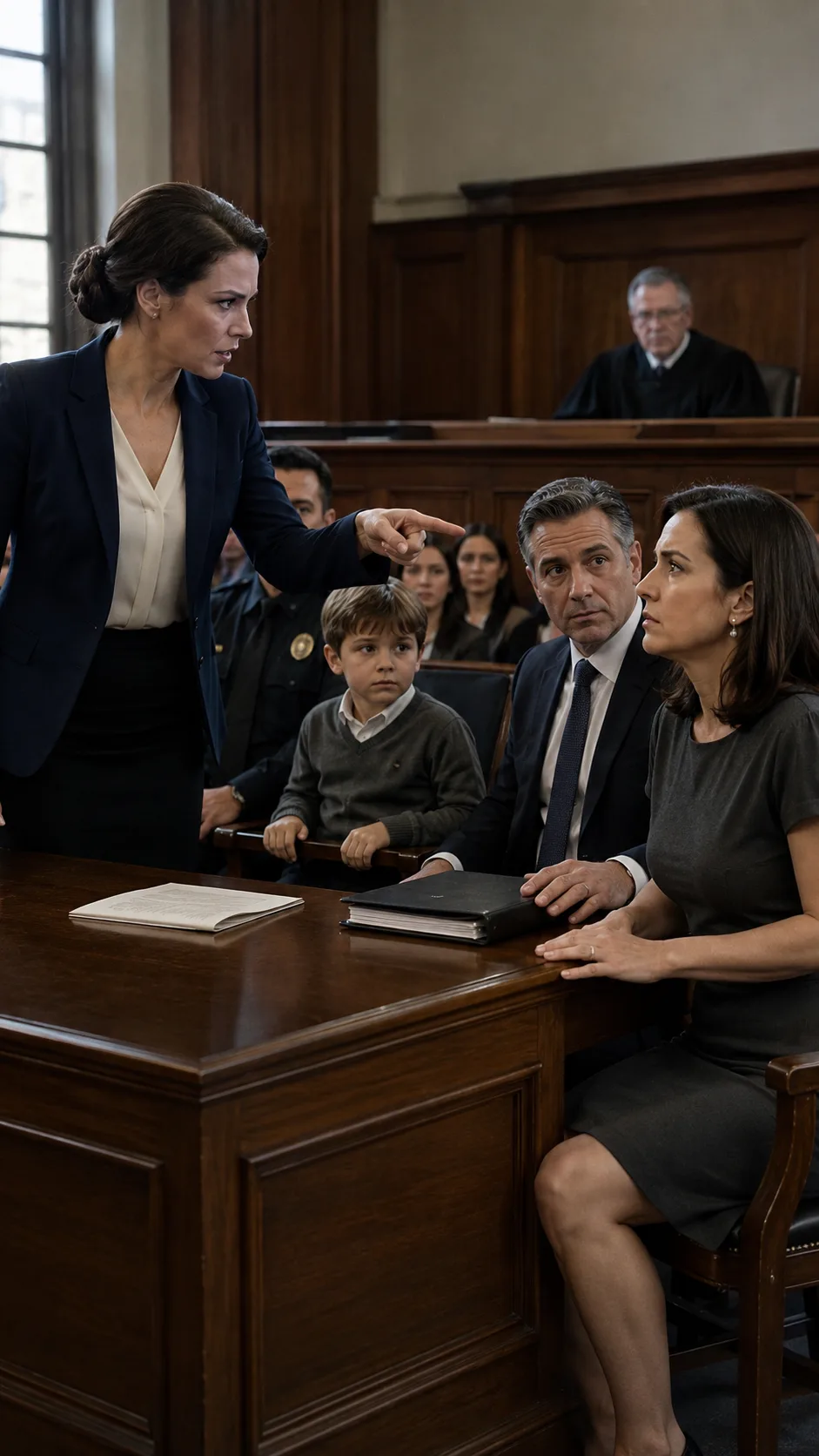
Across the aisle, my sister Rachel stood near the witness table as if she had been born there. Navy blazer. Cream blouse. Hair pinned low. No crease in her skirt. No tremble in her hands. She had always known how to look believable from a distance.
That was Rachel’s gift.
From far away, she looked like the woman who remembered birthdays, sent cards, made tea, and stepped in when family needed her.
Up close, you saw the empty places.
The way she held
Ethan’s name like property. The way she smiled only when someone important looked her direction. The way she could make a lie sound wounded if she lowered her voice enough.
Mr. Harris, my lawyer, slid a yellow legal pad toward me. He had written only two words.
Stay calm.
I looked at the words until the letters stopped looking like letters.
Stay calm.
As if calm had ever kept a child safe.
Rachel turned her head slightly, just enough to look at me from the corner of her eye. Her expression did not change. Her mouth softened, almost kind, almost sisterly.
Then she looked toward Ethan.
Not at him.
Toward him.
There was a difference.
Ethan stared at his shoes. His legs did not reach the floor. His hands wrapped around the chair arms, small fingers pressed into dark polished wood. A court officer sat near him, not touching him,
but close enough to remind the room that he belonged to the process before he belonged to anyone else.
The judge entered at 9:04.
Everyone stood.
The sound came in pieces. Chair legs. Fabric. Shoes. A woman behind me exhaling too sharply. Rachel rose smoothly, one palm resting on her folder like she was protecting something precious.
I rose too.
Ethan looked at me then.
Only for half a second.
His eyes found mine, and his shoulders dropped the smallest amount.
I did not smile. I was afraid that if I gave him anything soft, he would break.
So I nodded once.
He nodded back.
Rachel saw it.
Her mouth tightened.
The judge sat. We sat. The room settled into a silence that was not peace. Mr. Harris opened his folder. Rachel’s attorney, a narrow man with silver glasses and a voice like a locked cabinet, stood first.
He called my sister “Ms. Rachel Whitmore” with a careful respect he did not use for me.
When he said my name, he paused before the last name.
Claire Bennett.
Not Whitmore.
Not anymore.
Rachel had used that against me from the beginning.
When I married Daniel Bennett seven years earlier, she had told people I had been desperate to leave our family name behind. When Daniel died before Ethan turned two, she told people widowhood had made me unstable. When I moved to a smaller apartment and took night shifts at a dental office, she told people poverty had made me selfish.
Every fact became a weapon once Rachel touched it.
Her attorney lifted a document from the table.
“We are here regarding the emergency custody petition filed on behalf of Ms. Rachel Whitmore, who alleges that the minor child, Ethan Bennett, was wrongfully withheld from her care.”
Wrongfully withheld.
The phrase sat in the courtroom like a stain.
Mr. Harris wrote something on his pad.
Rachel looked down.
Ethan did not move.
The judge listened with his chin tilted slightly downward. His glasses sat low on his nose. He did not look cruel. That made it worse in some ways. Cruel people are easier to fight. Neutral people make you prove your pain in acceptable language.
Rachel’s attorney continued.
He spoke of dates, school forms, medical pickups, family proximity, grief. He made my life sound like a pattern of absence because he left out every shift I had worked, every bill I had paid, every night I had stayed awake listening to Ethan breathe through a winter cough because we could not afford to miss another clinic appointment.
Then he said it.
“The petitioner has reason to believe Ethan recognizes Ms. Whitmore as his true mother.”
My chair did not move, but my body did.
Something inside me stepped forward.
Mr. Harris’s hand shifted under the table, a small warning before I could make the mistake Rachel wanted.
I stayed seated.
Barely.
Rachel’s attorney called her to speak.
She stood with the graceful hesitation of someone performing reluctance. She touched her fingertips to the edge of the witness table, lowered her eyes, then lifted them toward the judge.
“I never wanted this to become public,” she said.
Her voice did not shake.
That was how I knew.
Rachel could cry over a chipped wineglass if the right person was watching. She could make her eyes shine at a graduation, a funeral, a grocery store apology. But here, where she claimed her child had been stolen, her voice stayed clean.
“I tried to handle this privately,” she said. “Claire refused.”
Mr. Harris stood.
“Objection. Characterization.”
“Sustained,” the judge said.
Rachel’s lips pressed together for a moment.
Only a moment.
Then she began again.
“I have been part of Ethan’s life since the beginning. I was there when Claire couldn’t be. I fed him, took him to appointments, stayed with him when she was working late. He came to me for comfort.”
There it was.
A careful truth wearing a false coat.
Rachel had watched Ethan sometimes. Yes.
She had taken him to one dentist appointment when my car broke down. Yes.
She had spent nights at my apartment after Daniel died, not because I asked her to, but because she liked being seen as the sister who sacrificed.
The first time she stayed overnight, Ethan had a fever. He was eighteen months old. I had been awake for almost two days. Rachel offered to sit with him while I showered.
When I came out, she was taking pictures.
Not of him sleeping.
Of herself holding him.
She posted one before I had even dried my hair.
Family is everything, she wrote.
I remembered that now as she stood in court with one hand near her folder, building a mother out of favors she had once treated like social currency.
Rachel turned slightly toward the benches behind her.
Our aunt Linda sat there. Cousin Mark. Two neighbors from my old building. People who knew pieces of us, not the whole thing. Rachel had invited them, I was sure. Not officially. Not on paper. She would never make it look that obvious.
She wanted witnesses.
She wanted a stage.
She wanted me to lose my son in front of people who would repeat the story for years.
Mr. Harris called the first discrepancy gently.
He asked about Ethan’s birth certificate.
Rachel said it had been “handled poorly” after Daniel’s death.
He asked about hospital records.
Rachel said she had not been given access.
He asked why her name appeared nowhere on pediatric intake forms until five months ago.
Rachel folded her hands.
“Because Claire controlled everything.”
The silver-glasses attorney nodded as if this answer solved time itself.
Mr. Harris did not react. He turned one page in his folder and placed it flat.
Paper against wood.
A small sound.
Rachel heard it.
Her eyes moved to the folder, then away.
I saw her do it.
So did Mr. Harris.
The judge asked for a short recess at 10:12.
No one moved at first. The room seemed unsure whether it had permission to breathe.
Then chairs scraped back. People stood. Rachel’s attorney bent close to her, speaking into the side of her pinned hair. Rachel nodded once, twice, then looked over his shoulder at me.
This time she smiled.
It was not a big smile.
It was worse.
A small private thing, meant only for me.
I stayed seated until the judge left, because if I stood too fast, my knees might not hold.
Mr. Harris leaned toward me.
“She’s leaning harder than expected,” he said.
“She’s lying harder than expected.”
He looked at me over the top of his glasses.
“That too.”
Across the room, Ethan remained with the court officer. He looked smaller with adults standing around him. His shoes swung once under the chair, then stopped. He was watching Rachel now.
Not me.
Rachel took two steps toward him before the court officer lifted one hand.
“Please wait.”
Rachel stopped. Her smile stayed fixed.
“Of course.”
She looked down at Ethan.
“Sweetheart,” she said.
The word made him flinch.
Not much.
Enough.
Mr. Harris saw that too.
Rachel bent a little, careful not to touch him.
“You remember what we talked about.”
The court officer shifted his stance.
“Ms. Whitmore.”
Rachel straightened immediately, palms open.
“I’m only reassuring him.”
Ethan looked at the floor.
The right side of his collar was still folded under.
I gripped the edge of the table until Mr. Harris quietly slid a cup of water toward me. I did not drink it.
At 10:24, the judge returned.
The room rose again. Sat again. Settled again.
Rachel’s attorney called a school attendance form, a pickup authorization, three photographs, and a statement from a neighbor who had seen Rachel take Ethan to the park twice.
Twice.
Two afternoons became a motherhood claim when printed cleanly and placed in a binder.
Then he placed one folded custody paper on the table.
I had seen that paper before.
Not the exact one. The copy I had was blurry, forwarded by mistake from a clerk who later called to apologize. But the signature at the bottom had been visible.
Mine.
Or something pretending to be mine.
Mr. Harris had circled it in red and asked me three times if I had ever signed anything giving Rachel temporary guardianship.
No.
No.
No.
The judge accepted the document for review.
Rachel kept her chin lifted.
Her attorney said, “Ms. Whitmore, did Claire Bennett ever acknowledge your role as Ethan’s mother?”
Rachel turned toward me.
A pause.
A perfect one.
“She did. Not publicly. But she did.”
The bench behind her shifted.
Aunt Linda put one hand to her chest.
Cousin Mark stared down at his shoes.
Rachel’s attorney walked closer.
“And why, in your understanding, did she refuse to say so now?”
Rachel inhaled.
Not shakily.
For timing.
“Because she was afraid of how it would look.”
My lawyer stood.
“Objection.”
The judge lifted one hand.
“Ms. Whitmore, answer only what you personally know.”
Rachel lowered her eyes.
“I know she kept him from me.”
That was when Ethan whispered something.
It was so small the microphone did not catch it.
The court officer leaned closer.
The judge noticed.
“Did the child say something?”
Rachel turned too fast.
Her attorney touched her elbow.
Ethan pressed his mouth shut.
The judge looked at Mr. Harris.
“Counsel?”
Mr. Harris stood slowly.
“Your Honor, I believe this hearing has placed the child under extraordinary pressure.”
Rachel’s attorney stood at once.
“The child’s recognition is central to the petition.”
Mr. Harris did not look at him.
“Then the court should hear from the child without coaching.”
Rachel’s head snapped toward him.
There.
The crack widened.
Not fear yet.
Annoyance.
Fear would come later.
The judge sat back. He studied Ethan for several seconds. The courtroom waited in a way that made every small sound too large.
The vent clicked overhead.
A page shifted.
Someone swallowed.
“Ethan,” the judge said, his voice gentler than before. “No one here is asking you to make a grown-up decision. Do you understand?”
Ethan did not answer.
The judge nodded once, as if silence was still information.
Rachel’s attorney moved forward.
“Your Honor, perhaps Ms. Whitmore could—”
“No,” the judge said.
One word.
Rachel’s attorney stopped.
The judge turned to the court officer.
“Bring the child’s chair slightly forward. Not toward either party.”
The officer moved Ethan’s chair a few inches. The chair legs made a short sound against the floor.
Ethan’s hands tightened.
I nearly stood.
Mr. Harris’s hand hovered near the table again, not touching me, not restraining me, just reminding me that the room had rules and Rachel was waiting for me to break one.
So I stayed seated.
Rachel did not.
Not fully. She shifted forward, one foot moving before she caught herself.
The judge saw it.
“Ms. Whitmore, remain where you are.”
Rachel stopped.
Her face smoothed.
“Of course, Your Honor.”
But her fingers curled against the edge of the witness table.
The judge looked back at Ethan.
“Do you know the woman standing over there?”
Ethan looked at Rachel.
Rachel’s face softened instantly.
It was almost impressive, how quickly she could arrange herself into tenderness.
Ethan nodded once.
Rachel’s lips parted.
The room leaned toward her without moving.
The judge continued.
“And do you know the woman seated at that table?”
Ethan turned his head toward me.
His collar was still folded wrong.
His lower lip moved, but no sound came.
Rachel’s attorney stepped forward again.
“Your Honor, the child may be confused by—”
The judge looked at him.
He stopped.
Mr. Harris opened the black folder in front of him.
Not dramatically.
Not quickly.
Just enough.
Rachel’s gaze dropped to it.
The black folder had been on the table all morning. Closed. Unremarkable. A thing among things.
Now it became the only object in the room.
Rachel saw the blue tab first.
Her face changed by less than an inch.
But I had known her my whole life.
That was fear.
Mr. Harris slid one document slightly upward, still inside the folder, where only he could see it clearly. The judge noticed the movement.
Rachel did too.
Her attorney did not.
Rachel said, “He’s been coached.”
No one had asked her anything.
The judge turned to her.
“Ms. Whitmore.”
She lifted her chin.
“I’m concerned for him. She has had months to prepare him for this.”
I felt the sentence pass through the room and land on my skin.
Prepare him.
As if I had rehearsed motherhood with my own son.
Mr. Harris stood.
“Your Honor, may I respond after the child answers?”
The judge gave one curt nod.
Rachel’s attorney placed a hand on the custody paper.
“The petitioner has submitted documentation supporting her claim.”
Mr. Harris looked at the folded paper.
Then he looked at Rachel.
“So have we.”
Rachel’s hand moved toward her folder.
Stopped.
The judge lowered his glasses.
“Let the child answer.”
The words struck the room cleanly.
Ethan lifted his head.
For one second, he looked at the judge.
Then at Rachel.
Then at me.
My hands were flat on the table now. I did not remember placing them there. One of my nails had chipped against the wood.
Ethan’s small fingers loosened from the chair arm.
He raised his right hand.
Not high.
Not strong.
Just enough to point.
Straight at me.
His voice came out small.
“Mom.”
No one moved.
Not even Rachel.
The word did not echo. Real rooms do not do that. It simply arrived and stayed.
My mouth opened, but no sound came out.
Mr. Harris placed one palm gently over the open folder, as if holding the moment in place.
The judge looked at Ethan for another second.
“Can you say that again?”
Rachel stepped forward.
“Your Honor—”
The court officer moved before she finished. One quiet step. Not blocking her fully. Just enough to remind her where she stood.
Ethan still pointed at me.
“Mom.”
This time, someone behind Rachel lowered a purse to the floor. It made a soft thud.
Aunt Linda covered her mouth.
Rachel’s attorney turned toward Rachel, and for the first time all morning, he looked at his own client as if she had become a question he did not know how to ask.
Mr. Harris slid the document out of the folder.
The original birth record.
Not the copy.
Not the blurred clerk scan.
The certified hospital record with the embossed seal, the attending physician’s signature, my name printed clearly, and Rachel’s name nowhere on the page.
He laid it in front of the judge.
“Your Honor,” he said, “her name is on every page.”
Rachel reached for it.
Not a big movement.
A stupid one.
A guilty one.
The court officer’s hand came up, flat and calm, stopping her before her fingers crossed the table edge.
“Do not touch the evidence,” he said.
Rachel froze.
Every person behind her saw it.
So did the judge.
So did Ethan.
Rachel pulled her hand back slowly, but it was too late. The movement had already spoken for her.
Mr. Harris turned another page.
“And this,” he said, “is the pediatric intake record from the month Ethan was born.”
He placed it below the first.
My signature.
Daniel’s signature.
The clinic stamp.
Ethan Bennett.
Mother: Claire Bennett.
Father: Daniel Bennett.
Emergency contact: Rachel Whitmore.
Not mother.
Emergency contact.
Rachel stared at the paper as if the words had betrayed her.
Her attorney moved closer, lowering his voice.
“Rachel.”
She did not look at him.
Mr. Harris continued.
“The petition relies on a temporary guardianship form allegedly signed by my client. We requested the original. The petitioner did not provide it.”
Rachel’s attorney stiffened.
“We provided a certified copy.”
“A copy of a forged document,” Mr. Harris said.
Rachel’s mouth opened.
The judge looked up sharply.
“Counsel.”
Mr. Harris placed a third sheet beside the others.
“Handwriting analysis from a court-approved examiner. The signature does not match Claire Bennett’s verified signatures from the same period.”
Rachel whispered something.
Too low to hear.
Her attorney heard it.
His face changed.
The judge noticed that too.
Mr. Harris did not raise his voice.
“The ink pattern also suggests the signature was reproduced from a digital image. We have reason to believe the petitioner obtained that image from a school permission slip.”
The room shifted.
Not loudly.
Worse.
Quietly.
People moved away from Rachel without standing up. A shoulder angled. A knee turned. Aunt Linda lowered her hand from her mouth and placed it in her lap like she no longer trusted it near her face.
Rachel looked at Ethan.
For the first time that morning, she looked directly at him.
He leaned slightly toward me.
Only slightly.
Enough.
The judge looked at Rachel.
“Ms. Whitmore, did you submit this guardianship document?”
Rachel’s throat moved.
Her attorney touched her arm.
“Do not answer without—”
The judge raised one hand.
“I asked the witness.”
Rachel swallowed.
“It was given to me.”
“By whom?”
She did not answer.
The clock above the door ticked once.
Then again.
Rachel’s polished face began to lose its arrangement.
“I believed it was valid.”
Mr. Harris looked down at his folder.
That was when he placed the final item on the table.
A printed email.
Rachel saw the header first.
Her own email address.
The date.
The attachment line.
She took half a step back.
Not enough for everyone.
Enough for me.
Mr. Harris read only one sentence.
“Use the school form signature. She never checks attachments.”
Rachel’s attorney closed his eyes.
Only for a moment.
But the room saw.
The judge took the page from Mr. Harris and read it himself. His expression did not change much. Judges are trained for that, I suppose. But his hand flattened against the paper, and his jaw worked once.
Rachel whispered, “That is not—”
She stopped.
No one helped her finish.
The judge placed the email down.
“Ms. Whitmore,” he said, “you will step back from the witness table.”
Rachel looked at him.
Then at me.
Then at Ethan.
Her mouth moved again.
“I never meant—”
The judge’s voice cut through before the sentence could become another performance.
“Step back.”
Rachel stepped back.
Two inches.
Then another.
The court officer moved beside the witness table. Not aggressive. Not dramatic. Just present.
That was all it took.
For months, Rachel had built herself out of documents and whispers and people who preferred her version because it sounded cleaner than mine. She had turned my long shifts into neglect, my grief into instability, my trust into opportunity.
Now she stood in the same navy blazer, in the same room, with the same people watching.
Only the room no longer belonged to her.
Ethan slid off the chair before anyone told him he could.
The court officer started to reach out, then stopped when the judge lifted one finger.
My son crossed the few feet between us.
Not running.
Walking fast, like he had been told not to run in court but had not been told what to do when his mother was right there.
I stood then.
No one stopped me.
He reached me at the edge of the legal table, and I dropped to my knees so he would not have to look up.
His arms went around my neck.
His collar was still folded under.
I fixed it with two fingers.
The judge looked down at his papers for a moment. Maybe to give us privacy. Maybe to read. Maybe because even neutral people sometimes need somewhere else to look.
Rachel made a sound behind us.
Not a cry.
Not a word.
Something smaller.
When I looked over Ethan’s shoulder, she was staring at the custody paper she had brought. It sat alone on the witness table now, thin and useless.
Her attorney had stepped away from her by half a pace.
A small distance.
A public one.
The judge suspended the hearing for ten minutes.
No one left quickly.
That was the strange part.
People who had come to watch me lose did not seem to know how to carry themselves afterward. Aunt Linda stood, then sat again. Cousin Mark picked up his phone, put it back in his pocket, then stared at the floor.
Rachel remained near the witness table until the court officer spoke to her.
“Ma’am.”
She blinked.
Only then did she move.
Ethan stayed against me, one hand curled into the back of my dress. Mr. Harris gathered the documents with careful hands, stacking them in the order he had placed them down, as if the truth deserved to be kept neat after all that had been done to it.
When court resumed, Rachel did not return to the witness table.
She sat beside her attorney, shoulders drawn in, navy blazer no longer looking expensive. Just dark.
The judge spoke for seven minutes.
Temporary petition denied.
Emergency custody claim rejected.
Forgery issue referred for further review.
Rachel’s visitation request suspended pending investigation.
The words came one by one, official and dry and sharp enough to cut through every lie she had arranged.
I held Ethan’s hand under the table.
This time, no one told me not to.
Rachel did not look at us when the judge dismissed the room. Her attorney leaned close to her and spoke with the careful patience people use when they are trying not to be recorded saying the wrong thing.
She nodded.
Once.
Twice.
Then she looked at me.
There was no apology in her face.
That would have required a kind of surrender Rachel had never practiced.
There was something else.
A question.
How did you let me get this far?
I did not answer it.
I picked up Ethan’s backpack from under the table, the small blue one with one broken zipper pull, and helped him put it over both shoulders. He slipped his hand into mine like he had done a thousand times in grocery stores, parking lots, school hallways, and half-lit mornings before work.
Outside the courtroom, Aunt Linda waited near the vending machines.
Her purse hung from both hands.
“Claire,” she said.
I stopped because Ethan stopped.
Aunt Linda looked at him first.
Then at me.
“I didn’t know.”
I looked at her until she lowered her eyes.
“You didn’t ask.”
The vending machine hummed between us.
She nodded, but it did not fix anything.
Maybe it was not meant to.
We walked past her.
Down the courthouse steps, the air felt colder than it had that morning. Ethan held my hand with both of his. Mr. Harris walked beside us for a few steps, then paused near the bottom.
“There will be more paperwork,” he said.
I almost laughed.
Of course there would be.
There is always paperwork after someone tries to steal your life.
“Will he have to come back?” I asked.
Mr. Harris looked at Ethan, then back at me.
“Not like that.”
That was enough for the moment.
At home, Ethan took off his gray sweater and left it on the back of a kitchen chair. The collar was finally flat. I made grilled cheese because it was the only thing he asked for. He ate half, then pushed the plate toward me.
“You didn’t eat,” he said.
I took a bite.
Cold cheese. Burnt edge.
Perfect.
That night, he fell asleep with the hallway light on and one hand under his cheek. I stood in the doorway longer than I needed to.
My phone lit up twice.
A message from Aunt Linda.
A missed call from a number I knew belonged to Rachel.
I did not open either.
The next morning, I found Ethan’s gray sweater folded on the kitchen chair. Not thrown. Folded. Crookedly, with one sleeve tucked inside out.
On top of it sat the small courtroom visitor sticker the clerk had given him.
He had peeled it off carefully and saved it.
I picked it up and turned it over in my hand.
No name.
No title.
No claim.
Just a sticker from a place where a room full of adults had waited for a child to tell them what I had known from the beginning.
At breakfast, Ethan climbed onto his chair and looked at me over his cereal bowl.
“Do I have school today?”
“Yes.”
He nodded, serious as a judge.
“Can you fix my collar first?”
I walked around the table and folded the white collar neatly over his sweater.
“There,” I said.
He touched it once.
Then he picked up his spoon.
My phone lit again on the counter.
Rachel.
I let it ring.
Ethan ate his cereal.
The kitchen stayed quiet.
So did I.
Chapter complete
You have reached the end of this chapter.
Continue reading
A few more worlds to get lost in after this chapter.