PART 2 — THE WOMAN THEY UNDERESTIMATED
My name is Eleanor Whitman, and for most of my life, I believed love meant staying.
Chapter 1
PART 2 — THE WOMAN THEY UNDERESTIMATED
My name is Eleanor Whitman, and for most of my life, I believed love meant staying.
Staying quiet.
Staying useful.
Staying close enough to be needed, but never demanding enough to be chosen.
I learned that lesson long before Harper entered my family.
I learned it as a little girl in my mother’s house, where my older sister Margaret was treated like a future queen and I was treated like the girl who could clear the table after the queen finished eating.
Margaret got ballet lessons, birthday parties, new dresses, and my mother’s soft voice.
I got chores.
“Eleanor, help your aunt.”
“Eleanor, don’t bother your sister.”
“Eleanor, you’re stronger. You can handle it.”
People always say “strong” like it is a gift.
Sometimes it is just another word for abandoned.
When I was twenty-four, I married Jack Whitman, a construction worker with rough hands and honest eyes. He did not have money, but he looked at me like I had entered the world already deserving
tenderness.
For three years, I was loved properly.
Then Jack died in a work accident, and I became a widow with a toddler, a stack of bills, and a heart too broken to explain.
Mason was two.
I raised him alone.
I worked mornings at a diner and nights cleaning office buildings. I learned which groceries went on clearance after seven. I learned how to smile through exhaustion. I learned how to hide fear from a child who thought his mother could fix anything.
And I did fix everything.
School clothes.
Doctor bills.
Field trips.
College applications.
A private-school scholarship.
A used car.
A future.
I gave Mason the life I never had.
When he graduated college, he hugged me in his cap and gown and said, “I couldn’t have done this without you, Mom.”
I held those words close.
Years later, I would realize gratitude can expire when a
child decides your sacrifices are no longer impressive.
Mason met Harper in his final year of business school.
She was beautiful in a sharp way. Perfect hair. Perfect nails. Perfect smile that never reached her eyes when she looked at me.
The first time she came to my apartment, she glanced around at my old sofa, my thrift-store lamps, my balcony roses, and said, “How… modest.”
Mason heard it.
He said nothing.
That silence was the first warning.
After they married, Harper began sanding me down one comment at a time.
“Eleanor, you don’t have to bring food every time. We’re not starving.”
“Eleanor, that cardigan is very dated.”
“Eleanor, maybe call before dropping by. Boundaries are healthy.”
She said boundaries, but what she meant was distance.
I tried harder.
I cooked more.
I smiled more.
I made myself smaller.
Mason became busier. Harper became colder. Their apartment became a
place where I was tolerated like an old chair nobody wanted but nobody had the courage to throw away.
What they did not know was that I had a secret life.
After Jack died, I started saving.
At first, it was five dollars from tips, ten dollars from not buying lunch, twenty dollars from mending my own coat instead of replacing it.
I read investment books from the library. I watched financial lectures after midnight. I learned about index funds, dividends, taxes, compound growth, and patience.
Nobody expected a diner waitress to understand the market.
That helped.
People who underestimate you rarely watch what you are building.
By the time Mason married Harper, I had more than three hundred thousand dollars invested.
By the time Harper started calling me “clingy” behind my back, I had nearly half a million.
And by the time she invited me to Mason’s promotion dinner, I had already signed papers on a white coastal house with five bedrooms, wide windows, a neglected garden, and an ocean view that made me cry the first time I saw it on the virtual tour.
The house cost seven hundred and fifty thousand dollars.
I sold part of my portfolio, made the down payment, secured the mortgage, and told no one.
Not Mason.
Not Margaret.
Not even the neighbors who watched me carry groceries upstairs in the same old coat I had worn for years.
I wanted one thing that was mine before anyone could ruin it with opinions.
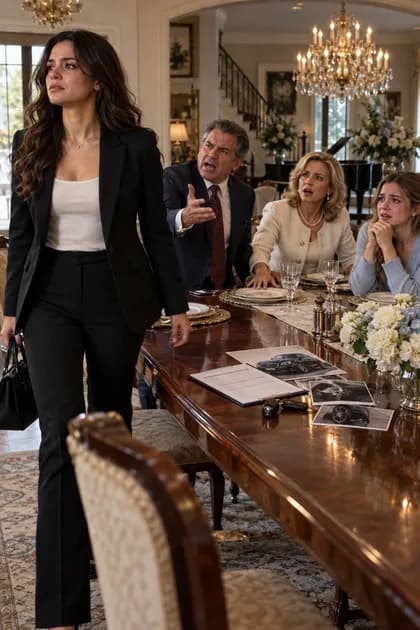
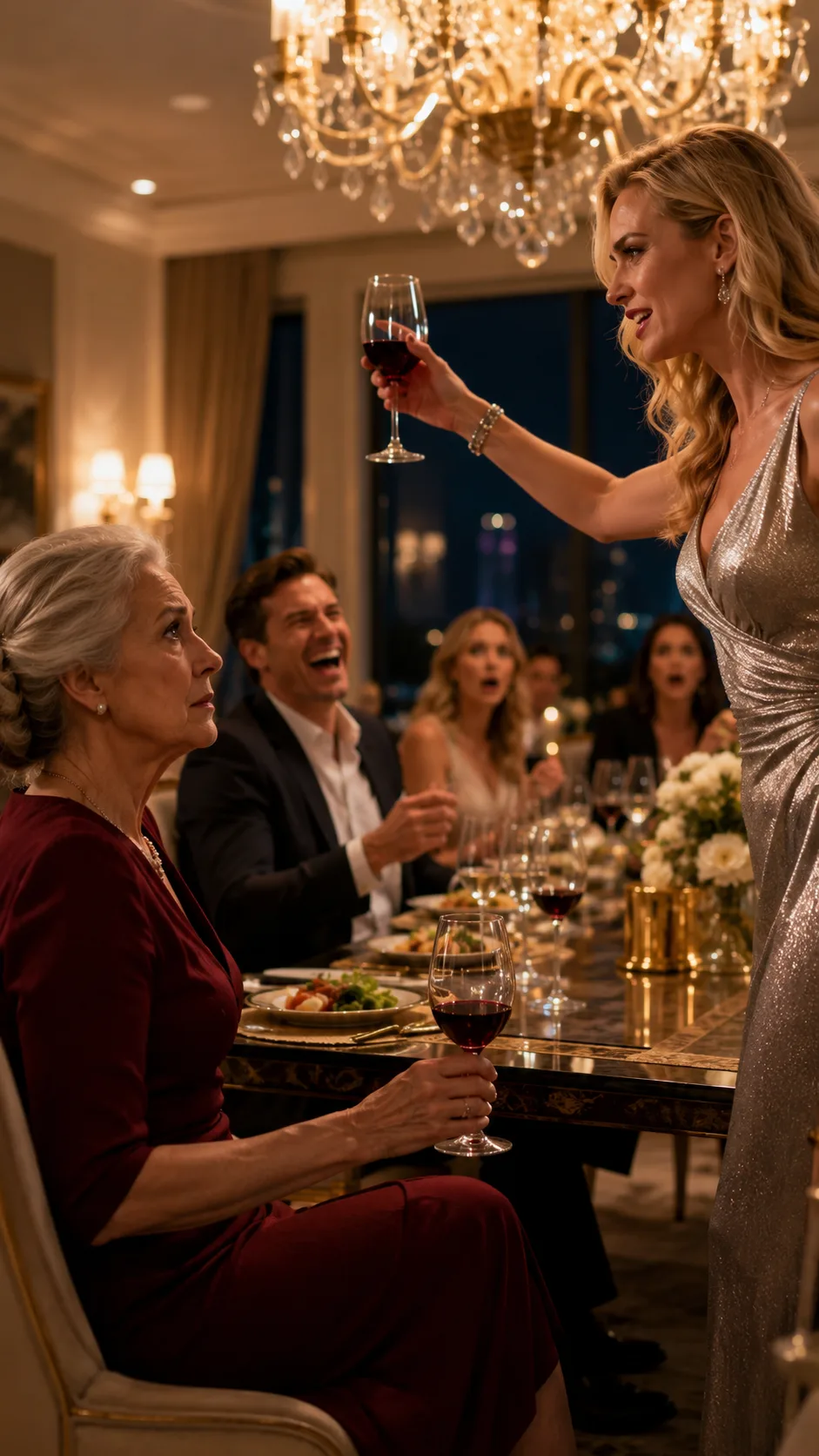
So when Harper made that toast, she thought she was humiliating me.
She didn’t know she was giving me my exit cue.
The morning after the dinner, Mason called nine times.
I watched his name glow on my phone while I packed coffee mugs in newspaper.
Then came the texts.
Mom, please answer.
Mom, Harper didn’t mean it like that.
Mom, you can’t just move away.
That last one almost made me laugh.
I could not move away?
At sixty-four years old, after burying a husband, raising a son alone, surviving poverty, grief, loneliness, and years of being treated like unpaid help?
I could do anything.
Harper texted once.
Eleanor, this drama is upsetting Mason. Please be mature.
I blocked her.
Three days later, my sister Margaret appeared at my door without warning.
She walked into my apartment, stared at the boxes, and said, “So it’s true. You bought a house.”
“Yes.”
“With what money?”
“My money.”
Her face twisted.
“You never had that kind of money.”
“No,” I said. “You never knew I had that kind of money.”
She looked around my shabby apartment like the furniture itself had betrayed her.
“Mason says you’re punishing him.”
“I’m leaving him.”
“He’s your son.”
“And I am his mother, not his property.”
Margaret lowered her voice. “Mom would be ashamed of you.”
Once, that sentence would have split me open.
This time, it barely touched me.
“Mom was ashamed of me when I was eight years old and washing dishes while everyone celebrated you,” I said. “Her opinion is no longer available for consultation.”
Margaret went pale.
I opened the door.
“I have packing to finish.”
The night before my flight, I sat on my balcony beside my roses.
Those roses had survived storms, frozen winters, bad soil, neglect, and tiny cracked pots.
So had I.
I wrapped their roots carefully for the journey.
I was not leaving behind the only things that had bloomed with me.
At the airport, I turned off my old phone.
Mason had sent forty-three messages.
Margaret had sent twelve.
Harper had found three new ways to call me selfish.
I boarded anyway.
When the plane lifted, the city dropped beneath the clouds, and something inside my chest loosened for the first time in decades.
I landed at sunset.
A driver held a sign with my name.
“Mrs. Whitman,” he said warmly, “welcome home.”
Home.
The word nearly broke me.
The house stood behind an iron gate, white and bright against the orange sky. The garden was wild, the lawn overgrown, the roses tangled with weeds, but the windows caught the ocean light like the whole place had been waiting for me.
Inside, the rooms echoed.
No furniture yet.
No voices.
No judgment.
Just space.
My space.
I walked through the kitchen, the living room, the bedrooms, the upstairs balcony. Then I stepped outside and saw the ocean in the distance, dark blue beneath the moon.
I cried then.
Not because I was lonely.
Because I was finally alone without being abandoned.
For two months, I rebuilt my life.
I bought a cream sofa, a wooden dining table, bookshelves, thick towels, fresh sheets, and a blue armchair just because I loved it.
I hired a seventy-year-old gardener named Earl, who looked at my wild yard and said, “This place doesn’t need saving. It just needs someone patient enough to see what’s still alive.”
I laughed.
“Then we have something in common.”
I planted my balcony roses in the sunniest corner.
They exploded with color within weeks.
I met my neighbor Clare, a widow with a huge dog and a laugh that sounded like bells. I joined a painting class. I sold small floral arrangements at the Saturday market, not because I needed the money, but because I liked being useful when usefulness was my choice.
Then, one afternoon, an unknown number called.
I almost ignored it.
But something told me to answer.
“Eleanor?” a woman asked.
“Yes.”
“This is Chloe. Harper’s sister.”
My hand tightened around the phone.
“I know you don’t know me,” she said, “but there’s something you need to understand. Harper didn’t just dislike you. She planned to push you out.”
I sat down slowly.
Chloe continued, “She wanted Mason isolated. She told people once you were gone, she could finally convince him to ask about your money.”
“My money?”
“She knew,” Chloe said softly. “Not everything. But enough. She found an old bank statement in Mason’s drawer from when you helped with the wedding. She thought you were hiding assets.”
The garden blurred in front of me.
Harper had not wanted me gone because I was poor.
She wanted me gone because she suspected I wasn’t.
Chloe sent screenshots.
Harper’s messages appeared one by one.
The old woman is sitting on money.
Mason is too sentimental to ask.
Once she feels guilty enough, she’ll help us with the down payment.
I stared at the words until they stopped hurting and became evidence.
That night, Mason called from a number I did not recognize.
For the first time since I left, I answered.
“Mom,” he whispered. “Harper is gone.”
I closed my eyes.
“She emptied our account,” he said. “She left me a note saying she married a man, not his mother’s shadow.”
There was a silence so deep I could hear the ocean breathing behind my house.
Then Mason said the words I had waited years to hear.
“I think I destroyed the only person who ever truly loved me.”
I did not comfort him.
Not yet.
I simply said, “Then maybe it’s time you become someone worth loving again.”
And I hung up.
To be continued… Click “PART 3” to read the final part : 👉 PART 3 👈
Chapter complete
You have reached the end of this chapter.
Continue reading
A few more worlds to get lost in after this chapter.