He Sent His Mother Away in the Rain.
Chapter 1
He Sent His Mother Away in the Rain.
But the Note Hidden in the Rice Revealed the Truth Too Late Miriam Hale had saved the last orange from her kitchen bowl for Daniel. It sat in her coat pocket all afternoon, wrapped in a paper napkin, because she knew her son forgot to eat fruit when work became too heavy. He had been like that since he was a boy. Books open. Shirt untucked. One shoe missing. A sandwich untouched beside his elbow until the bread went dry. She remembered these things even when he stopped calling. Especially then. Her apartment smelled faintly of boiled rice and old wood. The radiator clicked in uneven little beats by the window. On the small table, she had placed the orange beside a folded handkerchief, her bus pass, and the photograph of Daniel at seventeen, standing beside his father with a fishing rod he never learned to use properly. Miriam touched
the photograph before she left. “Just ten minutes,” she told the empty room. The room did not answer. It had been almost four months since Daniel last visited. Before that, six. Before that, birthdays with flowers sent by a driver and cards written in handwriting that did not look like his. Vanessa’s handwriting. Miriam had learned to recognize it. Perfect loops. Sharp endings. No warmth in the space between words. Outside, the evening had already gone dark. Rain gathered in the gutter above the front steps and spilled onto the pavement in broken streams. Miriam pulled her old gray coat tighter around herself and tucked the orange deeper into her pocket. The bus was late. A young man gave up his seat for her, then looked away quickly when she thanked him. Miriam held the strap with one hand and the paper bag with the other. Inside the bag were
two small jars of pickled vegetables, the kind Daniel used to steal from the pantry when he was twelve. She had made them the night before. She had almost not gone. Then she had woken before dawn and found herself staring at the ceiling, listening to rain begin against the window. A mother knows when something is wrong. People say that lightly. Miriam did not. She knew the difference between worry and warning. Worry sat in the stomach. Warning touched the back of the neck. That morning, warning had stood beside her bed. Daniel’s house was at the end of a private road lined with black trees and expensive lamps. The iron gate stood taller than Miriam remembered. Wet vines clung to the brick pillars. Beyond it, the house glowed with warm windows, large and polished, a place built for comfort but shaped like distance. Miriam pressed the bell. Once.
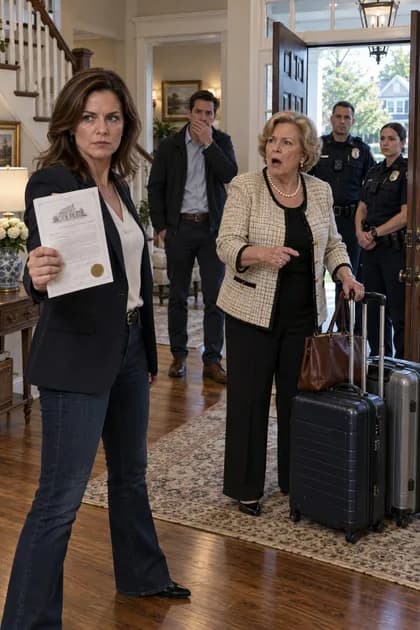
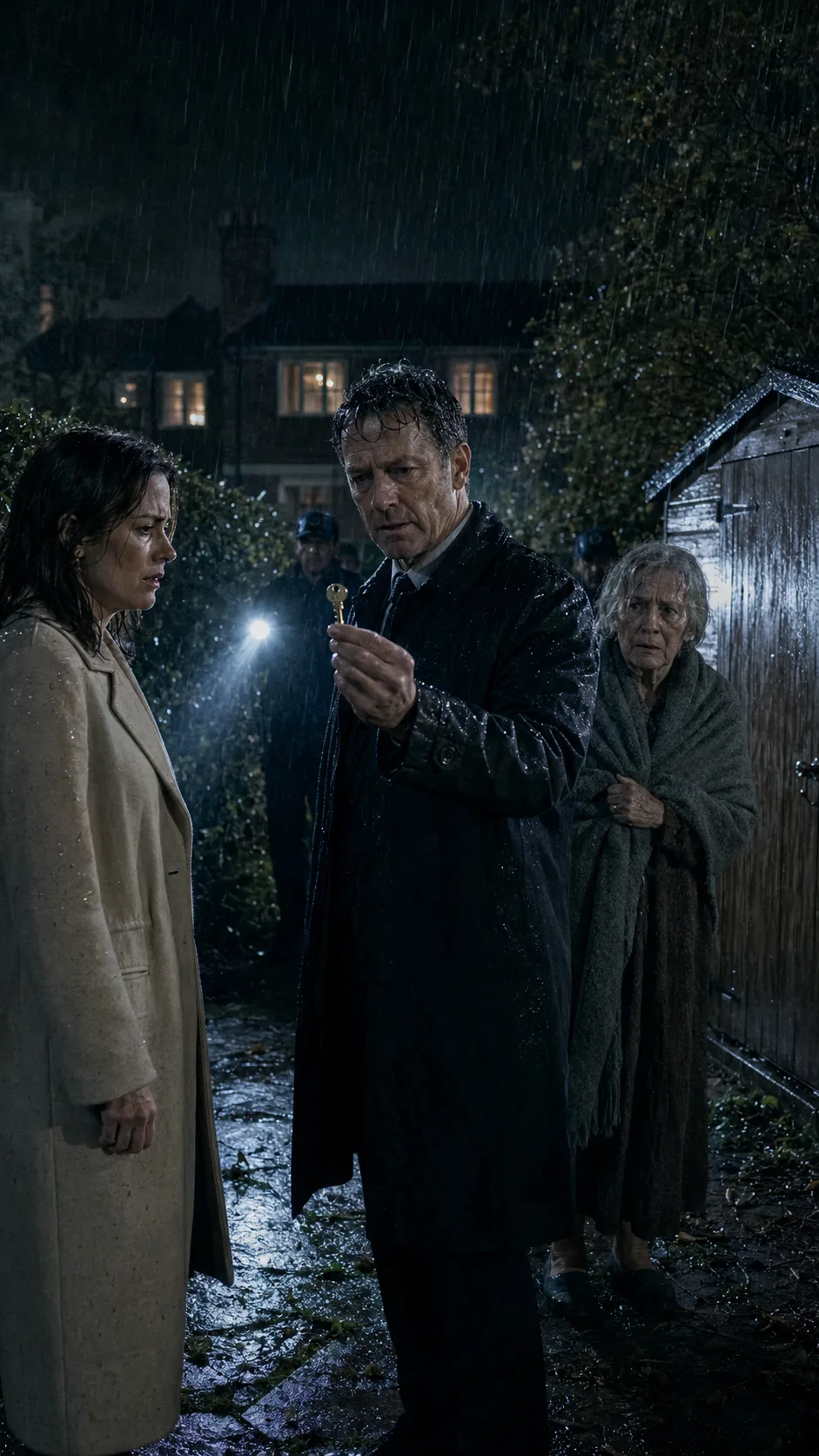
Then twice. The speaker crackled. No answer. She lifted her hand to press again, but the gate opened before she touched it. Daniel stood inside the driveway. Not at the door. Not beneath the porch. Right at the gate, as if he had been waiting to stop her before she came too close. Miriam’s fingers tightened around the paper bag. “Daniel.” He looked older than he should have. He was forty-two, but the rain and the porch light carved lines beside his mouth that Miriam did not know. His hair was damp. His white shirt was buttoned wrong near the collar. He held a burlap sack against his chest. A sack of rice. Behind him, Vanessa stood near the front steps. Cream coat. Smooth hair. Gold earrings small enough to pretend modesty and bright enough to announce price. She watched Miriam through the rain with the calm of a person examining a stain on a tablecloth. Miriam tried to smile. “I only came to see if you were well. I brought—” “Take this rice and go, Mom.” The words hit harder than the rain. Miriam looked at the sack. Then at him. “I don’t need rice.” “Take it.” Daniel shoved it forward. The weight nearly pulled her arms down. She stumbled one step back, her shoes slipping on the wet stone. The paper bag struck her knee. One jar cracked inside. Miriam heard it. Daniel heard it too. His eyes moved to the bag. For half a breath, his face changed. Not much. Just enough for Miriam to see the boy beneath the man, the child who used to apologize before she found the broken vase. Then Vanessa stepped closer. “Daniel,” she said. “Close the gate. Your mother will catch a cold.” Your mother. Not Mom. Never Mom. Miriam raised her chin. Rain ran down the side of her face and into her collar. “I didn’t mean to trouble anyone.” Daniel’s jaw moved. His hands hung at his sides, fingers flexing once. Vanessa’s eyes went to those hands. Daniel saw her looking. He stepped back. “Go,” he said. A small word. A terrible one. Miriam held the sack to her chest. The cracked jar leaked vinegar through the paper bag and onto her sleeve. “He’s still my boy,” she told herself on the walk back to the bus stop. The lie kept her moving. Her apartment was dark when she returned. She had forgotten to leave the lamp on. The hall smelled of damp coats and someone’s cabbage soup. Her neighbor’s television murmured through the wall. Miriam set the rice sack on the wooden table and lowered herself into the chair. She did not remove her coat. For a long while, she only sat there, listening to water drip from the hem onto the floorboards. Then she untied the sack. Rice shifted under her hand, cool and dry, untouched by the storm. She scooped some into a bowl without thinking. Habit had saved her more times than pride. Cook first. Fall apart later. Her fingers touched paper. Miriam froze. She dug deeper. A white envelope lay hidden beneath the grains. Not tucked carelessly. Buried. Her name was written across the front. MOM. Daniel’s handwriting. The room seemed to pull back from her. She opened the envelope with one damp finger. Money slid onto the table. Not a little. Stacks of cash, wrapped in thin bands, pressed flat from being hidden too long. Miriam pushed back from the table so hard the chair legs scraped. “No.” The note was folded once. She opened it. I’m sorry, Mom. The first line made her grip the table edge. I couldn’t say it in front of her. Miriam read. Vanessa has taken control of everything. The accounts. The business documents. My phone. The house papers. She watches every call I make. She threatened to send you away for good if I helped you. The radiator clicked. Miriam’s breathing came rough and uneven. This money is all I could hide. There is more, but I need you to listen carefully. She swallowed. There is a key sewn into the inside seam of the sack. It opens the old garden shed. If I don’t come for you by midnight, take the key to the police. Do not trust Vanessa. Miriam pressed the note against her chest. The knock came then. Three slow strikes against the door. She stood. No one visited that late. Not in her building. Not in that weather. The knock came again. “Mrs. Hale?” A man’s voice. Miriam slipped the note into her coat pocket and walked to the door without turning on the light. “Who is it?” “Police.” Her hand stopped on the chain lock. Two officers stood in the hallway when she opened the door. Between them was a man in a dark raincoat. Water dripped from his collar onto the worn carpet. “Mrs. Miriam Hale?” “Yes.” “I’m Inspector Rowan. We need to speak with you about Daniel Hale.” The floor seemed thinner under her feet. “My son?” “Yes.” Miriam stepped back. They entered carefully, as people do when they know bad news has already arrived before them. Rowan saw the rice. The envelope. The money. His eyes sharpened. “Where did you get this?” “My son gave it to me tonight.” The officers exchanged a look. Rowan took off one glove. “At his house?” “Yes.” “What time?” Miriam glanced at the clock above the stove. It had stopped at nine-fifteen three years ago, but she still looked at it whenever time frightened her. “Maybe an hour ago. Maybe less.” Rowan’s face changed only slightly, but Miriam saw it. “Mrs. Hale, Vanessa Hale reported your son missing forty minutes ago.” Miriam shook her head once. “No. He was there. At the gate.” “She said he left this afternoon after an argument and never came back.” “She lied.” The words came out before Miriam knew she would say them. Rowan looked at her for a long second. Then she pulled the note from her pocket. His face remained controlled while he read. The officers stood near the door, rainwater gathering under their boots. When Rowan reached the line about the key, he looked at the sack. “May I?” Miriam nodded. He took a small folding knife from his pocket and cut the inner seam of the burlap. A brass key dropped onto the table. Tiny. Plain. Almost harmless. Miriam stared at it as if it had teeth. Rowan picked it up. “Your son came to the station three weeks ago,” he said. “He said he believed his wife was involved in financial fraud. He had no documents with him. He said she had locked him out of the accounts and was using his name.” Miriam’s lips moved, but no sound came. “He was afraid. Not for himself only.” “For me?” Rowan did not answer quickly. That was answer enough. The drive back to Daniel’s house felt longer than the bus ride, though the police car moved fast through the wet streets. Miriam sat in the back wrapped in a blanket one officer had taken from the trunk. The orange was still in her coat pocket, bruised now. The cracked jar had soaked through the paper bag and stained the seat beside her with vinegar. She kept one hand over the note. At the gate, the police turned off the siren before they arrived. No dramatic noise. No warning. Only tires hissing through rain and lights sliding across the black iron bars. The gate opened after Rowan spoke into the intercom. The house was blazing with light. Too much light. Every window downstairs shone gold against the storm. It looked less like a home than a stage prepared for a performance. Vanessa opened the front door before anyone knocked. She had changed nothing. Still in the cream coat. Still composed. Still dry enough to seem untouched by the same world everyone else lived in. “Inspector,” she said. “Have you found Daniel?” Rowan stepped under the porch light. “We need to inspect the garden shed.” Vanessa’s face did not move. Then her left hand closed around the doorframe. Only that. “The shed?” “Yes.” “There’s nothing there.” “Then this will be quick.” Rowan held up the brass key. For the first time, Vanessa looked at Miriam. Not at the officers. Not at the key. At Miriam. Something cold passed between them. “You should have stayed home,” Vanessa said. Miriam stood straighter. Her soaked shoes made small dark marks on the stone. “I tried that for years.” Rowan walked past Vanessa. The officers followed. The garden behind the house was wide and expensive, but the rain had made it ugly. Hedges sagged. Gravel paths shone like black glass. The lawn held puddles that reflected the house lights in broken pieces. The shed stood at the far end, half-hidden behind wet ivy and a leaning rose trellis. Miriam remembered it from years earlier. Daniel’s father had stored fishing rods there. A red toolbox. Bags of fertilizer. A bicycle Daniel had outgrown but refused to throw away because the bell still worked. Now the shed looked abandoned. But the lock was new. Rowan lifted the key. Vanessa stepped forward. “You need a warrant.” Rowan looked at her. “We have sufficient cause.” “This is harassment.” “No.” The word came from Miriam. Small. Flat. Everyone turned. Miriam did not look away from Vanessa. “This is my son.” Vanessa’s mouth tightened. Rowan inserted the key. It fit. The lock clicked open. Rain hammered the shed roof. The sound was so loud that when Rowan pulled the door, Miriam almost missed the first thing that came out. Smell. Gasoline. Damp wood. Paper. Something sharp enough to make the back of her throat close. An officer raised a flashlight. The beam moved across boxes stacked along the wall. Folders. Copies of bank statements. Property deeds. Signed forms. Several stamps on the workbench. A laptop wrapped in plastic. Rowan stepped inside. Miriam followed without being told. Her feet crossed the threshold, and the cold changed. Outside was wet air. Inside was stale, trapped darkness. Then something moved in the corner. A plastic sheet hung from a beam. Gray. Still. Then not still. A sound came from behind it. Muffled. Weak. Human. Miriam’s hand flew to her mouth. “Daniel?” The sound came again. One officer pulled the sheet aside. Daniel sat tied to an old chair, head lowered, shirt damp, face marked from a struggle but alive. Alive. Miriam ran before anyone stopped her. “My boy.” Daniel lifted his head with effort. His eyes found hers. All the years between them collapsed and did not collapse. They stood there anyway. The birthdays missed. The house sold. The calls unanswered. The gate in the rain. All of it remained, and still she reached him. The officer cut the tape from his mouth. Daniel dragged in air. “Mom.” That one word broke him. Miriam touched the side of his face with shaking fingers. “I’m here.” Vanessa ran. She made it three steps. An officer caught her before she reached the garden path. Her cream coat twisted under his grip. One shoe slipped off in the mud. She stopped pretending then. “You stupid old woman,” she shouted. “You think he loves you?” Daniel went still. Miriam turned. Vanessa laughed once. It sounded ugly in the rain. “Ask him why he sent you away years ago. Ask him whose signature was on the nursing home papers.” The garden seemed to lose all sound except rain. Miriam looked at Daniel. “What does she mean?” Daniel closed his eyes. “Mom.” “No.” Miriam stepped back from him. “Tell me.” Rowan said nothing. The officers held Vanessa near the shed door. She looked pleased now, even with mud on her coat. “Tell her,” Vanessa said. “Tell her who signed her house away.” Daniel’s mouth opened. No words came. Miriam’s face emptied. Years earlier, after her husband died, papers had arrived. Legal papers. Transfer papers. Documents she did not understand in the fog of grief and medication. Her small house had been sold. Daniel had avoided her after that. Vanessa had handled every call. Miriam had blamed herself. Her age. Her confusion. Her weakness. She had never let herself blame him. Daniel looked at the floor. “I signed them.” Miriam took another step back. The shed wall stopped her. “I thought I was saving the business,” he said. “Vanessa said it was temporary. She said we would fix it before you knew.” Miriam stared at him. “You sold my home.” “I let her sell it.” The difference meant nothing. For a while, no one moved. Rainwater ran from Miriam’s coat sleeve onto the shed floor. It made a dark spot near Daniel’s shoe. “You let me think I had done it myself,” she said. Daniel lowered his head. “Yes.” Vanessa smiled. That smile lasted only until Rowan turned to her. “Vanessa Hale, you’re under arrest.” She began shouting again as they pulled her across the wet garden. Fraud. Lies. Daniel’s weakness. Miriam’s foolishness. Every word thrown like a dish against a wall. Miriam did not follow. Daniel reached toward her as far as the loosened rope allowed. She looked at his hand. Then at his face. She did not take it. Not then. The hospital smelled of antiseptic, coffee, and raincoats drying near the entrance. Daniel’s room was on the third floor. Miriam sat in the corridor for almost an hour before going in. A nurse passed twice and pretended not to notice. Someone had placed a vending machine near the elevators, and its motor hummed with the confidence of a thing that never had to forgive anyone. Miriam held the orange in her lap. It had split slightly from being crushed in her pocket. A thin line of juice had dried on the peel. When she entered, Daniel turned his head. He looked smaller in the bed. Not weak. Not innocent. Just stripped of the house, the gate, the wife, the business name, the things that had made him look unreachable. “Mom.” She placed the orange on the bedside table. “I brought this before all of it.” Daniel looked at the fruit. His mouth trembled. “I don’t deserve that.” “No.” The word landed between them. He flinched. Miriam sat in the chair. “I am not here because you deserve it.” Daniel looked at her then. “I don’t know how to fix what I did.” “You can’t fix some things.” He nodded, but it hurt him to do it. Good, Miriam thought. Then she hated herself for thinking it. Then she allowed it. “You broke my heart,” she said. “Not once. Not by accident. You let another person hold the knife, but you opened the door.” Daniel pressed one hand over his eyes. “I know.” “No. You know part of it.” He let his hand drop. “You let me lose my home and then let me lose my son. Those are different losses.” The room went quiet. The rain tapped softly against the window. Softer now. The storm had moved away, leaving only its edges. Daniel swallowed. “When I put the note in the rice, I thought maybe you’d throw it away.” “I almost cooked it.” A sound came from him that was not quite a laugh. Miriam did not smile. “But you didn’t throw me away,” she said. “Even when you were afraid. Even when it was late. You tried.” “That doesn’t erase it.” “No.” She reached into her purse and took out the brass key. The police had returned it after photographing it. It lay in her palm, dull under the hospital light. “This opened the shed,” she said. “It also opened what I did not want to know.” Daniel looked at the key. Then at her. “What happens now?” Miriam closed her fingers around it. “Now you tell the truth. To the police. To the court. To me. No more clean lies.” “I will.” “And you do not buy forgiveness with money.” His face tightened. “I know.” “Do you?” He held her gaze. “Yes.” Only then did Miriam place the key on the bedside table beside the orange. “We begin there.” Months passed in strange pieces. Vanessa went to prison after Daniel testified. The investigation pulled records from banks, property offices, fake loan accounts, and shell companies with names that sounded harmless enough to hide rot. Some property was recovered. Some money was not. The old home Miriam had lost had changed hands twice and could not be returned. Daniel offered to buy it back at any price. Miriam refused. “I don’t want a haunted house,” she told him. Instead, he bought a small cottage near the sea and put it only in her name. She made the lawyer explain every page twice. Daniel sat beside her during the signing and did not touch the pen until she told him where to sign as witness. The cottage had blue shutters, uneven floors, and a kitchen window that looked toward a narrow road down to the beach. The first week she lived there, Miriam bought a cheap ceramic bowl shaped like a lemon and placed oranges in it every Monday. Daniel came every Sunday. At first, he brought groceries and stood too long near the door. Then he learned to sit. They spoke carefully. Then badly. Then honestly. Some Sundays ended early. Some ended with Daniel washing dishes while Miriam dried them and placed each cup in the wrong cabinet just to hear him say, “Mom, that goes on the left,” like he used to. One year after the night in the rain, Miriam found an envelope on her kitchen table. Daniel stood by the door with his coat still on. “What is this?” “Read it.” The envelope was old. Not Vanessa’s handwriting. Not Daniel’s. Inside was a hospital record, folded along lines so worn they had almost torn through. Miriam read the date. Thirty-eight years earlier. Daniel’s birth date. Her fingers stopped on the printed line beside mother’s name. Unknown. She did not move. Daniel’s voice came from the doorway. “I found it in Vanessa’s files. She used it against me before I even understood what it meant.” Miriam kept looking at the paper. “You and Dad adopted me when I was three days old,” he said. The sea wind pressed against the window. Miriam sat down slowly. “We meant to tell you.” Daniel nodded once. “Then you didn’t.” “No.” “Why?” Miriam touched the edge of the page. “Your father said love did not need paperwork.” Daniel looked toward the floor. “For years, I thought blood was why you kept coming back.” Miriam looked up. He was crying without trying to hide it. Not like a man performing regret. Like a child who had found a locked room inside himself and hated what was stored there. “I thought you loved me because you had to,” he said. Miriam stood. She crossed the kitchen slowly. Daniel dropped to his knees before she reached him, not for drama, not for forgiveness, but because his legs seemed to stop carrying him. “All this time,” he said, “you chose me.” Miriam touched his face. The same face she had washed with a warm cloth when he was feverish at six. The same chin that had copied his father’s stubborn angle. Not blood. Never blood. “You were never the son I carried,” she said. Daniel looked up at her. Miriam bent and kissed his forehead. “You were the son I chose.” Outside, rain began again. This time, no one closed the gate. THE END.
Chapter complete
You have reached the end of this chapter.
Continue reading
A few more worlds to get lost in after this chapter.