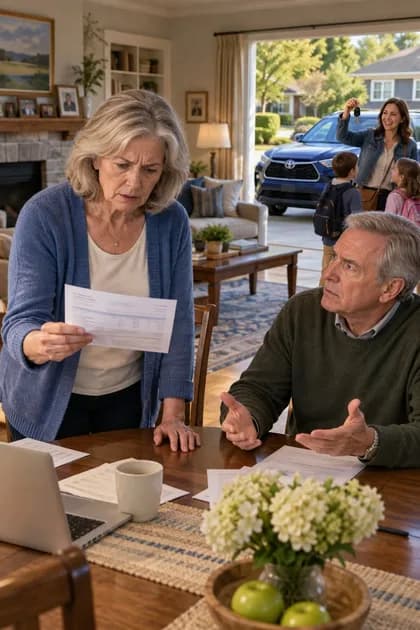
At 1:03 a.m., my phone lit up with a message from my parents that made fifteen years of sacrifice feel suddenly ridiculous.
Chapter 1
THE THANKSGIVING THEY THOUGHT MY SILENCE WOULD PAY FOR
4,925 words
“We know you spent $680,000 to save our house... but your sister doesn’t want you at Thanksgiving.”
I stared at the screen.
Before I could even decide how to respond, another message appeared.
Lena thinks your presence might create tension. She wants Thanksgiving to feel sophisticated. Please don’t take it personally.
Sophisticated.
That was the word they chose.
I sat upright in my dark Seattle apartment, the glow from my phone washing over my hands.
Six months earlier, I had liquidated a huge part of the life I’d spent fifteen years building so my parents wouldn’t lose their home.
And now my sister didn’t want me sitting at their Thanksgiving table.
I could have reminded them what I had done.
I could have asked whether “sophisticated” meant excluding the daughter who had just spent $680,000 saving the roof over their heads.
Instead, I typed one word.
“Noted.”
No argument.
No
guilt trip.
No demand for gratitude.
Just noted.
Then I set my phone down.
For as long as I could remember, I had been the dependable daughter.
When my parents had trouble paying a bill, they called me.
When Lena’s newest dream collapsed, I was expected to help clean up the wreckage.
And Lena had plenty of wreckage.
She quit law school.
Then she decided she was going to build a wellness brand.
She took expensive trips to Napa and Miami that somehow became “business investments.”
Whenever money disappeared, a new explanation appeared.
She just needed more time.
She was building something.
She was finding herself.
My parents called it supporting her.
I called it expensive.
But I still helped.
That was my mistake.
While Lena lived loudly, I built my life quietly.
I worked in tech. I saved relentlessly. I bought a modest rental duplex outside Seattle and lived
far below what I could actually afford.
I skipped expensive vacations.
I wore thrift-store coats.
I invested.
I planned.
Every dollar represented another brick in the wall of security I had spent years constructing.
Then my parents called.
Their mortgage was badly behind.
The amount required to save the house was staggering.
$680,000.
I remember staring at the number while my mother cried on the phone.
I knew what paying it would mean.
I sold my duplex.
I took the tax hit.
I pulled money from the brokerage account I had spent years building.
Then I wired $680,000 directly to their lender.
My mother cried again when she thanked me.
“You’re our blessing,” she whispered.
My father promised they would repay every dollar.
I desperately wanted to believe him.
But before the money moved, I did one thing my family wasn’t expecting.
I called Marcy, my lawyer.
I had spent
too many years rescuing people based on promises.
This time, there would be paperwork.
Marcy drafted a binding agreement.
My parents had six months to repay the loan or begin paying market-rate rent.
If they did neither, ownership of the house would transfer according to the terms they signed, giving me the legal right to decide what happened next.
Nothing was hidden.
Nothing was slipped into fine print.
Marcy sat at their kitchen table and explained the agreement sentence by sentence.
My mother’s eyes were swollen from crying.
Dad kept rubbing the back of his neck.
He even asked Marcy directly whether the agreement protected them from an immediate sale.
“Yes,” she told him, “as long as you follow the repayment schedule.”
They understood.
They signed.
Because their other option was foreclosure.
Lena wasn’t there.
She was in Tulum “networking.”
Afterward, Mom squeezed my hand.
“We won’t forget this,” she said.
I believed her.
At least for a while.
But gratitude has a strange way of changing when people get comfortable.
Within weeks, Lena was talking about the house as if saving it had cost absolutely nothing.
My parents stopped mentioning repayment.
Whenever I gently asked Dad if they had created a plan, he said they were “working on it.”
Mom would immediately change the subject.
So eventually, I stopped asking.
Not because I forgot.
I wanted to see if they would remember without being chased.
Six months passed.
The deadline was now one day away.
And instead of calling to discuss the money they owed me, my mother was asking me not to come to Thanksgiving because Lena wanted the evening to feel sophisticated.
I opened my laptop.
There it was.
A folder labeled:
Alden Legal.
Inside were the signed PDFs.
The notarized documents.
The wire confirmations.
And the contract.
Every promise had a paper trail.
They had mistaken my silence for surrender.
I opened the agreement and checked the deadline one more time.
Tomorrow.
Strangely, I wasn’t angry anymore.
I felt calm.
Almost peaceful.
I opened another browser tab and booked a first-class ticket out of Seattle for Thanksgiving morning.
Window seat.
Then I texted Marcy.
“Go ahead. Serve the notice during dinner. They’ll be home.”
Her response came almost immediately.
“Understood.”
I stared at those words.
This wasn’t revenge.
I didn’t want my parents homeless.
I didn’t want to destroy anyone.
I simply wanted the rules to apply to everyone for once.
Including Lena.
A few minutes later, Mom texted again.
We hope you’re not too upset. Lena’s under pressure. We’ll celebrate with you another time.
I didn’t respond.
I packed instead.
Swimsuits.
Linen dresses.
Two books.
And a folded copy of the contract.
By Thanksgiving morning, Lena was posting photos of my parents’ house online like she owned it.
Crystal glasses gleamed beneath warm lights.
The dining table looked professionally staged.
There were catered dishes, expensive wine glasses, floral arrangements, and bowls of candied pecans.
Her boss and his wife were coming.
Apparently, everything had to look perfect.
Meanwhile, I was sitting in the first-class lounge at SeaTac with an oat-milk latte when my phone buzzed.
Dad.
What is this legal notice? Call us immediately.
Then Mom.
Emma, you can’t do this. This is our home.
Then Lena.
You’re insane. You’re ruining everything.
I looked through the rain-streaked airport windows.
They expected panic.
Apologies.
Maybe even another rescue.
But the contract wasn’t new.
The deadline wasn’t a surprise.
Their signatures were already sitting at the bottom of every page.
For six months, I had protected them from feeling the consequences of their choices.
Now I had simply stopped.
My phone began ringing.
Dad.
Mom.
Lena.
Dad again.
I turned it facedown.
Boarding hadn’t even started.
Back at the Thanksgiving dinner they had planned so carefully, a courier had arrived at the door carrying a flat manila envelope.
Inside were the terms my parents had ignored for six months.
I learned what happened next later.
Lena’s boss and his wife were already seated at the table when Dad opened the envelope.
He began reading.
Mom leaned over his shoulder.
Her face went pale.
Lena’s boss’s wife slowly stopped smiling.
Then Lena snatched the papers from Dad’s hands.
At first, she looked annoyed.
Then confused.
Her eyes began moving faster across the pages.
Until she reached the section Marcy had highlighted.
That was when the entire room went silent.
My phone lit up again.
Lena.
This time, she didn’t send a text.
She left a voicemail.
I put in one earbud and listened.
Her voice had completely changed.
Gone was the polished hostess tone.
Gone was the carefully controlled confidence.
Gone was the woman who had decided I wasn’t sophisticated enough to sit at Thanksgiving dinner.
There was only panic.
“Emma, call me right now. You need to stop this before everyone finds out.”
I lowered the phone.
At the gate, the airline employee reached for the microphone and began preparing the boarding announcement.
Then another message appeared on my screen.
Dad.
I opened it.
Five words.
What exactly did we sign?
I stared at Dad’s message for several seconds.
What exactly did we sign?
That question told me everything.
For six months, they had treated the agreement like meaningless paperwork because they assumed I would never enforce it.
I finally replied.
“The contract Marcy explained to you before you signed it.”
Three dots appeared instantly.
Then disappeared.
Then appeared again.
Mom called.
I declined.
Lena called next.
Declined.
Seconds later, her text came through.
Emma, my boss is here. This is humiliating. Fix it NOW.
I almost laughed.
Not because she was scared—but because even now, her biggest concern was how she looked in front of someone important.
Then Marcy called.
I answered.
“The notice has been delivered,” she said calmly. “Unless they make the required payment or accept the rental terms, the next provision takes effect.”
I glanced at the folded contract inside my bag.
“What happens next?”
Marcy paused.
“Emma... there’s something your parents haven’t told you.”
My stomach tightened.
“What?”
Before she could answer, another message appeared from Dad.
Please don’t talk to Lena until we explain where the money went.
I froze.
Where the money went?
The $680,000 had gone directly to the lender.
Unless...
There was another debt.
And suddenly, I realized this Thanksgiving disaster was much bigger than the house.
“Marcy,” I said, “tell me.”
I heard papers move on her end.
“When we prepared the default documents, I ordered an updated title report.”
I sat straighter.
“And?”
“Your parents opened a home-equity line five weeks after your payment cleared.”
For a moment, the airport disappeared around me.
The announcements.
The rolling suitcases.
The hiss of the espresso machine.
Everything.
“How much?”
“Two hundred forty thousand dollars.”
I closed my eyes.
The contract in my bag suddenly felt heavier.
“They borrowed against the house after I paid off the lender?”
“Yes.”
“They were allowed to do that?”
“They were still on title, but the agreement specifically prohibited them from placing new debt against the property without your written consent. You never gave consent.”
“No.”
“I know.”
My voice came out quieter than I expected.
“How much did they use?”
“According to the lender’s payoff statement, a little over two hundred fourteen thousand.”
I looked at Dad’s message again.
Where the money went.
I already knew the answer before Marcy said it.
“The transfer records point to Lena’s company.”
I laughed once.
Not because anything was funny.
It was the sound a person makes when reality finally becomes too obvious to deny.
“Of course they do.”
“Emma, listen to me. The additional borrowing is a separate breach. It strengthens your position, but it also means we need to handle the property carefully. Don’t agree to anything over the phone.”
“I’m not going to.”
“And don’t let them turn this into an emotional negotiation before you have the documents.”
That part almost made me smile.
Marcy knew my family.
They had always treated emotion like a currency that only I was expected to spend.
“Send me everything,” I said.
“I already did.”
My phone buzzed with an email.
TITLE UPDATE — ALDEN PROPERTY.
I opened it.
The first attachment was the recorded home-equity agreement.
The second was a disbursement summary.
The third was a bank statement my parents had provided that morning after Marcy demanded financial records under the contract.
There it was.
$200,000 transferred to LENA VIDA LLC.
Another $14,200 went to a business credit card.
The dates were six weeks after I wired $680,000.
I stared until the numbers blurred.
I had sold a property I worked years to buy.
My parents had watched me do it.
Then, barely a month later, they put the house at risk again to finance Lena.
My phone rang.
Dad.
This time, I answered.
He spoke before I could say anything.
“Emma, please. Just listen.”
“I’m listening.”
His breathing was uneven.
In the background, I could hear my mother crying.
A door shut.
The dinner guests were probably gone.
“We were going to tell you.”
“When?”
Silence.
“Before Christmas.”
I looked at the departure board.
“After the repayment deadline?”
“We thought Lena would have the money by then.”
“From what?”
“She had investors interested.”
“Dad.”
“She did.”
“Then why did she need two hundred thousand dollars from your house?”
Another silence.
Longer this time.
My father had always hated direct questions when the honest answer embarrassed him.
Finally, he said, “Her company had supplier bills. Advertising costs. Some inventory problem.”
“An inventory problem worth two hundred thousand dollars?”
“She said if she missed the payments, the whole business could collapse.”
“And you believed her.”
“We were trying to help your sister.”
The sentence landed harder than I expected.
Not because it was new.
Because I had heard some version of it my entire life.
Lena needed help.
Lena needed another chance.
Lena was under pressure.
Lena was finding herself.
And Emma?
Emma could handle it.
Emma always handled it.
“So you used my sacrifice to create borrowing capacity for her.”
“That isn’t fair.”
“It’s exactly what happened.”
“No. We never touched your money.”
I actually pulled the phone away from my ear for a second.
When I brought it back, my voice was calm.
“You couldn’t borrow against that house until I paid off the debt that was swallowing it. I cleared the lender. You turned around and borrowed against the equity I protected. Legally, maybe you didn’t transfer my dollars to Lena. Financially, you used the rescue I gave you to rescue her next.”
Dad didn’t answer.
Mom’s voice suddenly came through.
“Emma, please don’t talk like this. We know it looks bad.”
“Mom, it doesn’t look bad. It is bad.”
“We thought she’d repay it.”
“Did you have a written agreement?”
Silence.
I almost admired the symmetry.
They had accepted paperwork from me because they needed $680,000.
But when Lena needed $200,000, apparently a promise was enough.
“Put Lena on,” I said.
Dad reacted immediately.
“No. She’s upset.”
“So am I.”
“She didn’t mean for any of this to happen.”
“Put her on.”
A muffled argument followed.
Then Lena’s voice hit my ear.
“What?”
No apology.
No hello.
Just what.
I leaned back in the lounge chair.
“Did you know about my agreement with Mom and Dad when you took the money?”
“I knew you gave them some loan.”
“Some loan?”
“Oh, God, Emma, don’t do the accountant voice.”
“I work in tech, Lena.”
“You know what I mean.”
“Yes. I know exactly what you mean. Facts make you uncomfortable.”
She exhaled sharply.
“My company had a temporary cash-flow issue.”
“Two hundred fourteen thousand dollars is not temporary when you don’t have two hundred fourteen thousand dollars.”
“You have no idea how companies work.”
That almost impressed me.
Lena had managed to owe my parents six figures and still find a way to speak down to me.
“Send them the money back.”
“I can’t.”
“Then tell me your repayment plan.”
“I don’t have to explain my business to you.”
“You do when your business is financed by a house tied to a contract with me.”
Her tone changed.
“This is exactly why I didn’t want you at Thanksgiving.”
There it was.
Not sophistication.
Not tension.
Fear.
She hadn’t excluded me because I embarrassed her.
She had excluded me because my presence threatened the story she had built.
“What story did you tell your boss?” I asked.
She went quiet.
I knew I’d hit something.
“What did you tell him, Lena?”
“Nothing.”
“Your panic started the second the legal notice arrived in front of him. You didn’t say, ‘Mom and Dad are losing their house.’ You said, ‘Stop this before everyone finds out.’ What exactly weren’t they supposed to find out?”
“Stop interrogating me.”
“What did you tell him?”
She snapped.
“That the company was family-backed.”
I said nothing.
She rushed to fill the silence.
“That isn’t a lie.”
“It is when the family backing it doesn’t include the daughter whose money made that equity available.”
“You always have to make yourself the hero.”
“No, Lena. That’s the difference between us. I spent years trying not to make myself anything. I just kept paying.”
Her breathing changed.
I could picture her pacing through my parents’ kitchen in whatever carefully selected dress she had worn to impress her boss.
Then she said something I will probably remember forever.
“You can afford it.”
Four words.
That was her entire philosophy.
Not thank you.
Not I’m sorry.
Not I’ll fix this.
You can afford it.
I looked down at the old canvas tote I used as a carry-on.
The zipper had been repaired twice.
Inside it was a first-class ticket I had almost talked myself out of buying because some part of me still believed comfort had to be earned through suffering.
I thought about my duplex.
The brokerage account.
The years of saying no to myself.
Then I thought about Lena in Tulum.
Napa.
Miami.
“You’re right,” I said.
She hesitated.
“What?”
“I could afford to save the house.”
Her voice softened slightly, thinking she had won.
Then I continued.
“But I can’t afford this family anymore.”
The line went silent.
I ended the call.
My hands were steady.
That surprised me most.
A boarding announcement sounded overhead.
Flight 417 to Maui.
First class could begin boarding.
I picked up my bag.
Marcy texted as I reached the gate.
Do you want me to pause enforcement until Monday?
I stopped walking.
For fifteen years, I would have said yes.
One more weekend.
One more extension.
One more rescue.
I typed back.
No. Follow the agreement exactly.
Then I boarded my flight.
By the time I landed, I had twenty-seven missed calls.
I returned one.
Marcy’s.
Not my mother’s.
Not my father’s.
Not Lena’s.
Marcy told me my parents had finally signed the temporary standstill paperwork she sent—not an escape from the contract, just an agreement preventing them from moving more money, borrowing more against the property, or transferring anything while we reviewed the debt.
For the first time in six months, they were following instructions.
Funny what consequences can accomplish when reminders cannot.
I spent Thanksgiving evening on a hotel balcony overlooking black water and scattered lights along the shore.
I ordered fish tacos.
I drank a glass of wine.
I watched families move along the beach below me.
My phone remained facedown on the table.
I expected to feel guilty.
Instead, I felt tired.
Then free.
Monday morning, Marcy scheduled a video conference.
My parents appeared from their kitchen.
Lena was there too.
Same table.
Same chandelier.
No flowers now.
No crystal glasses.
No performance.
Dad looked ten years older.
Mom’s face was swollen.
Lena sat with her arms folded.
Marcy joined from her office.
I joined from Maui.
For once, nobody got to use physical proximity to pressure me.
Marcy began.
“The original $680,000 obligation is in default. The additional home-equity borrowing also violated paragraph eleven of the agreement. We need a resolution.”
Mom clasped her hands.
“Can’t Emma just extend the deadline?”
Marcy looked at me.
I answered.
“No.”
Lena rolled her eyes.
“You’re really going to throw your own parents out?”
“No.”
“Then what is all this?”
“I’m going to stop pretending the only two choices are rescuing everyone or being cruel.”
She opened her mouth.
I raised one hand.
“I’m not finished.”
That stopped her.
I turned to my parents.
“You have two choices. The first is the option already in the contract. Ownership transfers, you stay under a formal lease, and you pay market rent. Every payment is documented. No more borrowing against the house. No more giving Lena money from the property.”
Mom started crying.
Dad stared at the table.
“The second?” he asked.
“We sell.”
Lena sat forward.
“You can’t sell their house.”
Dad looked at her.
For the first time in my life, he looked annoyed at the interruption.
“Let her finish.”
Lena went still.
I continued.
“The house is worth enough that a normal sale should pay the home-equity balance, reimburse my $680,000 under the agreement, cover transaction costs, and leave Mom and Dad with money to move somewhere smaller.”
Mom whispered, “Sell?”
“Yes.”
“But this house has been in our family for thirty-one years.”
I looked at her.
“And six months ago, it was days from foreclosure.”
She flinched.
I didn’t enjoy it.
But I didn’t take it back.
“The house isn’t a symbol if everyone keeps using it like an ATM.”
Dad rubbed both hands over his face.
Then he asked Marcy, “What would you recommend?”
Marcy didn’t hesitate.
“Financially? Sale. Your income does not comfortably support market rent plus repayment of the second debt. Selling would create a clean break.”
Lena shook her head.
“This is ridiculous. My business is about to turn around.”
Dad looked at her.
“When?”
She blinked.
“What?”
“When is it turning around?”
“Dad—”
“No. Give me a date.”
“I can’t predict—”
“You predicted it when we borrowed the money.”
The room changed.
Quietly.
Completely.
For years, my parents had protected Lena from the exact moment she was now facing: the moment when excuses stopped being treated as plans.
Dad’s voice was low.
“You said ninety days.”
“I said probably ninety days.”
“You said you had purchase orders.”
“I had verbal commitments.”
“You showed us projections.”
“That is how startups work.”
“You said Emma would never know.”
Silence.
My chest tightened.
Lena’s face changed.
“Dad.”
He looked at the screen.
At me.
Then he reached for something beside him.
A printed sheet.
“I need to show you this.”
He held it up, but the camera couldn’t focus.
“Email it,” Marcy said.
A minute later, the document appeared in my inbox.
It was a text conversation between Lena and Dad from five months earlier.
Dad had apparently printed it after their Thanksgiving argument.
I read.
Lena: The equity line is temporary.
Dad: Emma’s agreement says no new loans.
Lena: Emma lives three hours away and never looks at anything unless you bring it up.
Dad: She might check.
Lena: She won’t. She trusts you.
My throat tightened.
Then the next message.
Lena: By the time she finds out, I’ll have repaid it and everyone wins.
I stared at those words.
She trusts you.
That was the part that hurt.
Not because Lena had manipulated them.
Because my father had read that sentence and continued anyway.
I looked up.
“Did Mom know?”
Mom started crying harder.
“Yes.”
“Before you borrowed?”
She nodded.
I sat back.
There are betrayals that explode.
And there are betrayals so simple that they leave nothing to argue about.
This was the second kind.
My parents hadn’t forgotten the agreement.
They hadn’t misunderstood it.
They had made a calculation.
Lena needed money.
I trusted them.
Therefore, I was the safer person to betray.
Dad’s voice broke.
“I’m sorry.”
I didn’t answer.
He kept going.
“No. I need to say it properly. We knew you would be angry if you found out. But we also knew you wouldn’t want us to lose the house. We counted on that.”
Mom covered her mouth.
Lena stared at him.
Dad looked directly into the camera.
“We counted on your love like it was insurance.”
That sentence hurt more than anything Lena had said.
Because it was true.
I took a breath.
“Thank you for finally saying it.”
Mom wiped her face.
“Emma, what can we do?”
“Stop asking me that.”
She looked confused.
“I mean it. Stop asking me what you can do to make me fix this. Decide what you’re willing to do yourselves.”
Dad looked at Mom.
Then at Marcy.
“We sell.”
Lena shot out of her chair.
“What?”
Dad didn’t look at her.
“We sell the house.”
“You can’t be serious.”
“I am.”
“Where are you going to live?”
“Somewhere we can afford.”
Lena laughed in disbelief.
“So Emma gets exactly what she wants.”
That was when my mother surprised me.
She turned toward Lena.
“No.”
Lena stopped.
Mom’s voice shook, but she kept speaking.
“Emma wanted us to keep our word.”
Lena’s mouth opened.
Mom continued.
“She sold her property to save this house. Then we risked it again for you.”
“I didn’t force you.”
“No,” Mom said. “You didn’t.”
The room went still.
“That part is ours.”
For the first time, my mother wasn’t protecting Lena by pretending she had no agency.
And she wasn’t protecting herself either.
Lena’s face hardened.
“So now everyone’s blaming me?”
Dad finally looked at her.
“We’re blaming ourselves for giving you money we couldn’t afford to give. And we’re asking you to repay what you took.”
“I don’t have it.”
“Then you’ll make a plan.”
Her laugh was sharp.
“You sound like Emma.”
Dad gave a tired nod.
“Maybe we should have sooner.”
Lena left the room.
The door slammed hard enough to shake the camera.
Nobody chased her.
That mattered.
The house went on the market three weeks later.
For those three weeks, Lena tried everything.
She called me selfish.
Then cruel.
Then jealous.
Then “financially abusive.”
She sent long messages about family loyalty.
She reminded me of birthdays from childhood.
She told Mom I was trying to punish her for being more social than me.
She even sent one message saying:
I hope taking their home makes you feel powerful.
I responded once.
They chose the sale after reviewing the numbers with counsel. You borrowed $214,000 against a property already under agreement. If you want to help them keep more of the proceeds, repay what you borrowed.
She never answered that question.
The house sold in February.
The final price was $1.19 million.
After the home-equity balance, closing costs, taxes, and the repayment required under my agreement, my parents still had enough left to start over.
Not richly.
Not dramatically.
But safely.
They rented a two-bedroom condo fifteen minutes from Dad’s doctor and close enough for Mom to walk to a grocery store.
No formal dining room.
No giant kitchen.
No house worth pretending was proof that everything had gone right.
The first time I saw the condo, Mom stood in the smaller living room and said, almost embarrassed, “It isn’t much.”
I looked around.
Sunlight came through the windows.
The rent was manageable.
The refrigerator was full.
Nothing was in foreclosure.
“It’s enough,” I said.
She cried.
But this time, I didn’t rush to stop her.
My parents never recovered the money they gave Lena all at once.
They finally did what they should have done from the beginning.
They put it in writing.
Lena signed a repayment agreement.
Not because she suddenly became responsible.
Because Mom and Dad finally refused to give her another dollar without one.
Her wellness company downsized.
The Napa trips stopped.
So did Miami.
She sold most of the inventory at a loss, closed the expensive office she had been calling a “studio,” and kept the business online.
Her boss didn’t fire her because of Thanksgiving.
Real life wasn’t that theatrical.
But the promotion she had spent Thanksgiving trying so hard to impress him for never came.
Whether the dinner changed his opinion, I don’t know.
I never asked.
That was Lena’s consequence to understand, not mine to celebrate.
For months, we barely spoke.
Then one evening in May, she sent me a message.
No accusation.
No request.
Just six words.
I really did think you’d pay.
I read it twice.
Then replied.
I know.
A minute later, another message arrived.
I’m sorry.
I didn’t forgive fifteen years in a text message.
I didn’t block her either.
Some boundaries don’t need dramatic speeches.
Sometimes they’re just doors that stop being permanently open.
My relationship with my parents changed too.
We still talked.
But they stopped calling me first whenever something cost money.
Dad got a part-time consulting job.
Mom started keeping a household budget for the first time in decades.
Once, when their car needed a $2,400 repair, Dad mentioned it during a phone call.
I felt the old reflex immediately.
I could transfer it.
It would take thirty seconds.
Before I could speak, Dad said, “We moved money from savings. It’s handled.”
I sat there quietly.
He must have heard something in my silence.
“We’re learning,” he said.
That meant more to me than another apology.
A year after the Thanksgiving I wasn’t sophisticated enough to attend, I bought another duplex.
Smaller than the first one.
Older.
A little farther outside Seattle.
When I signed the closing papers, I wore a thrift-store coat I’d owned for seven years.
Marcy laughed when she saw it.
“You just bought investment property.”
“I know.”
“You can buy a new coat.”
“I like this coat.”
She shook her head.
But I smiled.
Because for the first time, frugality didn’t feel like preparation for someone else’s emergency.
The money I saved belonged to my future.
The security I built belonged to me.
That Thanksgiving night, I had thought enforcing the contract was about $680,000.
It wasn’t.
The money mattered.
Of course it did.
But what I really recovered was something I hadn’t realized I had been giving away for years.
The right to let other adults experience the consequences of their own choices.
The right to help without becoming responsible.
The right to say no without writing a defense brief afterward.
The right to love people without financing every mistake they refused to face.
I still have the Alden Legal folder on my laptop.
I never deleted it.
Not because I’m waiting for another fight.
Because sometimes I open it and remember the night my family mistook silence for surrender.
They were wrong.
My silence wasn’t surrender.
It was the moment I finally stopped negotiating against myself.
THE END.
Chapter complete
You have reached the end of this chapter.
Continue reading
Find your next story
A few more worlds to get lost in after this chapter.