PART 4 — THE CHAIR THAT GAVE ME BACK MY VOICE
The first time Lily returned from a weekend with Brandon, she sat next to me while I folded laundry.
Chapter 4
PART 4 — THE CHAIR THAT GAVE ME BACK MY VOICE
The first time Lily returned from a weekend with Brandon, she sat next to me while I folded laundry.
“Dad said you broke the family,” she said.
I continued folding a towel. “What do you think?”
She remained silent.
Then she said, “I think he was mean before Christmas too.”
I nodded.
“Sometimes I miss him,” she added.
“That’s allowed.”
“Even if he was mean?”
“Yes. People are complicated. Your feelings can be complicated too.”
She rested against my arm. “I like it here.”
I kissed the top of her head. “So do I.”
Spring arrived slowly that year.
Snow disappeared from the gutters. The maple tree in the front yard started to bud. Claire found part-time employment at a pediatric clinic, then added more hours when Owen’s school schedule permitted it. She purchased a used blue Honda using money from her separate account and a modest loan I co-signed only after she insisted on handling every payment herself.
One Saturday in April, she brought the dining chairs outside
to polish them.
I watched from the porch while she worked on the head chair.
My chair.
She smoothed a rough patch on the arm, then glanced toward me.
“Mom,” she called, “when Dad refinished this, did he use walnut stain?”
“Cherry,” I said.
She smiled. “Of course he did. He always liked things warmer than necessary.”
I laughed, and the sound caught both of us by surprise.
By Christmas the next year, the house felt different.
Not because we had remodeled it. We hadn’t. The same tree stood beside the window. The same stockings hung above the mantel, although two new ones had been added for Claire and the children to use every year they wished. The same table extended across the dining room, polished and arranged with my grandmother’s plates.
But the atmosphere had changed.
Nobody whispered in corners. Nobody weighed every sentence before speaking. Nobody studied Brandon’s
expression to determine whether happiness was permitted.
Claire prepared the mashed potatoes. Owen arranged the forks unevenly. Lily put handwritten place cards beside every seat. Mrs. Patel joined us because her nieces had traveled to Florida and she insisted she was only there to “check the pie.”
When dinner was prepared, everyone gathered around the table.
Out of habit, I headed toward the chair at the head.
Then I paused.
Claire noticed. “Mom?”
I glanced at the chair, then toward my daughter.
For an entire year, that seat had represented humiliation, then dignity, then survival. But now, seeing Claire standing straighter than she had in years, I understood that the chair itself had never truly been the problem.
The question was whether I believed I deserved a place.
And I did.
But she did too.
I pulled back the chair at the head of the table and rested my hand
on its back.
“Claire,” I said, “sit here tonight.”
Her eyes widened. “No, Mom.”
“Yes.”
“That’s your seat.”
I smiled. “It is my table. I can choose where everyone belongs.”
The room became quiet, but this time there was no fear.
Only tenderness.
Claire lowered herself slowly into the chair, one hand covering her mouth. Lily grinned. Owen asked whether that meant he could sit at the head next year, making everyone laugh.
I sat in the chair on Claire’s right.
Before we began eating, Lily raised her glass of sparkling cider.
“To Grandma,” she declared.
I shook my head. “To all of us.”
Claire looked toward me, tears shining in her eyes without falling.
“To all of us,” she echoed.
After dinner, once the dishes were cleared and the children were sprawled across the rug among new books and candy wrappers, Claire and I stood side by side in the kitchen washing plates.
“Do you ever regret leaving that night?” she asked.
I looked through the doorway toward the dining room, at the gleaming table, at the chair where my daughter had sat like someone who finally understood she was allowed to take up space.
“No,” I said. “I regret how long I waited.”
She carefully dried a plate. “I think about that sentence all the time.”
“Which one?”
“The meal is finished. The house is not.”
I smiled slightly. “I didn’t plan it.”
“It sounded planned.”
“At my age, dear, some sentences spend years getting ready.”
Claire laughed quietly.
Outside, snow started falling again, soft and steady. The kind of snow that made streetlights glow and the entire world appear briefly clean.
I thought about Thomas then. Not exactly with grief, but with the ache of wishing he could see the house filled again.
Not perfect. Never perfect. But truthfully.
A home is not created by keeping every chair occupied.
A home is created by knowing when to pull one out, when to offer one, and when to rise and walk away before someone teaches your family that love demands humiliation.
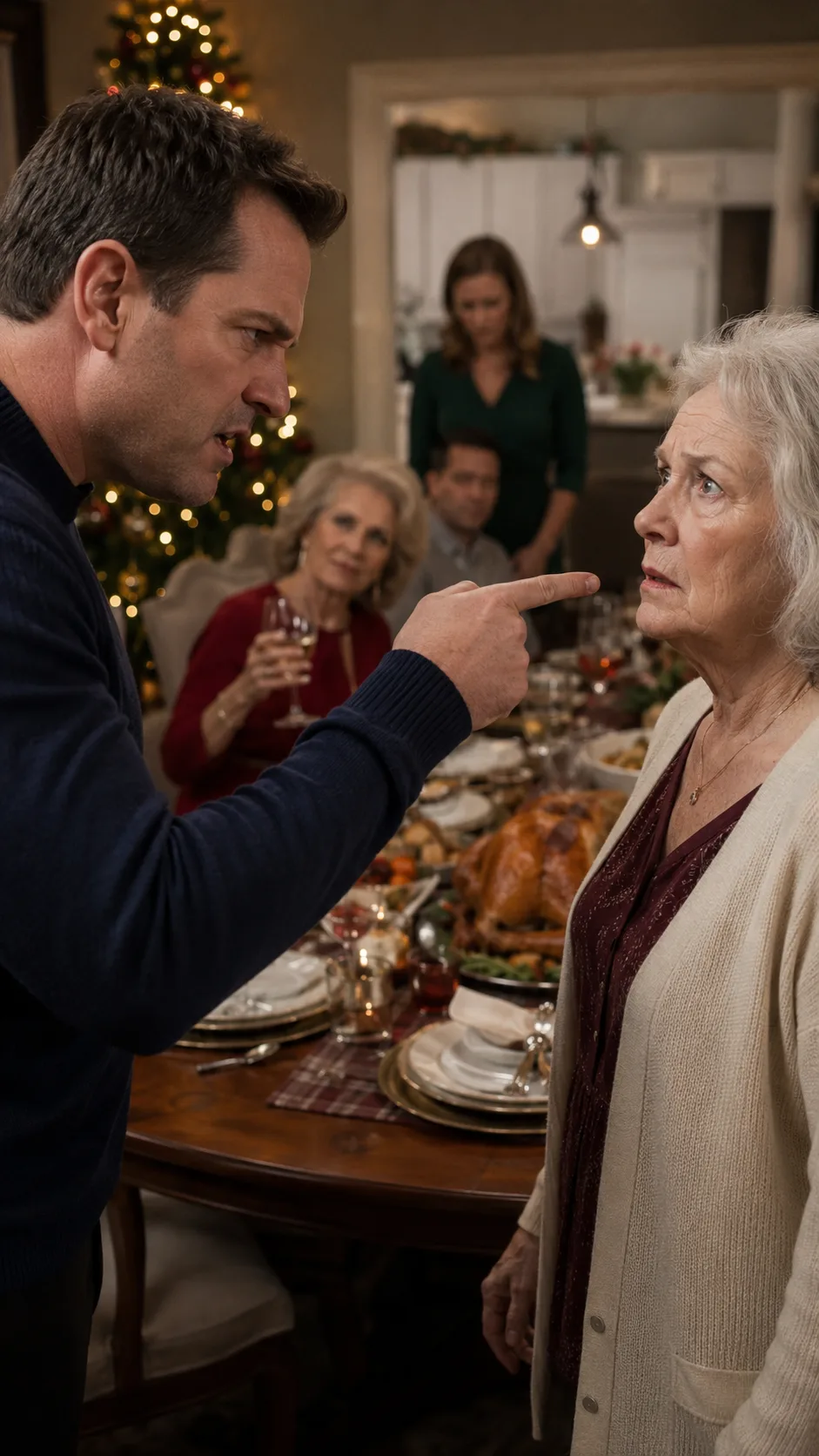
That Christmas evening, Brandon believed he had taken my seat.
He never realized he had given me back my voice.
THE END.
Chapter complete
You have reached the end of this chapter.
Continue reading
A few more worlds to get lost in after this chapter.