My sister turned our Maine family vacation into her own private party, left my diabetic mother without emergency insulin, then called me controlling in front of everyone — so I packed my bag, walked out, and let them finally discover what I had been carrying alone.
Chapter 1
THE VACATION WHERE RESPONSIBLE EMMA FINALLY PUT DOWN THE LOAD
4,121 words
The first text hit my phone at 7:12 the next morning.
“You ruined our vacation.”
Before I could even process it, another appeared.
“Mom is crying because of you.”
Then a third.
“Hope you’re proud of yourself, Emma.”
I stared at the glowing screen from a cheap roadside inn thirty miles from the lake cabin, feeling like I’d woken up inside someone else’s version of reality.
Missed calls.
Angry texts.
Voicemails I couldn’t bring myself to play.
According to every message, there was only one villain in this story.
Me.
Not my older sister Melissa, who had spent the week disappearing with strangers she met at a dock.
Not Dad, who had spent thirty-three years avoiding conflict with Melissa because enabling her was easier than confronting her.
Not even Mom, who had taught me so young to be the “easy daughter” that I never realized how heavy the role would
become.
No.
Apparently, I had destroyed everything.
Emma. Twenty-nine. Accountant in Hartford.
Responsible Emma.
Organized Emma.
The daughter who booked the cabin, planned the meals, packed the medications, researched the closest hospitals, printed backup directions, and managed Mom’s blood sugar schedule like a second job because her type 2 diabetes had become unpredictable.
The trip had been my idea for one reason.
Mom needed rest.
One peaceful week in Maine.
Dad fishing.
Mom reading on the deck.
Melissa and I maybe remembering how to be sisters without the usual tension hanging between us.
That was the fantasy.
Reality started cracking before we even left Connecticut.
Melissa was supposed to meet us at my parents’ house at eight.
By then, I had already packed the cooler, checked Mom’s medication bag three times, and placed her emergency insulin inside a labeled pouch.
Melissa arrived at 9:10 wearing enormous sunglasses, holding an iced
coffee, and dragging enough luggage for an international vacation.
“Sorry,” she said. “I couldn’t decide which shoes to bring.”
Dad laughed.
Mom smiled because Melissa had actually shown up.
I said nothing.
That was my job.
Say nothing.
Fix everything.
The cabin itself was gorgeous—towering pines, a wide wooden deck, sunlight sparkling across the lake.
For one dangerous moment, I believed the week might actually be okay.
Then Melissa walked inside, saw the bedroom overlooking the lake, and immediately claimed it.
Dad turned to me.
“Emma, you don’t mind taking the little room in the back, right?”
It sounded like a question.
It wasn’t.
So I carried my suitcase into the bedroom overlooking the driveway.
That evening, I made chicken and vegetables while Dad grilled and Melissa spent most of sunset taking pictures of herself outside.
After dinner, Mom squeezed my hand.
“This was such a wonderful idea.”
Across the
table, Melissa beamed as if the compliment belonged to her.
I swallowed that too.
The next morning, I made whole-grain pancakes with berries because Mom could safely eat them if we controlled the syrup.
Melissa slept until almost ten.
By the time she emerged with perfect hair and spotless white sneakers, we’d missed the cool morning weather for the short hike I had planned.
Halfway down the trail, Mom started breathing heavily.
I stopped beside a fallen log and handed her water.
Melissa rolled her eyes.
“God, Emma. Let her enjoy her vacation without pretending you’re her nurse every five minutes.”
The words I wanted to say burned behind my teeth.
Someone has to.
But I stayed quiet.
Then came the third morning.
Melissa disappeared before breakfast.
She took Dad’s SUV without asking.
No note.
No call.
No explanation.
We had a boat tour booked that morning—the activity Mom had been most excited about because it required almost no walking.
Dad went outside looking for the keys.
Gone.
Then Mom opened the refrigerator.
“Emma,” she said quietly, “where’s my backup insulin?”
My stomach dropped.
The insulin was in the cooler.
The cooler was in the trunk.
The trunk was in the SUV.
And Melissa had the SUV.
Dad called her again and again.
Straight to voicemail.
I canceled the boat tour.
We lost the deposit.
Then I paid for a water taxi across the lake and rushed Mom into town so I could get emergency medication from a small pharmacy before her blood sugar became dangerous.
Melissa returned around four.
Shopping bags in both hands.
New sun hat on her head.
“My phone died,” she announced casually.
I told her everything.
The insulin.
The canceled tour.
The lost money.
The water taxi.
The pharmacy.
The fact that I had spent hours terrified something might happen to our mother.
For half a second, guilt crossed Melissa’s face.
Then she reached into a shopping bag.
“But look what I found for Mom! Isn’t this scarf adorable?”
And just like that, she tried to erase the entire day.
Dad helped her.
“What’s done is done,” he said. “Let’s not spoil the rest of the afternoon.”
The next day, I tried one more time.
I planned a picnic at a quiet cove near the cabin. Shade for Mom. Almost no walking. Nothing complicated.
For once, Melissa was actually on time.
Then she smiled and announced she’d invited three people she’d met at the dock.
Jake.
Troy.
Aubrey.
They arrived by boat carrying beer and homemade liquor, already laughing loud enough to make people across the water stare.
Within twenty minutes, Jake was lecturing Mom about replacing diabetes medication with “natural supplements.”
Troy threw a Frisbee over the picnic table and knocked food everywhere.
Melissa laughed.
Then Mom’s face went pale.
Her blood sugar was dropping.
“We need to go back,” I said.
Melissa sighed dramatically.
“You’re overreacting again.”
Then Troy suggested everyone continue drinking at our cabin.
“No,” I said.
“Yes,” Melissa said immediately.
Dad hesitated.
That was all it took.
By six o’clock, three strangers were drinking on our deck while music blasted through a portable speaker and my exhausted mother tried to rest in her bedroom.
I was in the kitchen making dinner when I heard Melissa laughing outside.
“Emma will make something for everybody,” she told them. “She loves being the house mother. It’s basically her entire personality.”
Something inside me went completely still.
Not angry.
Not loud.
Still.
The way glass seems perfectly calm one second before it shatters.
I walked onto the deck.
Melissa lounged in a chair with a drink in her hand.
Jake had his feet on the railing.
Troy was opening another beer.
Dad sat in the corner, visibly uncomfortable.
Doing absolutely nothing.
“Your friends need to leave,” I said.
Melissa stared at me.
Then laughed.
“Oh my God. Saint Emma has arrived.”
“Mom isn’t feeling well. They’re drunk, they’ve been disrespectful, and I’m not cooking dinner for them.”
Troy smirked.
“Wow. Uptight much?”
Melissa shot to her feet.
“You don’t get to decide who can be here! This isn’t your cabin.”
“No,” I said, my voice strangely calm. “But I reserved it. I planned this trip. I packed Mom’s medication. I made the meals. I canceled the boat tour after you disappeared with the SUV. I paid for the emergency insulin. I’ve spent this entire vacation making sure Mom stays safe while you’ve treated it like spring break.”
Silence.
Complete silence.
For once, nobody laughed.
Melissa’s eyes filled with tears.
But I knew those tears.
They weren’t grief.
They were strategy.
She turned toward our parents.
“Are you seriously going to let her speak to me like this?”
Dad opened his mouth.
And I already knew what he was about to say.
Emma, enough.
Emma, let it go.
Emma, be the bigger person.
But before he could get the words out, Mom appeared in the doorway.
She looked smaller somehow.
Paler.
One hand gripped the doorframe.
“I am not fine,” she said.
Her voice was quiet.
But every person on that deck heard it.
“I haven’t been fine for months.”
Melissa froze.
Mom looked at Dad.
Then Melissa.
Then finally at me.
“This vacation was supposed to give me time to rest,” she said, her voice trembling. “Instead, all I’ve done is watch Emma carry everything while the rest of us let her.”
Nobody moved.
Then, across the darkening lake, the low growl of a boat engine broke the silence.
Getting louder.
Getting closer.
Melissa’s phone lit up in her hand.
She looked down at the screen.
Her friends were back at the dock.
And that was the moment I turned toward the little bedroom in the back, reached for my suitcase, and realized I was finally about to do the one thing nobody in my family ever believed Responsible Emma would dare to do...
I packed faster than I thought possible.
Behind me, the deck had gone completely silent. Even Melissa’s friends seemed to understand that something had changed.
“Emma, where are you going?” Dad asked as I dragged my suitcase into the hallway.
“Somewhere I’m not responsible for everyone.”
Melissa followed me inside. “Seriously? You’re leaving because of one argument?”
I stopped.
“One argument?” I said. “Mom nearly went without insulin because you took the car. I’ve cooked, planned, paid, fixed every problem, and somehow I’m still the difficult one.”
For once, Melissa had no clever response.
Mom stepped closer, tears filling her eyes.
“Emma… I’m sorry.”
Those three words almost broke me.
I wanted to stay. I wanted to believe an apology could erase years of being the dependable daughter who never got to fall apart.
But then Dad said quietly, “Maybe we should all calm down and talk tomorrow.”
There it was again.
Tomorrow.
Later.
Anything except dealing with the truth now.
So I picked up my suitcase.
As I reached the front door, Mom suddenly called my name.
I turned around.
She was holding something in her shaking hand—something I had never seen before.
And when Melissa saw it, every bit of color disappeared from her face.
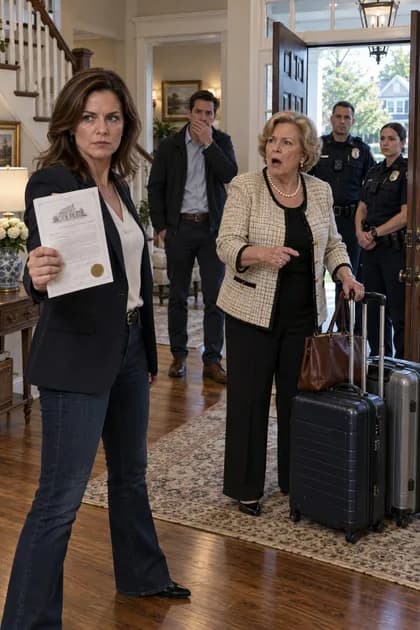
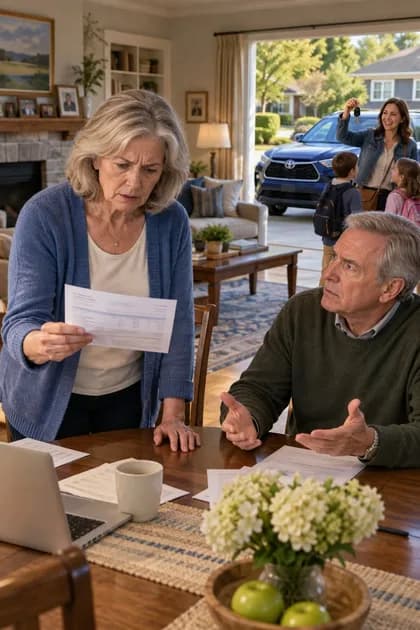
It was a credit card statement.
Not one page.
Six.
Folded together so many times the creases had gone soft.
Mom held them against her chest.
“Tell him,” she said.
Melissa stared at her.
“Mom.”
“Tell your father.”
Dad looked from one of them to the other.
“Tell me what?”
Melissa’s face hardened.
It was subtle, but I saw it happen.
The tears disappeared.
Her chin lifted.
The same transformation I had watched my entire life whenever sympathy stopped working.
“This has nothing to do with Emma leaving,” she said.
Mom laughed once.
It was a terrible little sound.
“No. It has everything to do with why I’m tired.”
Dad took the pages from her.
I watched his eyes move down the first statement.
Then the second.
His mouth slowly opened.
“What is this?”
Melissa folded her arms.
“You know Mom added me to that card.”
“As an authorized user for emergencies,” Mom said.
Dad looked at the total again.
“Almost ten thousand dollars?”
Nobody spoke.
Even the music outside had stopped.
Mom leaned against the wall.
“Six months ago, Melissa called me crying because she was behind on rent. She said work had been slow. I added her to one card because she promised she’d use it for groceries and emergencies until she got caught up.”
Melissa snapped, “I was going to pay it back.”
Mom pointed toward the statement in Dad’s hand.
“Then explain the boutiques.”
Melissa said nothing.
“The restaurants.”
Silence.
“The cash advances.”
Her jaw tightened.
Then Mom’s eyes landed on the shopping bag still sitting beside the kitchen island.
“And the scarf.”
I looked at Melissa.
The adorable scarf.
The one she had presented like a peace offering after disappearing with Mom’s insulin for most of a day.
Mom had paid for it.
Melissa noticed me looking at the bag.
“It was a gift.”
“With my own card,” Mom said.
“I didn’t realize I used that one.”
“You used it eleven times this week.”
Dad looked up sharply.
“This week?”
Melissa turned on him.
“Oh, please. Don’t act like I robbed a bank. Mom gave me the card.”
“For groceries,” Mom said.
“I was struggling.”
“You were buying drinks for people you met two days ago.”
Melissa’s face flushed.
“At least I know how to enjoy my life.”
That did it.
Mom closed her eyes.
Dad looked like someone had slapped him.
And I suddenly understood why Melissa had gone pale when she saw the statement.
Not because there was some dramatic secret crime.
Because she knew the story she had been telling everyone was about to collapse.
Melissa had spent months presenting herself as carefree, successful, independent.
And Mom had been quietly financing the illusion.
Dad lowered the papers.
“How long have you known?”
Mom looked ashamed.
“Three months.”
“Three months?”
“I kept thinking she would fix it.”
Melissa jumped in immediately.
“I told you I would.”
Mom shook her head.
“Every time I asked, you told me one more week. Then you cried. Then you said I was making you feel like a failure. Then you reminded me that Emma had a stable job and you didn’t.”
My head snapped toward her.
“What?”
Melissa looked away.
Mom’s voice cracked.
“She said we’d always helped you more because you were responsible. That we owed her some patience.”
For a few seconds, I couldn’t speak.
It was almost impressive.
Even my competence had somehow been turned into a reason Melissa deserved more.
Dad rubbed a hand over his face.
“And you didn’t tell me because...”
“Because I knew exactly what you’d say.”
He stared at her.
Mom’s eyes filled.
“You’d say, ‘Give her time.’”
Dad’s hand dropped.
Nobody had to explain the rest.
Because we all knew she was right.
I looked at him.
For years, I had thought Dad’s favorite phrase—let it go—meant he was peaceful.
Suddenly I saw it for what it was.
A bill.
He handed every conflict to someone else, usually me, then congratulated himself for keeping the family together.
Melissa turned toward me.
“So what? Now you get to stand there looking superior because I needed help?”
“No.”
My voice surprised even me.
“I’m standing here because I’m leaving.”
She blinked.
“What?”
“This doesn’t change my decision.”
Mom looked at me quickly.
I stepped closer to her.
“I’m glad you told the truth. I’m glad Dad finally knows. But I am not staying here to organize the fallout.”
Dad frowned.
“Emma, nobody’s asking you to—”
I looked at him.
He stopped.
Because we both knew that eventually, he would.
Maybe not tonight.
Maybe tomorrow morning.
But soon there would be statements to review.
Amounts to total.
A repayment plan to calculate.
A conversation to mediate.
A pharmacy run.
Breakfast.
Transportation.
Someone would say, Emma is good with numbers.
Emma knows what to do.
Emma can handle it.
I picked up my suitcase.
“No.”
Dad looked confused.
I almost smiled.
“I know you didn’t ask yet. I’m answering early.”
Mom pressed her lips together, fighting tears.
Melissa scoffed.
“This is unbelievable. You’re really making everything about you.”
And for the first time in my life, I didn’t defend myself.
I just opened the front door.
Cold lake air swept into the hallway.
Behind me, Dad said, “Melissa.”
His voice sounded different.
She turned.
“Give me the SUV keys.”
Her mouth fell open.
“What?”
“The keys.”
“I was going to go back out.”
“No.”
She laughed as if he were joking.
He wasn’t.
“Your friends need to leave. You’re not taking my car anywhere tonight.”
“Dad—”
“And tomorrow you and your mother are calling the card company.”
Melissa stared at him.
Then at Mom.
Then at me.
“You did this.”
There it was.
The oldest trick in our family.
If Melissa faced a consequence, somebody else had caused it.
I rested my hand on the door.
“No,” I said. “You did.”
Then I walked out.
I didn’t have a dramatic destination.
No secret boyfriend waiting in a luxury hotel.
No friend with a lake house.
No brilliant revenge plan.
I drove thirty miles until I found a roadside inn with a VACANCY sign glowing red beside the highway.
The room smelled faintly like lemon cleaner.
The comforter was ugly.
The air conditioner rattled every twenty minutes.
It was perfect.
Because nobody needed anything from me there.
I took a shower.
I ate crackers from the vending machine.
Then I sat on the edge of the bed and cried harder than I had cried in years.
Not because Melissa had won.
Not because my vacation was ruined.
Because I finally understood how exhausted I was.
Sometime after midnight, I turned my phone face down and fell asleep.
At 7:12 the next morning, the first text arrived.
“You ruined our vacation.”
Then another.
“Mom is crying because of you.”
Then:
“Hope you’re proud of yourself, Emma.”
And that was how I ended up staring at my phone in that cheap roadside inn, feeling like I had woken inside someone else’s version of reality.
Except now I knew what had happened before those messages.
So I looked more carefully.
The first was from Melissa.
So was the second.
And the third.
Mom had not texted me.
Dad had not texted me.
Melissa had simply appointed herself spokesperson for the entire family.
Again.
There were nine missed calls.
Seven were hers.
One was Dad’s.
One was Mom’s.
I opened the family group chat.
My fingers hovered over the keyboard.
Old Emma would have written paragraphs.
Receipts.
Explanations.
A complete defense arranged chronologically with supporting evidence.
I was an accountant.
I knew how to prove a case.
Instead, I typed four sentences.
I love all of you, but I am done being blamed for problems I did not create. Mom’s medication is not my sole responsibility, Melissa’s debt is not mine to manage, and Dad’s refusal to confront conflict is not mine to compensate for. I will talk when everyone is ready to discuss their own choices without making me responsible for the consequences.
I read it once.
Then pressed send.
Melissa started typing almost immediately.
I muted the conversation.
My hands shook.
But the room stayed quiet.
Ten minutes later, Mom called.
I almost let it ring.
Then I answered.
“Hi.”
For a moment, neither of us spoke.
Then Mom said, “I packed my own medication bag this morning.”
I closed my eyes.
“That’s good.”
“Your father checked it with me. Not because you told him to. Because we should have been doing it together all along.”
Something loosened in my chest.
Mom continued.
“We called the card company. Melissa has been removed as an authorized user.”
I said nothing.
“And your father is driving her home today.”
“Okay.”
“She’s furious.”
“I figured.”
Mom gave a small, tired laugh.
Then her voice broke.
“Emma, I need to apologize for something bigger than this week.”
I stared at the faded wallpaper across from the bed.
“When you were little,” she said, “you were easy. At least that’s what we called you. You remembered your homework. You packed your own bag. You didn’t throw tantrums. Your sister needed more attention, so we gave it to her.”
I swallowed.
Mom continued.
“And every year, we rewarded your independence by giving you more responsibility.”
The words hit harder than I expected.
“We told ourselves we trusted you,” she whispered. “But sometimes what we really meant was that we knew you wouldn’t complain.”
I wiped my face.
“Mom.”
“I’m not asking you to tell me it’s okay.”
That stopped me.
Because that was exactly what I had been about to do.
She knew me too well.
“I just want you to know I see it now.”
Outside my window, a delivery truck rumbled into the parking lot.
Morning sunlight slipped through the curtains.
For once, I didn’t rush to make her feel better.
“Thank you,” I said.
Two words.
Enough.
Dad called that afternoon.
His apology was uglier.
Less graceful.
Probably more difficult.
“I failed you,” he said.
I sat in my car outside a coffee shop, listening.
“I thought avoiding fights kept this family peaceful.”
He exhaled.
“It didn’t. It just meant you and your mother dealt with things I didn’t want to deal with.”
I looked through the windshield.
“Yeah.”
“I’m sorry.”
No excuse.
No request for forgiveness.
No but.
That mattered.
He told me he had reimbursed the money I spent on the emergency pharmacy trip and water taxi.
He had also covered the canceled boat-tour deposit.
Then he said, “Melissa asked me to have you look over the credit card statements.”
I laughed.
I couldn’t help it.
Dad did too, but his laugh sounded embarrassed.
“I told her no.”
That might have been the first real sign I believed.
“What are you going to do?” I asked.
“Your mother and I will handle our finances. Melissa will handle hers.”
Simple.
Obvious.
Apparently revolutionary.
I drove back to Hartford that afternoon.
Alone.
The Maine trip ended three days early for everyone else.
Melissa did not apologize.
Not then.
For the next two weeks, she sent variations of the same message.
You embarrassed me.
You turned Mom against me.
Dad is acting insane because of you.
I answered none of them.
Eventually, they stopped.
A month passed.
Then six weeks.
One Tuesday night, a message appeared.
No accusation.
No emojis.
Just:
I made the first payment to Mom today.
I stared at it for a long time.
A second message followed.
I was angry at you because it was easier than being embarrassed about myself.
Then:
I still think you can be controlling sometimes.
I actually laughed.
Of course she did.
But the final message surprised me.
I also know I gave you reasons to think everything would fall apart if you weren’t controlling it.
I didn’t forgive her because one text suddenly erased everything.
That would have been another version of the same old pattern.
But I answered.
Thank you for saying that.
We started slowly after that.
Very slowly.
Coffee instead of weekends away.
An hour together instead of entire holidays.
If Melissa insulted me and called it a joke, I left.
If Dad tried to hand me a conflict that belonged to him, I handed it back.
If Mom asked for help, I sometimes said yes.
And sometimes I said, “Can Dad handle that?”
The first few times, guilt followed me around for hours.
Then for minutes.
Then barely at all.
Three months after Maine, Mom invited me over for Sunday lunch.
When I arrived, Dad was in the kitchen burning chicken.
Mom was sitting at the table with her medication bag beside her.
Not my bag.
Hers.
She smiled when she saw me.
“Your father insists he can cook.”
From the stove, Dad shouted, “I can cook.”
Smoke drifted toward the ceiling.
I looked at Mom.
She looked at me.
And we both started laughing.
Melissa arrived twenty minutes later carrying salad.
Actually carrying something useful.
She put it on the table and glanced at me.
“No friends from the dock.”
“Good start,” I said.
She rolled her eyes.
But she smiled.
Nothing was magically fixed.
Melissa still hated being wrong.
Dad still sometimes tried to smooth things over too quickly.
Mom still apologized when she asked for perfectly reasonable things.
And I still felt the old reflex whenever something went wrong.
Fix it.
Organize it.
Carry it.
But now I recognized the feeling before obeying it.
That was the difference.
Later that afternoon, Mom asked whether I wanted to see the latest credit card statement.
I felt my shoulders tighten automatically.
Then she smiled.
“Never mind. That’s between your father, your sister, and me.”
She placed it back inside a drawer.
I stood there for a second.
Then I smiled too.
On my drive home, I thought about that roadside motel in Maine.
The ugly comforter.
The rattling air conditioner.
The vending-machine crackers.
At the time, leaving had felt like the most selfish thing I had ever done.
Now I understood it differently.
I had not abandoned my family.
I had simply stopped standing between them and the consequences of their own choices.
For years, they had called me responsible.
What they really meant was reliable enough to overload.
Strong enough not to complain.
Easy enough not to protect herself.
I still loved my family.
I still helped them.
I still kept lists.
I still arrived early.
I was still Emma.
But I was no longer the emergency plan for four adults.
And once I put that weight down, something unexpected happened.
They finally learned how heavy it had been.
THE END.
Chapter complete
You have reached the end of this chapter.
Continue reading
Find your next story
A few more worlds to get lost in after this chapter.