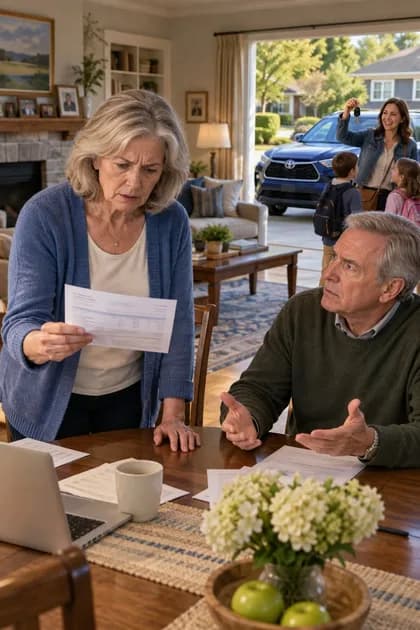
The moment my mother pushed a $12,000 Hawaiian cruise itinerary across the coffee shop table, I realized something that should have terrified me years ago.
Chapter 1
The moment my mother pushed a $12,000 Hawaiian cruise itinerary across the coffee shop table, I realized something that should have terrified me years ago.
My family didn’t see me as a daughter.
They saw me as a resource.
Rain crawled down the floor-to-ceiling windows of the Seattle café while Mom sat across from me, perfectly composed, one manicured finger resting on the glossy brochure. Beside her, my father checked his gold watch as if this conversation were already taking longer than necessary.
Apparently, everyone had made plans for the next two weeks.
Everyone except me.
“Lauren needs a break,” Mom said casually, tapping the brochure. “You’ll pick up Mia and Leo on Friday.”
I stared at her.
“Friday?”
“Yes. Lauren has plans.”
“So do I.”
Mom’s expression tightened, as though I had said something unreasonable.
Dad barely looked up.
Five years earlier, that sentence might have crushed me.
That afternoon, it barely registered.
Maybe because I’d heard different versions of it my entire life.
My older sister, Lauren, was always the one everyone rushed
to rescue.
Lauren needed expensive tutors? Mom and Dad found the money.
Lauren wanted a huge wedding? They made it happen.
Lauren wanted the polished house in Belleview? Somehow, they helped.
When Lauren had children, Mia and Leo went to private preschool.
Whenever Lauren became overwhelmed, the whole family reorganized itself around her.
I was different.
I was the easy daughter.
The dependable one.
I earned the grades.
Won the scholarship.
Built my career.
Paid my own bills.
And somewhere along the way, I learned that needing nothing was the easiest way to keep everyone happy.
So five years earlier, when Dad called and told me his pension had been cut and they were in danger of losing their house, I didn’t hesitate.
I did what the dependable daughter was supposed to do.
I opened my bank account.
Set up an automatic transfer.
$2,500.
Every month.
For five years.
I
never questioned it.
Not once.
Because I believed that money was keeping my parents safe. I thought I was protecting their retirement, helping with the mortgage, making sure the people who raised me would never have to fear losing their home.
And now Mom was sitting across from me wearing a diamond tennis bracelet, pushing a luxury Hawaiian cruise brochure in my direction, while informing me that I also owed the family two weeks of unpaid childcare because I was “the single one.”
I lowered my eyes to the photograph on the brochure.
White beaches.
Blue Hawaiian water.
Ocean-view suites.
Then I started doing the math.
Sixty months.
Two thousand five hundred dollars every month.
$150,000.
I looked back at my parents.
For once, I didn’t argue.
I didn’t cry.
I didn’t explain the importance of my career.
I didn’t ask them to respect my time.
“I see,” I said
quietly.
Dad leaned forward.
“We’re not finished discussing the drop-off schedule.”
“We are,” I said.
I stood, left a $50 bill beside my untouched drink, and walked straight out into the Seattle rain.
That evening, alone in my condo, I opened my banking portal.
There it was.
The recurring transaction I had barely thought about in years.
Richard and Brenda Gemma.
First of the month.
Active.
$2,500.
I clicked it.
Then:
Edit schedule.
Delete recurring transaction.
A warning box appeared.
Are you sure?
For five years, that money had left my account automatically.
For five years, nobody had thanked me.
For five years, I had assumed it was keeping my parents’ lives from falling apart.
I clicked yes.
That was it.
No speech.
No angry family group text.
No dramatic announcement.
One quiet click.
My parents’ flight to Honolulu was scheduled for Friday morning.
The transfer they counted on was supposed to arrive Thursday.
They had no idea what that timing was about to mean.
Friday morning, I was sitting at my desk in downtown Seattle watching infrastructure code scroll across three monitors when my phone started vibrating.
Mom.
I ignored it.
Seconds later:
Mom.
Again.
Then again.
I flipped the phone facedown.
Eventually, a voicemail appeared.
I put in one earbud and pressed play.
“Avery, answer your phone right now. We’re at the ticketing counter and our cards are frozen. Your transfer didn’t clear. Call your bank and fix this immediately. We’re going to miss our flight. Where is our money?”
I listened to it twice.
Not:
Are you okay?
Not:
Did something happen?
Not even:
Why didn’t the transfer come through?
Just:
Where is our money?
Later, I learned exactly what happened at Seattle-Tacoma International Airport.
My parents had arrived at the premier check-in counter looking like people who expected every door to open automatically.
Designer luggage.
Mom in a silk scarf.
Dad in a navy blazer.
Platinum card ready.
Then the baggage fee came up.
$800.
Dad handed over the platinum card.
Declined.
He frowned and gave the agent another card.
Declined.
Behind them, the line grew restless.
Dad apparently told the ticketing agent the machine must be broken.
The agent remained calm.
Mom opened their banking app.
And that was when she saw it.
Their balance was negative.
The deposit she had treated like a permanent law of nature simply wasn’t there.
By that evening, I had routed both of their numbers straight to voicemail.
I was making dinner when the intercom in my condo buzzed.
“Avery?”
The concierge sounded uncomfortable.
“Your sister is downstairs.”
Of course she was.
When I stepped into the marble lobby, Lauren was pacing near the entrance in a beige trench coat, gripping a designer handbag so tightly her knuckles had turned white.
She still had that polished Belleview confidence.
But cracks were beginning to show.
The moment she saw me, she stormed over.
“You’re not answering your phone.”
“I know.”
“Mom is having a nervous breakdown. They missed their flight, and now my entire weekend is ruined because you decided to throw a tantrum.”
There it was.
Her weekend.
Not our parents.
Not me.
Lauren.
Then she revealed why she had really come.
She had a wellness retreat in Sedona.
And she expected me to take Mia and Leo immediately.
“I’m not taking your children,” I said.
Her eyes hardened.
“You sit at a desk. You don’t have a real family. Mom and Dad always take the kids when I need a break. You’re going to transfer the money back, get them another flight, and then you’re taking my kids upstairs.”
Something inside me went completely still.
For years, I had tried to keep the peace.
That version of me was gone.
“I will not be bullied into providing free childcare,” I said. “And I will not continue funding our parents’ luxury vacations.”
Lauren froze.
Then she lost control.
“Luxury vacations?”
Her voice echoed across the marble lobby.
The concierge stopped typing.
Lauren stepped closer and jabbed a finger toward me.
“Cruises?” she shouted. “Do you honestly think this is about a vacation?”
I stared at her.
Lauren’s anger disappeared almost as quickly as it had arrived.
Her face changed.
Like she had realized she’d already said too much.
But it was too late.
The next sentence came out before she could stop herself.
“How are Mom and Dad supposed to pay for Greg’s car lease now?”
Silence.
Absolute silence.
Even the concierge behind the desk had stopped moving.
I didn’t answer.
I couldn’t.
I just stared at my sister while that one sentence began dismantling everything I thought I knew about the last five years.
Greg.
Lauren’s husband.
His car lease.
My money.
The $2,500 I had faithfully transferred every month because my father claimed his pension had been cut.
The $150,000 I thought had been protecting my parents from losing their home.
Suddenly, the Hawaiian cruise wasn’t the real story.
The missed flight wasn’t the real story.
Even Lauren standing in my lobby demanding free childcare wasn’t the real story.
Because my money hadn’t simply been helping Mom and Dad survive.
It had been going somewhere else.
And judging by the look of pure panic spreading across Lauren’s face, Greg’s car lease was only the first thing I was about to discover.
Lauren’s face went pale.
For the first time that night, she had nothing to say.
“Greg’s car lease?” I repeated slowly. “What does Greg’s car have to do with the money I send Mom and Dad?”
She looked toward the concierge, then lowered her voice.
“Avery, this isn’t the place.”
“Then tell me somewhere else.”
She grabbed my arm, but I pulled away.
That was when my phone buzzed.
Dad.
This time, instead of ignoring it, I answered.
“Avery,” he said sharply, “whatever Lauren told you, she doesn’t understand the situation.”
I stared straight at my sister.
“So there is a situation.”
Silence.
Then Dad sighed.
The truth came out in pieces.
My monthly $2,500 hadn’t just covered their mortgage. Mom and Dad had been quietly paying Lauren’s expenses for years—Greg’s luxury car lease, part of their mortgage, private school bills, credit cards, even family vacations.
And apparently, everyone knew.
Everyone except me.
My hands went cold.
“You told me you were going to lose the house.”
“We needed help,” Dad replied.
“No,” I said. “Lauren needed help.”
Then Lauren suddenly snapped.
“You think you’re better than us because you have money?”
Before I could answer, another notification appeared on my phone.
It was an email from my bank.
I opened it—and froze.
Someone had tried to access my account.
Three times.
From my parents’ home.
I looked at Lauren.
“Did you try to log into my bank account?”
Her anger disappeared.
“What?”
“Three login attempts. From Mom and Dad’s house.”
“I didn’t.”
I raised the phone to my ear again.
“Dad?”
He said nothing.
That silence answered before he did.
Then I heard my mother in the background.
“Give me the phone.”
There was a rustling sound.
“Avery, nobody was stealing anything.”
My stomach tightened.
“So you did try.”
“We were checking.”
“Checking what?”
“The transfer.”
I almost laughed.
Not because anything was funny.
Because I couldn’t believe she had said it as though it made perfect sense.
“You tried to log into my personal bank account to check why I didn’t send you money.”
“You’re making this sound criminal.”
“I’m repeating what you just told me.”
“You gave us that information years ago.”
I closed my eyes.
Years earlier, when I had first set up the transfer, I had logged into my bank from my parents’ desktop while Dad sat beside me. Apparently Mom had written down the username.
The password they tried was old.
That was why they hadn’t gotten in.
It was also the only reason they hadn’t gotten in.
“We would never take money without asking you,” Mom said.
“You just tried to enter an account you knew you didn’t have permission to enter.”
“That is not the same thing.”
“It is to me.”
Dad got back on the line.
“Stop being dramatic. We panicked because you canceled something we depend on without warning.”
The sentence landed harder than the shouting.
Something we depend on.
My paycheck.
Their dependence.
As if at some point, without discussion, my earnings had become infrastructure for four adults who had all built lifestyles larger than they could afford.
I looked at Lauren.
She wasn’t even pretending anymore.
“Were you expecting the transfer Thursday?” I asked her.
Her jaw tightened.
“I knew Mom said money was coming.”
“For Greg’s car?”
“And other things.”
“What other things?”
She folded her arms.
“The kids’ tuition is due. Our mortgage went up. Greg had a slow quarter.”
There was almost accusation in her voice.
As though those facts created an invoice with my name on it.
I turned away from her and spoke into the phone.
“Listen carefully. Nobody logs into any account of mine again. Nobody uses old passwords. Nobody calls my bank pretending to be me. Nothing.”
Mom scoffed.
“Avery—”
“If there is another attempt, I will treat it as unauthorized access. Because that is what it is.”
Dad’s tone changed.
Not softer.
Colder.
“If you do this, you are going to hurt people.”
I looked back at Lauren, standing in my condo lobby in an expensive trench coat while worrying about her husband’s luxury car and her weekend retreat.
“No,” I said. “I’m going to stop paying for decisions I didn’t make.”
Then I hung up.
Lauren stared at me.
“You can’t just walk away.”
“I can walk upstairs.”
“Avery.”
“I’m serious.”
“What am I supposed to tell Greg?”
“Tell him the truth.”
Her face hardened.
“And what truth is that?”
“That your sister isn’t making his car payment anymore.”
She flinched.
I walked toward the elevator.
Behind me, Lauren called my name.
I didn’t turn around.
Inside my condo, I locked the door, opened my laptop, and did what I should have done the moment that security email arrived.
Working in infrastructure had taught me that panic was useless after a credential compromise.
Procedure mattered.
I changed my password.
Revoked every remembered device.
Enabled a new authentication method.
Called the bank’s fraud department.
The representative confirmed that all three attempts had failed.
No one had entered the account.
No money had moved.
I asked them to place an additional security note on my profile and disable any old recovery methods that might still be attached to information my parents knew.
Then I froze my credit files.
Not because I had proof anyone intended to open something in my name.
Because five minutes earlier, I would have sworn my mother would never try to access my bank account either.
That night I barely slept.
Not from fear.
From arithmetic.
$150,000.
Every time I closed my eyes, another memory rearranged itself.
Lauren’s enormous wedding.
The kitchen renovation at my parents’ house.
Greg’s new SUV.
The private school photographs Mom loved posting online.
The family trip to Cabo I had skipped because I was busy with a major rollout.
The year Dad told me they couldn’t afford to replace their furnace—and three months later Mom appeared wearing that diamond bracelet.
I had explained every contradiction for them.
Maybe they used points.
Maybe Lauren paid.
Maybe Dad had saved.
Maybe the bracelet was fake.
Maybe.
Maybe.
Maybe.
When you trust people, you become frighteningly creative on their behalf.
The next morning, Dad emailed me.
The subject line read:
FAMILY OBLIGATIONS.
I opened it.
The message was three paragraphs long.
He told me parents sacrifice for children.
He told me Lauren had two young kids and “greater monthly pressures.”
He reminded me that I earned more than anyone else in the family.
Then came the sentence that finally made everything clear.
Your contribution was the fairest way to balance what each daughter had been given.
I stared at those words.
Balance.
They had taken from one daughter to fund the other and renamed it fairness.
I replied with five sentences.
If you want me to consider any future financial assistance, send me the complete records showing how the $150,000 I transferred was used. I want the mortgage records, the home-equity documents, and the account statements receiving my transfers. Do not redact payments to Lauren or Greg. Do not access any of my accounts again. Until I receive those records, there will be no further discussion about money.
I knew exactly what I was doing.
I had no intention of restarting the automatic transfer.
But they didn’t know that.
And if there was one thing my parents wanted more than privacy, it was the return of that $2,500.
Dad responded four hours later.
Sunday.
Our house.
Noon.
Lauren will be there.
When I arrived Sunday, there was no pot roast.
No coffee.
No attempt at warmth.
A thick accordion folder sat in the center of the dining table.
Mom was beside it, pale and furious.
Dad sat at the head of the table.
Lauren was across from him.
Nobody offered me a chair.
I pulled one out myself.
“Records?” I asked.
Dad pushed the folder toward me.
“You asked for transparency. There it is.”
I opened it.
The first document made my breath catch.
A home-equity line of credit.
Five years old.
Original balance: $92,000.
Borrowers: Richard and Brenda Gemma.
I looked at Dad.
“What was this for?”
His expression didn’t move.
“Expenses.”
“What expenses?”
Mom answered.
“Lauren’s house.”
Lauren looked down.
There it was.
The polished house in Belleview that Mom and Dad had somehow helped her buy.
Somehow had a number now.
My parents had borrowed against their own home to help cover Lauren’s down payment, wedding debt that had carried over, and moving expenses.
Months later, the payments had started hurting.
That was when Dad called me.
That was when he told me his pension had been cut.
I turned to the bank statements.
His pension deposits were right there.
Month after month.
They fluctuated slightly in the beginning.
They had never disappeared.
They had never been cut enough to explain what he told me.
I looked up.
“You lied.”
Dad’s mouth tightened.
“My retirement income changed.”
“Temporarily. By a few hundred dollars.”
“We had obligations.”
“You told me you were going to lose this house because your pension had been cut.”
“We could have fallen behind.”
“Because you borrowed ninety-two thousand dollars for Lauren.”
Mom slapped her palm against the table.
“She is your sister.”
I turned another page.
My $2,500 arrived on the first of each month.
Within days, pieces left.
$1,175 toward Greg’s vehicle lease.
A recurring payment toward school tuition.
Transfers to Lauren.
Credit-card payments.
A vacation deposit.
A landscaping bill at Lauren’s house.
And mixed between them, yes, payments toward my parents’ home-equity debt.
The deception was almost elegant.
Enough of my money touched my parents’ housing expenses that they could tell themselves they hadn’t completely lied.
Then they used the rest to finance Lauren.
Page after page.
Year after year.
I reached one statement where my transfer had arrived on Monday.
By Friday, $2,300 of it had left for expenses connected to Lauren’s household.
I tapped the paper.
“What did I pay for this month?”
Lauren stared at it.
“I don’t know.”
“Your mortgage. Greg’s car. The children’s school.”
“They’re your niece and nephew.”
“Yes.”
She looked relieved, as though that settled everything.
I continued.
“They are my niece and nephew. That does not make me their second parent.”
Mom leaned forward.
“You don’t understand what it costs to raise children.”
“No. But Lauren chose to have children. I didn’t choose to secretly finance them.”
Lauren’s chair scraped against the floor.
“Nobody forced you to send money.”
The room went completely still.
For once, my mother looked embarrassed.
I stared at my sister.
“You’re right.”
Lauren blinked.
Maybe she had expected me to argue.
I didn’t.
“You’re absolutely right. Nobody forced me. Dad lied to me, I believed him, and I volunteered because I thought my parents were scared of losing their home.”
Dad’s face darkened.
“I did not lie.”
I pulled the HELOC document from the folder and laid it beside the pension statements.
“You told me your pension was cut and the house was in danger. You left out that the danger came from borrowing against it for Lauren. Then when the original crisis passed, you kept taking the money.”
“We assumed you understood that family needs change.”
“How could I understand something nobody told me?”
Mom’s eyes filled with angry tears.
“You never needed what Lauren needed.”
That hurt.
Not because it was new.
Because it was finally spoken without disguise.
“I needed parents who didn’t turn my independence into a punishment.”
Mom recoiled.
“That’s ridiculous.”
“Is it?”
I pointed toward Lauren.
“When she struggles, you give her money.”
Then I pointed toward myself.
“When I don’t struggle, you take mine.”
Nobody answered.
I looked at Dad.
“You called that balance.”
He shifted in his chair.
“I called it family.”
“No. Family asks. Family tells the truth. Family doesn’t secretly decide that the child who worked hardest owes a tax to the child who spends the most.”
Lauren stood.
“You’ve always been jealous of me.”
I almost smiled.
That accusation would have worked when we were twenty.
Not anymore.
“Jealous of what?”
Her lips parted.
I continued.
“The mortgage Mom and Dad helped pay? The car they paid for? The vacations they subsidized? The retreat you expected me to babysit for?”
Her face reddened.
“You think because you have some tech job—”
“This has nothing to do with my job.”
“It has everything to do with it. You make more money than we do.”
“And you knew that money was mine.”
“We all contribute differently.”
I looked at the folder.
“Show me your contribution.”
Silence.
Lauren folded her arms.
“That’s not fair.”
For the first time that afternoon, I laughed.
Quietly.
Not cruelly.
Just because there was nothing else left to do with the absurdity.
Dad pushed his chair back.
“Enough. You have seen the paperwork. We have been transparent. Now restore the transfer and we will put this behind us.”
That was the moment I understood why they had agreed to show me everything.
They thought disclosure was a transaction.
They believed that once I saw exactly how badly they had used me, I would somehow become obligated to continue.
I closed the folder.
“No.”
Dad stared at me.
“What?”
“The transfer is not coming back.”
Mom went white.
“Avery.”
“You asked me to look at the truth. I did.”
Dad’s voice rose.
“Then what was the point of this?”
“The point was that I needed to know whether I was ending help because I was angry—or because the entire arrangement was dishonest.”
“And?”
“Now I know.”
Lauren stepped around the table.
“You’re going to blow up three households because you’re offended?”
“No. Your households are already financially unstable. My money was hiding it.”
“What happens to Mia and Leo?”
“They have two parents.”
“What happens to Mom and Dad?”
“They have pensions, equity, and choices.”
Dad slammed his palm down.
“What happens to this house?”
I held his gaze.
“That depends on whether you can afford it.”
His face changed.
For five years, that question had been mine to solve.
Now it belonged to him again.
Mom shook her head slowly.
“I cannot believe you would do this to us.”
I stood.
“That’s still the problem. You think me stopping is something I’m doing to you.”
I slid the folder back across the table.
“You borrowed against your house.”
I looked at Lauren.
“You accepted money you knew came from me.”
Then Dad.
“You lied about why you needed it.”
Then Mom.
“And when I stopped, you tried to get into my bank account.”
Her face hardened.
“We told you we were only checking.”
“And I’m telling you that was the last time.”
Dad pointed at the chair.
“Sit down.”
I picked up my purse.
“No.”
“Avery, I am your father.”
“Yes.”
“Then show some respect.”
I paused at the doorway.
“For five years, I showed trust. You treated it like permission.”
Nobody followed me when I left.
For the next month, the messages came in waves.
First anger.
Then guilt.
Then emergencies.
Greg’s lease payment was overdue.
Lauren might have to take Mia and Leo out of private school.
My parents’ credit-card minimums were higher than they expected.
The cruise company refused to refund every charge.
The home-equity payment was still due.
Each problem arrived in my inbox dressed like a crisis.
I answered none of them with money.
Eventually, something changed.
They started solving things themselves.
Greg returned the luxury SUV at the end of the lease instead of replacing it.
Lauren canceled the wellness retreat.
She and Greg reworked their household budget and told my parents they couldn’t keep accepting help.
The private school did not collapse because Mia and Leo eventually moved to a good public school.
The children survived.
So did Lauren.
My parents canceled two other trips they had quietly planned.
Mom sold several pieces of jewelry she rarely wore.
Dad met with a financial counselor.
Three months later, they listed the house.
Mom blamed me for that.
Dad did too, at first.
But the numbers were the numbers.
They had borrowed against a valuable home to subsidize an adult daughter, then built years of spending around money they did not earn.
Selling allowed them to clear the remaining home-equity debt and move into a smaller place they could actually afford on their retirement income.
They did not become homeless.
They did not starve.
Nobody’s life was destroyed.
They simply lost the luxury of having my salary quietly absorb the consequences of their choices.
As for the $150,000, I never got it back.
I thought about fighting over it.
Then I looked at the transfers.
I had authorized every one.
I had sent the money willingly based on a story I believed.
Recovering it would have meant years of conflict with no guarantee of recovering anything.
So I made a different decision.
I stopped paying for the past with my future.
Six months after that Sunday meeting, Dad asked me to have coffee.
Just him.
The request sat in my inbox for two days before I agreed.
We met at a small café nowhere near the one where the Hawaiian brochure had been pushed across the table.
He looked older.
Not ruined.
Just less certain of himself.
He didn’t bring paperwork.
He didn’t ask for money.
For several minutes, he stirred a coffee he wasn’t drinking.
Then he said, “I should have told you about the home-equity loan.”
I waited.
“And I should have told you when the original financial pressure eased.”
Still I said nothing.
He exhaled.
“Your mother and I kept telling ourselves that because the money helped the family, it was all right.”
“It wasn’t.”
“I know.”
It was the first clean apology I had received.
Not perfect.
Not complete.
But clean.
I nodded.
“I’m not restarting the transfers.”
“I know.”
“And neither of you ever gets access to my financial information again.”
“I know.”
I studied him.
“What about Mom?”
His mouth tightened.
“She isn’t ready to admit everything.”
“Then I’m not ready to pretend everything is fine.”
He nodded.
That was enough.
Not reconciliation.
Not yet.
Just a boundary neither of us could misunderstand.
Lauren and I barely spoke for almost a year.
When we finally did, it was at Mia’s birthday.
She approached me while the kids were tearing wrapping paper off presents.
Her clothes were simpler.
Greg’s ridiculous SUV was gone.
She looked tired.
Real tired.
Not wellness-retreat tired.
Life tired.
“I hated you,” she said quietly.
“I know.”
“When you stopped the money, I thought you were trying to punish me.”
“I wasn’t.”
“I know that now.”
I waited.
She looked across the room at Mia and Leo.
“I didn’t realize how much Mom and Dad were covering until it stopped. Greg didn’t either. We fought for months.”
“I’m sorry the kids were caught in it.”
She nodded.
Then she surprised me.
“We should never have known about your transfer.”
I looked at her.
She swallowed.
“And once I did know, I should have asked why you were paying for our life.”
That was the closest thing to accountability Lauren had ever given me.
I accepted it for what it was.
I did not erase what happened.
I did not offer money.
I did not promise babysitting.
We simply stood there, two sisters who were finally being forced to meet each other without our parents arranging the balance sheet between us.
The strangest moment came on the first day of the following month.
I woke up early.
Made coffee.
Opened my laptop.
For years, the first of the month had meant the same invisible disappearance.
$2,500.
Gone before I had even thought about it.
This time, the money was still there.
I opened my banking portal.
Created a new automatic transfer.
Same amount.
$2,500.
But this one went into my own long-term investment account.
I stared at the confirmation screen.
For a second, I thought about the airport.
Mom demanding to know where “our money” was.
Lauren standing in my lobby.
The thick folder on the dining table.
The ninety-two-thousand-dollar loan.
Greg’s car.
The vacations.
Five years of telling myself that being the dependable daughter meant making sure everyone else stayed comfortable.
Then I clicked confirm.
One quiet click.
Just like the first one.
Except this time, the money was going toward the life of the person who had earned it.
Me.
I used to think love meant being the person nobody had to worry about.
The person who never complained.
Never needed help.
Never said no.
I know better now.
Being dependable does not mean being available for exploitation.
Being successful does not make your money communal property.
And being family does not give anyone permission to lie to you because they think they know what you can afford.
My parents did not lose me because I canceled a bank transfer.
They almost lost me because they spent years believing the transfer mattered more than the daughter behind it.
Stopping the money didn’t destroy my family.
It simply forced all of us to see what had been holding it together.
And for the first time in my life, I was no longer the easy daughter.
I was simply Avery.
That was enough.
THE END.
Chapter complete
You have reached the end of this chapter.
Continue reading
A few more worlds to get lost in after this chapter.