The courtroom was smaller than I expected.
Chapter 4
PART 4 - THE CHOICE MASON MADE WHEN THE WHOLE TRUTH FINALLY CAME OUT
1,797 words
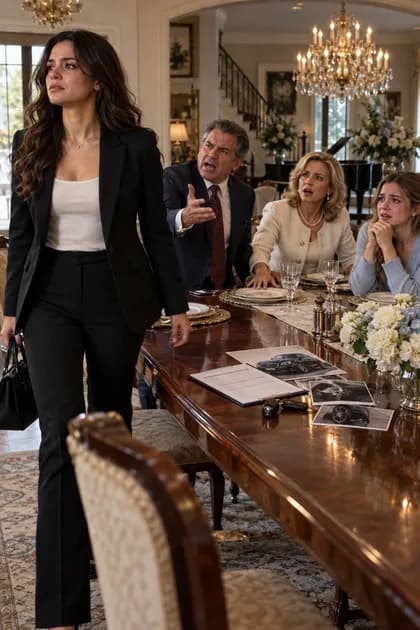
No dramatic rows of reporters. No television cameras. Just beige walls, polished wood, and the uncomfortable quiet of people waiting for a stranger in a black robe to make decisions about their lives.
Patricia sat beside me.
Mason sat on my other side.
David sat across the aisle with a different attorney.
His original lawyer, Mitchell Crane, was nowhere to be seen.
That mattered.
At 8:47 that morning, David had fired him.
At 8:52, Crane had emailed the court claiming he still represented David's company in related creditor matters.
At 8:58, Patricia whispered, "This is going to get ugly."
She was right.
The judge entered at nine.
Crane appeared five minutes later, breathless, carrying two boxes of documents.
He claimed David's disclaimer of trusteeship was a fraudulent attempt to shield assets from creditors.
David's new attorney objected.
Patricia objected louder.
For nearly an hour, the hearing became a maze of
trust law, insurance proceeds, creditor claims, fiduciary duties, and documents Sarah had signed fourteen years earlier.
Then Crane attacked me.
He argued that Sarah's twenty-five-thousand-dollar payment toward my garage ownership had created an undisclosed financial benefit.
He suggested I had spent fourteen years controlling Mason's life while profiting from Sarah's private planning.
I wanted to jump across the table.
Patricia squeezed my arm under the desk.
"Let him finish."
Crane held up the old cashier's check.
"Mr. Carter would have this court believe he sacrificed everything. Yet six months before Sarah Bennett's death, she quietly purchased his path into business ownership."
The judge looked at me.
"Mr. Carter, did you know about this payment?"
"No, Your Honor."
"Did you know Ms. Bennett was involved in the ownership transaction?"
"No."
Crane smiled.
"Convenient."
Then Mason stood.
Every head in the room turned.
The judge frowned. "Young man, sit down. You'll have
an opportunity to speak if called."
Mason looked at Patricia.
She nodded.
"Your Honor," Patricia said, "the beneficiary turns eighteen in twenty-three days. Given the extraordinary circumstances, we'd like to call him."
Crane objected.
The judge overruled him.
Mason took the witness chair.
He looked too tall for it.
Patricia approached.
"Mason, who raised you?"
"Leo Carter."
"How old were you when he became your legal guardian?"
"Four."
"And when were you adopted?"
"Five."
"Did Leo ever tell you about the trust?"
"No."
"Did he know about it?"
"Not until two nights ago."
"Did he ever tell you Sarah bought part of his business?"
"No."
"Did he know that?"
"No."
Crane stood. "How could you possibly know what he knew?"
Mason looked at him.
"Because I know my dad."
Crane smirked.
"That's not evidence."
"No," Mason said. "But this is."
He reached into his jacket.
Patricia's eyebrows rose.
Even I
didn't know what he was holding.
Mason unfolded a letter.
"After the championship, I went through the box of Mom's things David brought. There was a sealed envelope inside another folder."
David leaned forward.
Mason looked at him.
"It was addressed to Mr. Callahan."
My breath stopped.
The garage owner.
The man who had offered me the partnership.
Mason handed the letter to the clerk.
The judge read it silently.
Then she looked at Crane.
"Counsel, have you seen this?"
Crane's face changed.
"No, Your Honor."
The judge handed it to Patricia.
She read aloud.
Mr. Callahan,
Leo will never accept money from me if he knows where it came from. Please structure the ownership offer around work he has already earned. If I am wrong and nothing happens, then he will simply have received an opportunity he deserves. If I am right and Mason ever needs him, then I need Leo to have enough stability to say yes without destroying his own life.
Do not tell him unless it becomes necessary.
Sarah.
The courtroom fell silent.
I couldn't breathe.
For fourteen years, I had carried a private fear that I had somehow stumbled into being Mason's father by accident.
But Sarah had seen me.
She had known what David was becoming.
She had quietly built a bridge beneath my feet before I knew there was a cliff ahead.
Crane tried to recover.
"This still shows a financial relationship."
The judge looked at him.
"It shows Ms. Bennett deliberately concealed a gift from Mr. Carter."
"It benefited him."
"It benefited her child."
Crane shifted tactics.
"Even so, Mr. Carter failed to disclose—"
"Something he did not know existed?" the judge asked.
Crane stopped.
Then David stood.
His attorney whispered urgently, but David shook him off.
"Your Honor, may I say something?"
The judge studied him.
"You may answer questions if called."
"Then call me."
Patricia looked at Mason.
Mason nodded.
David took the stand.
Under oath, he admitted everything.
The gambling debt.
The loan against the house.
The money taken from Mason's college savings.
The original beneficiary challenge after Sarah died.
Leaving Mason.
Finding the trust documents.
Contacting Mason.
And yes, initially considering whether control of the trust could save his failing company.
Crane stared at him with open fury.
Then David said something none of us expected.
"I gave Mr. Crane authorization to explore legal options. I did not understand how aggressive he would become, but I won't pretend I didn't start it."
The judge asked, "And what are you asking for now?"
David looked at Mason.
"Nothing."
"Nothing?"
"I disclaim trusteeship. I disclaim any management fee. I disclaim any claim to the insurance proceeds."
Crane shot to his feet.
"Your Honor, he cannot disclaim assets to prejudice creditors."
David turned toward him.
"They aren't my assets."
The judge looked at Crane.
"That is the central issue, counsel."
David continued.
"I spent fourteen years treating fatherhood like something I could escape when it became painful."
His voice broke.
"I won't spend the rest of my life treating my son's inheritance like something I can reach for because I failed again."
Mason's eyes lowered.
I didn't know whether David's words were redemption.
Maybe redemption is too clean a word.
Maybe some people don't get redemption.
Maybe they only get a chance to stop causing new damage.
After a short recess, the judge returned.
She denied the emergency motion.
She found no evidence that I had concealed Sarah's contribution.
She recognized Sarah's original trust.
She accepted David's disclaimer subject to review in the creditor proceedings.
And until Mason turned eighteen, I would remain trustee.
But then the judge added something that mattered more than all of it.
"The beneficiary will reach the age of majority shortly. At that time, his informed designation will control under the trust language."
In other words, Mason would choose.
Outside the courthouse, reporters weren't waiting.
No crowd applauded.
Life doesn't always give you an audience for the moments that matter.
We stood on the steps in the cold.
David faced Mason.
"I don't expect you to forgive me."
Mason nodded.
"Good."
David winced.
"But I don't want you to disappear again either," Mason said.
David looked up.
Mason continued.
"If you want to know me, then know me. Not as an investment. Not as a second chance for your reputation. Not as the son who scored the winning goal."
David's eyes filled.
"Okay."
"You don't get to call yourself Dad."
David swallowed.
"I understand."
"You don't get money."
"I understand."
"And if you lie to me again, I'm done."
David nodded.
"Fair."
Mason extended his hand.
David stared at it before taking it.
It wasn't forgiveness.
It wasn't reconciliation.
It was a boundary.
And maybe, for now, that was more honest.
Twenty-three days later, Mason turned eighteen.
We celebrated at the garage.
The same garage Sarah had quietly helped make possible.
Mr. Callahan came.
Patricia came.
Mason's coach came.
Half his soccer team came and ate enough pizza to bankrupt a smaller business.
David came too.
He stood near the back, brought no expensive gift, and left before anyone had to ask him to.
At the end of the night, Mason handed me a folder.
"What is this?"
"Trust paperwork."
I looked at him.
He smiled.
"I signed the beneficiary designation."
My throat tightened.
"Mason, you don't have to make me trustee because of what happened."
"I know."
"You can choose a bank. Patricia can help you find a professional fiduciary."
"I know."
"Then why me?"
He laughed softly.
"Because Mom chose you before I could."
That nearly broke me.
Then he pulled out a second paper.
It wasn't legal paperwork.
It was a college commitment letter.
Full athletic scholarship.
A Division I school two states away.
I stared at him.
"When did this happen?"
"Coach knew last week."
"You didn't tell me?"
"I wanted to give you both things at once."
I laughed through tears.
"You are really enjoying making me cry lately."
Mason grinned.
"Kind of."
Then his expression softened.
"Dad, there's one more thing."
"What?"
"When I said what I said at the stadium... I wasn't trying to punish David."
"I know."
"I needed him to hear it."
I nodded.
Mason looked around the garage—the old lifts, the stained concrete, the office where I had filled out adoption paperwork while eating vending-machine crackers at midnight.
Then he looked back at me.
"But mostly, I needed you to hear it."
I couldn't answer.
He hugged me.
The same kid who once fit against my chest with a dinosaur backpack between us was now taller than me.
I held on anyway.
A month later, before Mason left for college orientation, we drove past the apartment where we'd lived when he was little.
The building looked smaller than I remembered.
He pointed toward an upstairs window.
"Was that ours?"
"Yeah."
"That's where you slept on the couch?"
"Unfortunately."
He laughed.
Then he went quiet.
"You know what I remember from that place?"
"What?"
"The nightlight."
I looked at him.
"I used to get scared at night."
"I remember."
"You always left it on by the door."
"Every night."
Mason nodded.
"I don't remember much about being four."
He looked out the window.
"But I remember never waking up alone again."
That sentence undid me more than the stadium speech ever had.
Because in the end, Sarah's money didn't make me his father.
The adoption decree didn't make me his father.
The trust didn't make me his father.
Even Mason calling me Dad didn't create it.
It happened fourteen years earlier on a cold kitchen floor, when a frightened little boy asked where his father had gone and I made a promise I had no idea how to keep.
I had spent years believing I rescued Mason.
The truth was more complicated.
He gave my life a shape I never knew it was missing.
And when he walked into his future, he didn't leave me behind.
He carried everything we had built together with him.
THE END.
Chapter complete
You have reached the end of this chapter.
Continue reading
Find your next story
A few more worlds to get lost in after this chapter.