My parents returned to Texas two days early.
Chapter 4
My parents returned to Texas two days early.
I knew because my father called me seventeen times before noon.
I answered none of them.
Rebecca had warned me that people who feel entitled to your silence become frantic when silence stops protecting them. She was right.
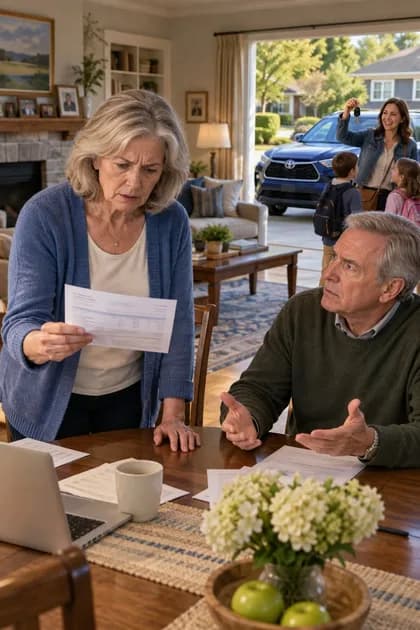
By the time my parents landed, the trust administrator had formally frozen all distributions. The bank had preserved account records. A forensic examiner had identified five documents containing signatures that were almost certainly traced or digitally copied from legitimate forms I had signed years earlier.
The seventy-five-thousand-dollar transfer through Sophia’s account was only the most offensive example.
It was not the largest.
The largest was a ninety-six-thousand-dollar distribution my parents had described as emergency housing support for me during an overseas relocation.
At the time, the Army had paid for my housing.
The money had gone toward the down payment on Tyler’s condo.
For years, I had watched my brother pose in
front of that place on social media, calling it proof that risk-takers beat rule-followers.
Apparently the real risk-taker had been me.
I just hadn’t known I was gambling.
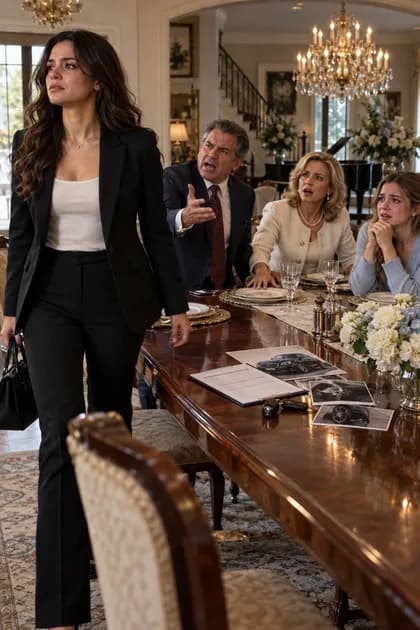
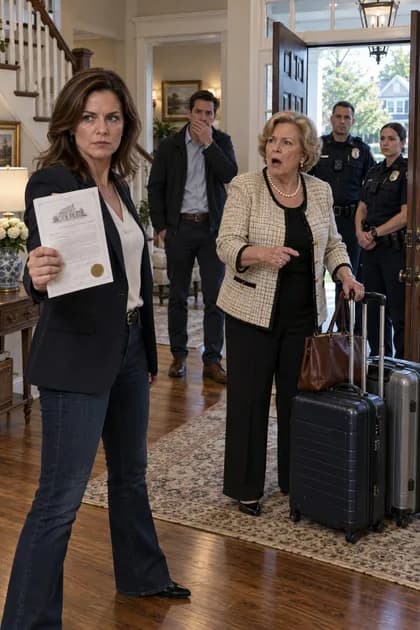
Three days after they came home, my parents drove to San Antonio and appeared at my front door.
I saw them through the security camera.
My mother was wearing oversized sunglasses and a beige coat despite the warm afternoon. My father looked ten years older than he had in the beach photograph. Tyler stood behind them in expensive sneakers, jaw tight, checking his phone every few seconds.
I did not open the door.
My mother rang the bell again.
“Elena, we know you’re in there.”
I stayed in the kitchen.
Rebecca was beside me.
So was General Vance, not in an official capacity, but because he had stopped by to make sure I was all right after hearing my family might confront
me.
My father knocked harder.
“This is ridiculous. Open the door.”
Then Tyler shouted, “You’re destroying us over paperwork.”
That sentence almost made me smile.
Paperwork.
The forged signatures were paperwork.
The missing money was paperwork.
Using my dead daughter’s name to move seventy-five thousand dollars was paperwork.
But the funeral had been trivial.
I pressed the intercom button.
“You need to leave.”
My mother leaned toward the camera.
“Sweetheart, please. We’re your parents.”
The sudden softness in her voice was more unsettling than anger.
“We made mistakes.”
“You committed fraud.”
“It wasn’t fraud. That money was always meant for the family.”
“Then why forge my name?”
Nobody answered.
My father looked toward the street.
“Can we talk privately?”
“No.”
His face changed.
For most of my life, he had relied on privacy the way some people rely on locks. Family problems stayed inside the family. Tyler’s failures stayed quiet.
Mom’s insults were misunderstandings. Dad’s passivity was peacekeeping.
Privacy had protected everyone except me.
“I’m not discussing this without my attorney,” I said.
My mother’s mouth tightened.
Then she said the thing that finally removed the last piece of doubt from me.
“Think about what this will do to Tyler’s future.”
Not what it had done to Sophia’s memory.
Not what it had done to Terrence and me.
Not what it had done to me as I stood alone beside two graves.
Tyler’s future.
Rebecca stepped closer to the intercom.
“This is Rebecca Shaw, counsel for Captain Rossi. You have been instructed to leave the property. Future communication should be directed through my office.”
My mother’s face went pale.
Tyler stared directly into the camera.
“You got a lawyer?”
Rebecca answered before I could.
“Yes.”
My father grabbed Tyler’s arm.
For the first time, I saw fear replace entitlement.
They left.
The civil filing went forward the next morning.
The bank referred the suspected forgery to its fraud division. The trust administrator referred the case to law enforcement. I did not control whether criminal charges would be filed, and Rebecca made sure I understood that.
My job was simpler.
Tell the truth.
Preserve evidence.
Stop protecting people who had never protected me.
The months that followed were brutal in ways I had not expected.
My mother sent long emails about forgiveness.
My father sent short ones about consequences.
Tyler sent none after his attorney became involved.
Extended family divided into predictable camps.
Some relatives told me I was courageous.
Others said suing my parents was cruel after they had “just lost a granddaughter.”
That phrase almost broke something in me.
They had lost a granddaughter.
I had buried my child.
Those were not the same experience.
Aunt Denise, the one who had sent me the screenshot from the family group chat, called one evening and apologized for staying quiet so long.
“I thought your mother was just angry,” she said. “I didn’t realize she was taking money.”
“Neither did I.”
“She always said you were the strong one.”
I looked at Sophia’s moon-shaped night-light glowing in the hallway.
“That was convenient for everyone.”
The forensic accounting eventually documented more than three hundred twenty thousand dollars in unauthorized distributions, fees, interest losses, and related transfers.
The civil case settled before trial.
My parents agreed to liquidate an investment account and place a lien on their house to restore most of the missing funds. Tyler was required to sell the condo purchased with trust money and surrender his interest in several remaining distributions.
The settlement did not make me feel victorious.
There was no moment when music swelled and justice repaired the dead.
Terrence was still gone.
Sophia was still gone.
Their rooms still held ordinary objects with unbearable weight.
But something changed inside me when I stopped negotiating with people who considered my pain less important than their convenience.
Six months after the funeral, I returned to the cemetery alone.
It was early morning.
The grass had filled in around both graves.
I brought fresh flowers for Terrence and a small painted ladybug for Sophia.
I sat between them and told them everything.
I told Terrence about the trust.
I told Sophia that her name had been used in something ugly, but that I had fixed what I could.
I told them I was selling the house on post because every room felt like a paused conversation.
I told them I had accepted a new assignment.
Then I told them the part that hurt most.
“I kept waiting for Mom and Dad to become the people I needed.”
The wind moved through the cemetery grass.
For a moment, I could hear Terrence’s voice in my memory, gentle and amused.
Elena, people tell you who they are. You just keep issuing extensions.
He had said something like that once after one of Tyler’s financial disasters.
I laughed through tears.
“I finally stopped.”
A few weeks later, the trust was restructured.
I remained the controlling trustee, but I changed its rules.
No distributions without independent review.
No family member permitted to approve funds for another family member.
No handwritten authorizations.
And one new provision.
I created the Sophia Rossi Memorial Education Grant using a portion of the recovered funds and my own contribution.
The grant would support children of military families who lost a parent or sibling unexpectedly and needed help with school expenses, counseling, or emergency care.
The first recipient was an eleven-year-old boy whose mother had died in a training accident.
When I received his thank-you letter, I cried at my desk for twenty minutes.
Not because the grief was gone.
Because for the first time, something useful had grown around it.
My parents never apologized in a way that felt honest.
My mother called what happened a misunderstanding until the day the settlement was signed.
My father said he was sorry “things went too far,” as though things had wandered off by themselves.
Tyler blamed everybody except himself.
I stopped waiting for better words.
The last time my mother asked whether we could “go back to being a family,” I told her the truth.
“We were a family when I needed you at the cemetery.”
She started crying.
I did not.
“You chose a beach.”
That was all.
I ended the call.
People sometimes ask whether I regret taking legal action.
I regret that it was necessary.
I regret that my daughter once drew a picture saying her grandparents loved visiting.
I regret that Terrence spent years encouraging me to set boundaries that I kept postponing.
I regret every excuse I made because accepting the truth felt more painful than continuing the pattern.
But I do not regret stopping them.
The forty thousand dollars they demanded after the funeral turned out to be the smallest number in the entire story.
The real cost was years of trust.
The real theft was not only money.
It was the belief that blood automatically means loyalty.
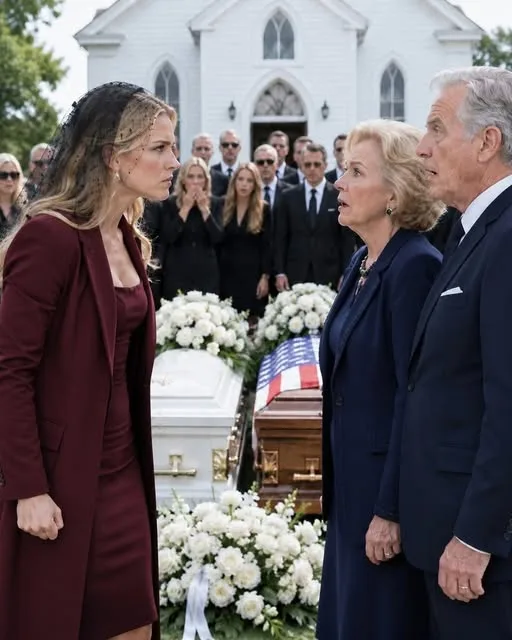
At Fort Sam Houston, I had stood between two graves and stared at three empty chairs.
For weeks, I thought those chairs represented the people who had abandoned me.
Eventually I understood something else.
They also represented space.
Space for the people who had actually shown up.
General Vance.
My soldiers.
Sophia’s teacher.
Terrence’s cousin.
Mrs. Gable with her casserole dish.
Aunt Denise with the screenshot she was afraid to send.
Friends who sat with me when I had nothing interesting to say.
People who did not ask what they could take from me before asking whether I could stand.
I had lost a husband and a daughter.
Nothing would ever make that loss small.
But my parents had been wrong about one thing.
The funeral was not trivial.
It was the day I finally saw exactly who considered my pain worth showing up for.
And who did not.
THE END.
Chapter complete
You have reached the end of this chapter.
Continue reading
A few more worlds to get lost in after this chapter.