She Didn't Speak at Their Wedding Breakfast—The Duke Noticed.
Chapter 1
She Didn't Speak at Their Wedding Breakfast—The Duke Noticed.
By Evening He Dismissed His Mistress
She did not speak at the wedding breakfast.
At first, Duke Alden did not notice.
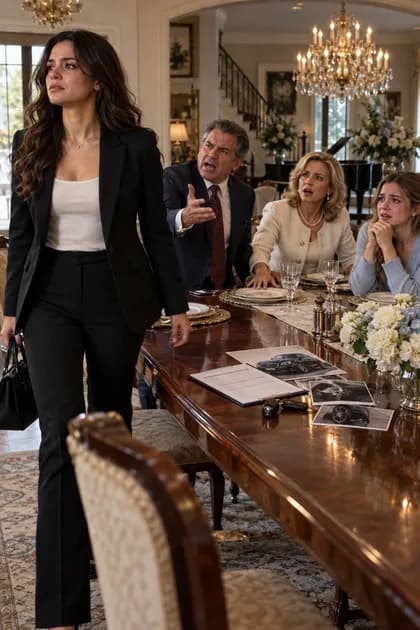
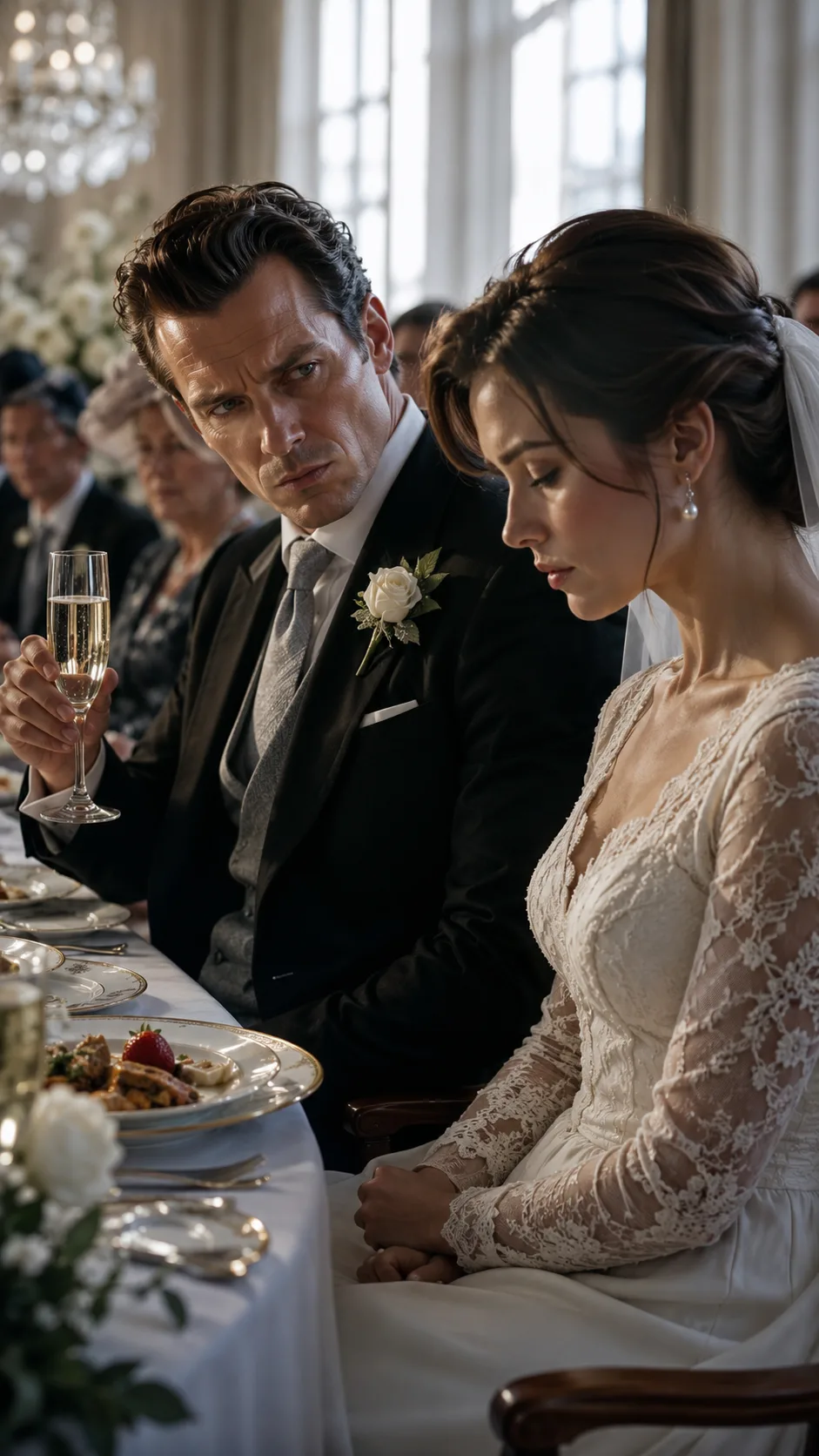
The ballroom of Alden House glittered in the pale April sun, its tall windows facing Fifth Avenue, its crystal chandeliers catching the light like frozen rain. Two hundred guests sat beneath garlands of white roses and silver ribbon, eating from porcelain plates rimmed in gold, whispering behind linen napkins, watching everything with the practiced hunger of New York society.
They had come because Duke Alden’s invitation was not something one refused.
His real name was Sebastian Duke Alden, but nobody called him Sebastian except lawyers, bankers, and the priest who had married him that morning. To the city, he was simply Duke Alden: heir to Alden Rail, owner of towers, hotels, shipping lines, vineyards, and half a dozen newspapers that pretended not to favor him. At thirty-six, he had
the grave face of a man born into power and the cold manners of a man who had never had to beg for anything.
At ten o’clock that morning, in St. Bartholomew’s Church, he had married Claire Whitmore.
At noon, she sat at his right hand as his wife.
And she said nothing.
She had said her vows clearly. She had signed the marriage register in small, careful handwriting. She had walked out beside him under a shower of rose petals while photographers shouted their names and guests smiled with their teeth. In the car, she had looked out the window at the blur of Manhattan traffic and folded her hands in her lap.
Duke had assumed she was nervous.
At breakfast, he poured her champagne.
She did not touch it.
He introduced her to Senator Bell, to Mrs. Carroway, to the bishop’s wife, to a judge whose decisions had
once saved Alden Rail several million dollars.
Claire nodded to each of them.
She smiled when politeness required it.
But she did not speak.
Her plate remained almost untouched. There were eggs with herbs, smoked salmon, roasted potatoes, strawberries dusted with sugar. She moved none of it. Her fork lay beside the plate as if it belonged to someone else.
Duke talked.
He talked because he knew how to fill a room without truly entering it. He discussed the Hudson Valley water rights with Senator Bell. He listened to Mrs. Carroway complain about her son’s unsuitable fiancée. He laughed once when Judge Halpern made a dry comment about marriage being the only contract people signed while pretending not to read the terms.
Then Arthur Penn leaned toward him and said quietly, “Your bride is remarkably composed.”
Duke turned his head.
For the first time since they had left the church,
he looked at Claire properly.
She was sitting very still.
Not stiffly. Not proudly. Still in the way a portrait was still. Still in the way a person became when she had learned that movement attracted attention, and attention led to correction.
Her hands were folded in her lap. Her dark hair was pinned beneath a pearl comb. Her wedding gown was expensive but simple, ivory satin with sleeves of sheer lace, chosen by someone who wanted elegance without daring. Her face was pale, calm, and unreadable.
But her eyes were not empty.
They moved.
They moved from person to person, from fork to glass, from the senator’s restless fingers to Mrs. Carroway’s strained smile, from the wilted roses near the fireplace to the footman standing too close to the wall because his left shoe hurt him.
She was watching everything.
She was missing nothing.
And suddenly Duke realized something that struck him with unreasonable force.
He did not know a single thing about his wife that mattered.
He knew why he had married her.
That was simple.
Claire Whitmore was the eldest daughter of Raymond Whitmore, a once-powerful Virginia landowner whose family estate bordered Alden land along the Hudson. Raymond had debts, three daughters, no sons, and a stubborn refusal to sell to strangers. Duke needed access to the southern riverfront for a redevelopment project that had been stalled for two years. Raymond needed money before the banks came for his house.
The arrangement had been clean.
A marriage. A settlement. A merger of land and blood.
Claire was twenty-four. Quiet. Educated. Respectable. Not scandalous, not ambitious, not loud. She was the kind of woman society called “well-bred” when it meant she had been trained to disappear gracefully.
Duke had chosen her for that.
He wanted a wife who would manage Alden House, host dinners, give him children, and not interfere with the life he had already arranged.
And that life included Vivian Rourke.
Vivian was thirty-two, beautiful in a dangerous, deliberate way, a widow with a townhouse on East Seventy-Third Street and a laugh that made men believe they were being chosen. She had been Duke’s mistress for nearly two years. Everyone knew. Nobody said it directly. In their world, knowledge moved like perfume: invisible, unmistakable, impossible to prove.
Duke had assumed nothing would change.
He would have a wife in name.
Vivian would remain where she had always been.
Claire would understand, or she would learn not to ask.
That was how these arrangements worked among people who believed themselves too important for ordinary morality.
But now Claire sat beside him like a woman who had already learned not to ask anything from anyone.
And Duke, for reasons he could not yet name, found that unbearable.
The breakfast lasted ninety minutes.
Duke performed his role perfectly.
He thanked the guests. He toasted the families. He smiled for photographs. He accepted congratulations from people who were already calculating what this marriage meant for land, money, influence, and inheritance.
Every ten minutes, without meaning to, he glanced at Claire.
She remained silent.
Once, Mrs. Carroway leaned across the table and said, “My dear, you must be overwhelmed. A wedding at Alden House is no small thing.”
Claire inclined her head.
“Yes,” Duke expected her to say.
Or, “It is very beautiful.”
Or, “Everyone has been kind.”
She said nothing.
The silence stretched just long enough for Mrs. Carroway’s smile to sharpen.
Duke felt irritation rise in him, but not at Claire. At the room. At the guests. At himself.
He noticed the champagne still full beside her plate.
He noticed her untouched food.
He noticed that when a footman offered more coffee, she looked startled, as if service itself were an accusation.
By the time the last guests began to leave, Duke had made his first real observation about his wife.
Her silence was not coldness.
It was not stupidity.
It was not arrogance.
It was the silence of a woman who had been taught, patiently and repeatedly, that her voice changed nothing.
After the guests departed, Duke found her in the entrance hall.
She stood at the foot of the grand staircase, looking up at the portraits that lined the wall. Alden men in black coats. Alden women in silk gowns. Generations of wealth watching from gilded frames with expressions of permanent judgment.
Claire’s hand rested lightly on the banister, as though she was not sure she was allowed to touch it.
“That is my mother,” Duke said.
Claire turned.
It was the first time all day she looked directly at him.
Her eyes were brown, steady, and disconcertingly intelligent.
He had expected gratitude. Fear. Perhaps embarrassment.
Instead, she studied him like a woman reading a difficult sentence twice.
Then she looked back at the portrait.
“She looks as if she was about to say something no one in the room wanted to hear.”
Duke stared at her.
For a moment, he had no answer.
Then, to his own surprise, he laughed.
“She usually was,” he said. “My father said my mother’s greatest talent was making powerful men uncomfortable before dessert.”
The corner of Claire’s mouth moved.
It was not quite a smile.
It was the beginning of one, quickly hidden, as if she had revealed too much by accident.
“Mrs. Hawthorne told me my rooms are upstairs,” she said. “If you will excuse me, I would like to rest.”
“Of course.”
She climbed the stairs.
Duke watched her go.
Only after she disappeared did he realize he was still standing there.
He went to his study.
He intended to work.
There were contracts waiting on his desk. Letters from his attorneys. A memorandum about the riverfront project. A message from his campaign adviser regarding a charity board he had no interest in joining but could not afford to offend.
And one note from Vivian.
It had been delivered that morning.
The paper smelled faintly of gardenia.
I trust the ceremony was painless, darling. Come when you are free. I will be waiting.
Duke read it once.
Then again.
Before that morning, the note would have amused him. It would have felt like proof that the world still obeyed the rules he preferred: wife in the public room, mistress in the private one, duty and desire neatly separated.
Now the words felt vulgar.
Not because Vivian had changed.
Because he had noticed Claire.
At three o’clock, Duke went downstairs to find Mrs. Hawthorne.
The housekeeper had managed Alden House for twenty-eight years and had never once appeared impressed by wealth, grief, scandal, or weather. She had served Duke’s mother. She had raised half the staff. She could communicate disappointment with a teaspoon.
He found her in the pantry, inspecting crystal glasses.
“Mrs. Hawthorne,” he said, “what do you make of my wife?”
She paused.
“Your wife, sir?”
Chapter complete
You have reached the end of this chapter.
Continue reading
A few more worlds to get lost in after this chapter.