I mailed out sixty-eight wedding invitations with gold-trimmed envelopes and a stupid amount of hope.
Chapter 1
My Parents Called My Fiancé “Trash” and Boycotted My Wedding—What Happened Next Went Viral
1,720 words
I remember that part clearly because hope always makes fools of us before it teaches us anything useful.
I sat at our kitchen table in Charlotte, North Carolina, with my hair clipped up and my fingers stained from sealing wax, writing every address by hand because my mother had always said handwritten invitations were “classy.” I used the same cream stationery she once told me she’d used for charity galas and anniversary dinners, the same looping script she’d insisted I practice when I was thirteen because “presentation matters, Brandy.”
Presentation mattered in my family more than truth ever did.
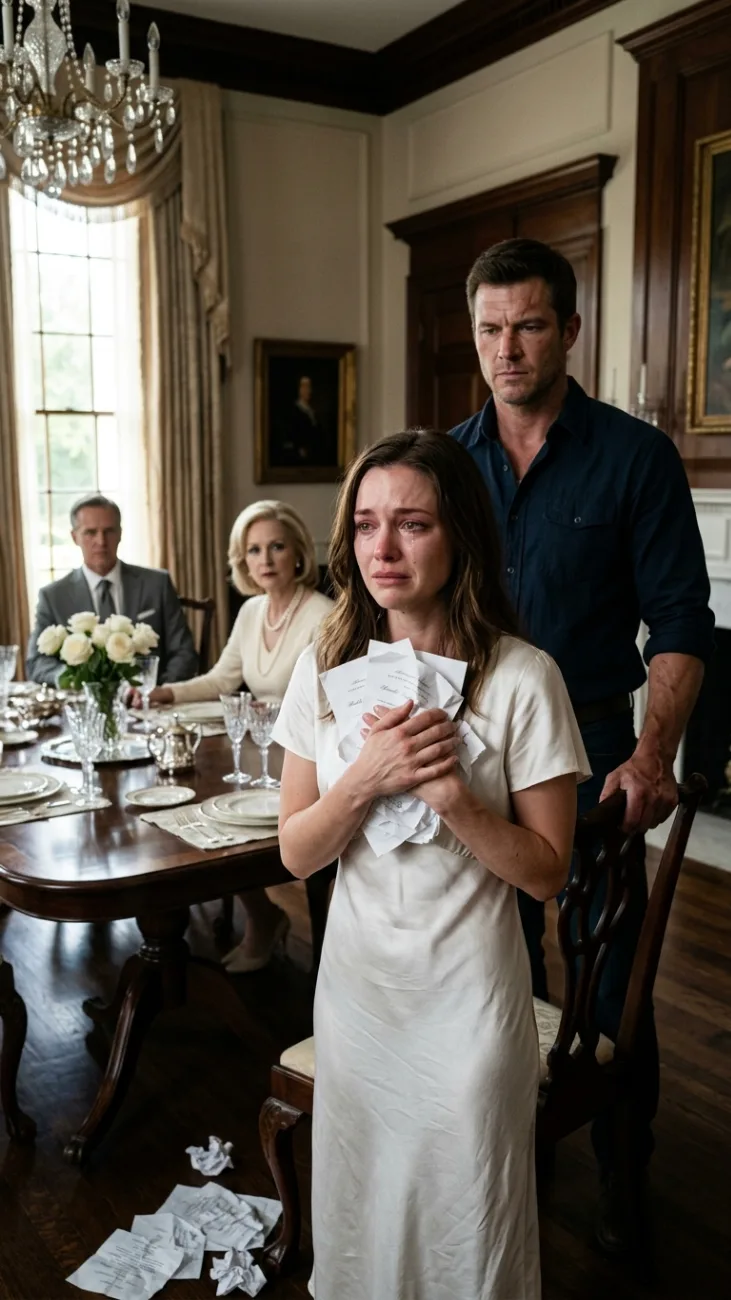
My parents lived in a brick house in Myers Park with white columns, blue hydrangeas, and a front porch nobody sat on. My father, Douglas Whitmore, was a financial advisor with the kind of smooth voice people trusted before they should. My mother, Caroline, chaired fundraisers, arranged luncheons, and treated kindness
like it was something to be displayed publicly and rationed privately. They believed in status the way some people believed in God—fully, fearfully, and without question.
They had plans for me.
Those plans included a husband with a graduate degree, a navy blazer, cuff links, and a last name that looked good beside mine on engraved Christmas cards.
Those plans did not include Marcus Reed.
I met Marcus four years before the wedding in the least glamorous way possible. The coffee shop where I worked remotely every Thursday lost power during a storm. Everybody complained. The manager panicked. Laptops died. Card readers failed. A line of caffeine-starved customers started acting like civilization was collapsing.
Then Marcus walked in carrying a red toolbox and wearing a gray work shirt with REED ELECTRIC stitched over the pocket.
He didn’t swagger. He didn’t perform. He just nodded once, asked where the breaker room
was, and got to work.
I noticed his hands first. Strong, scarred, capable hands. The kind of hands that knew how to build things and fix them. My family would have seen roughness. I saw steadiness.
Forty minutes later the lights came back on. Everybody clapped like he’d done magic.
He looked embarrassed by the attention and said, “It was a loose connection. Nothing heroic.”
I laughed before I meant to, and he turned toward me.
“What?” he asked.
“Nothing,” I said. “You just rescued modern society from having to sit quietly with itself.”
That made him smile.
We started talking because I offered to buy him a coffee he didn’t have time to drink. Then we talked again because he came back the next week to double-check the repair and asked whether I always worked by the window. Then we talked for real because one rainy Thursday he stood
beside my table and said, “I get off in an hour. Any chance you’d let me buy you dinner instead of the other way around?”
There was nothing polished about him, and that was exactly why he was impossible to resist.
Marcus didn’t charm people to control them. He listened. He remembered things. He noticed when I rubbed the bridge of my nose after a hard day and showed up with Thai takeout without making me ask. He learned how I took my coffee and how I got quiet whenever my mother called. He never made grand speeches. He just became dependable in all the small moments where life is usually hardest.
By the time I brought him home to meet my parents, I already loved him enough to know I was in trouble.
My mother smiled too brightly through dinner and asked him where he went to school.
“Community college for a bit,” he said. “Then I started working full-time.”
My father cut his steak and said, “So electrician work is the long-term plan?”
Marcus didn’t miss the tone. “It’s the current one and the future one. I own half the company with my uncle.”
“Trades are good money these days,” my mother said, which was the kind of sentence that sounds like a compliment until you hear the ceiling in it.
Marcus stayed calm. “Yeah. It’s been good to me.”
My parents asked about stocks, travel, networking, golf, things Marcus had no reason to care about. He answered what he could, laughed off what he couldn’t, and took their condescension with a grace I did not deserve and they absolutely did not.
When he dropped me home that night, he kept both hands on the steering wheel and stared through the windshield.
“They don’t like me,” he said quietly.
I turned toward him. “They don’t know you.”
He let out a short breath. “That’s not what bothered me.”
“What bothered you?”
He finally looked at me. “They knew enough.”
I wanted to tell him he was wrong, that my parents were just guarded, that they needed time, that people from different worlds sometimes stumbled before they met in the middle.
But Marcus had grown up with harder truths than I had, and he recognized judgment faster.
Still, we kept going.
We built a life in a two-bedroom rental house on the edge of the city. I worked in marketing for a nonprofit. Marcus left before sunrise some mornings and came home dusty and exhausted, yet he still kissed my forehead first, every time. He paid bills early. He saved money without making a show of it. He called my grandmother on her birthday because he remembered she liked hearing from “young people who still have manners.” He fixed my neighbor’s porch light for free. He drove forty minutes to help my best friend’s husband after a breaker blew during Christmas dinner. He was the kind of man who made the world safer without demanding applause for it.
When he proposed, he did it in the backyard under cheap string lights because he knew I hated being watched. He cooked dinner, burned the asparagus, laughed at himself, and then pulled out a ring he’d saved for in secret.
“Brandy,” he said, his voice shaking, “I can’t promise you easy, but I can promise you honest. I can promise I’ll show up. I can promise that if life gets ugly, I won’t run. If that’s enough, I want to marry you.”
I said yes before he finished the question.
My parents said nothing for two days.
Then my mother called and said, “If you go through with this, understand that you are choosing a much harder life than you need to.”
I should have heard the threat inside that sentence.
Instead, I kept addressing envelopes.
Part 2
Three weeks after I mailed the invitations, my mother RSVP’d no.
Not just for herself.
For the entire family.
Every aunt. Every cousin. Every relative who had held me at christenings, graduations, funerals, and holidays. People I had watched laugh at my childhood birthday parties and hug me at college move-in day. Gone with one phone call, one influence network, one woman deciding that my marriage was beneath attendance.
The next evening my father called while I was making pasta.
I saw his name on the screen and wiped my hands on a dish towel, stupidly hopeful. I thought maybe he was calling to say they’d overreacted. Maybe my mother had cooled down. Maybe my father had done one decent thing in his life and decided his daughter mattered more than appearances.
I answered on the second ring.
“Hi, Dad.”
“We will not walk you down the aisle to that electrician.”
No hello. No hesitation. No attempt to disguise the cruelty.
Just that electrician.
Not Marcus. Not your fiancé. Not the man you love. Just a job title flung like an insult.
I stood there in our kitchen, pasta boiling over behind me, my throat going tight.
“His name is Marcus.”
My father made a dismissive sound. “Brandy, don’t do this. You are humiliating yourself.”
“I’m humiliating myself by marrying a good man?”
“You are marrying beneath you.”
The words hit with a force that surprised even me. Not because I hadn’t suspected them. Because hearing your worth discussed like market value by the man who raised you does something permanent to the nervous system.
I turned off the stove because I suddenly couldn’t bear the sound.
“Do you hear yourself?” I asked.
“Very clearly. For once, I wish you did too.”
“He owns a business. He works harder than almost anyone I know.”
“That is not the point.”
I laughed then, one sharp broken laugh, because of course it wasn’t the point. Hard work only impresses people who understand dignity. My parents only understood hierarchy.
“What is the point, Dad?”
He didn’t answer immediately, which meant the truth was ugly enough even he had to dress it up.
Finally he said, “You were raised for more than this.”
I’ll never forget the silence after that. Not because it was empty, but because it held the entire shape of my childhood inside it. Piano lessons. Proper posture. Internships arranged through friends. Dress codes for dinner parties. My mother correcting how I pronounced French menu items. My father telling me, “Whitmores don’t chase. We choose carefully.”
They had raised me for more than this.
Meaning not love.
Meaning not honesty.
Meaning not a man whose hands proved he knew how to build a life instead of perform one.
I said, “Then maybe you raised me wrong.”
He hung up.
I stood in the kitchen staring at the dark screen until Marcus walked in through the back door twenty minutes later, sweaty from work and smelling like sawdust and summer heat.
He looked at the untouched pasta, then at my face.
“What happened?”
I tried to answer and couldn’t. Marcus crossed the room in two steps and took the spoon out of my hand before I realized I was still holding it.
“Brandy.”
I sat down hard in one of the kitchen chairs.
“My parents aren’t coming,” I said. “None of them are.”
His expression changed, but not in the way people think. Marcus didn’t look angry first. He looked guilty.
That wrecked me more than anything.
“Hey,” I said immediately. “No. Don’t do that.”
He crouched in front of me. “They did this because of me.”
“They did this because of who they are.”
“But it landed on you.”
Chapter complete
You have reached the end of this chapter.
Continue reading
Find your next story
A few more worlds to get lost in after this chapter.