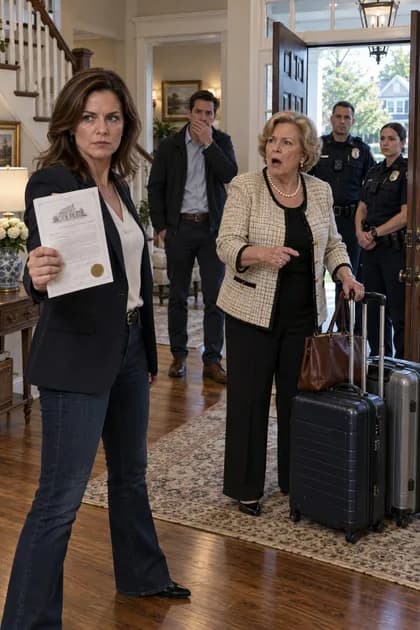
MY MOTHER SMILED AT MY SISTER’S ENGAGEMENT DINNER, POINTED ME OUT TO HER ELITE SEAL FIANCÉ, AND SAID, “THIS IS MY DAUGHTER WHO NEVER QUITE FIT THE FAMILY PICTURE”—THE SAME DAUGHTER WHO PAID THEIR BILLS, FUNDED THEIR EMERGENCIES, AND STOOD SILENT THROUGH YEARS OF INSULTS ABOUT BEING THE “LONELY CAREER FAILURE”… BUT THE SECOND HE SHOOK MY HAND, SAW THE INSIGNIA ON MY DRESS WHITES, WENT RIGID, AND SAID, “FLEET COMMANDER KENT, MA’AM,” THE ENTIRE ROOM FELL DEAD SILENT—AND FOR THE FIRST TIME IN THEIR LIVES, MY FAMILY REALIZED THE WOMAN THEY MOCKED WAS THE ONE PERSON IN THAT ROOM THEY SHOULD HAVE BEEN HONORING ALL ALONG...
Chapter 1
MY MOTHER SMILED AT MY SISTER’S ENGAGEMENT DINNER, POINTED ME OUT TO HER ELITE SEAL FIANCÉ, AND SAID, “THIS IS MY DAUGHTER WHO NEVER QUITE FIT THE FAMILY PICTURE”—THE SAME DAUGHTER WHO PAID THEIR BILLS, FUNDED THEIR EMERGENCIES, AND STOOD SILENT THROUGH YEARS OF INSULTS ABOUT BEING THE “LONELY CAREER FAILURE”…
1,326 words
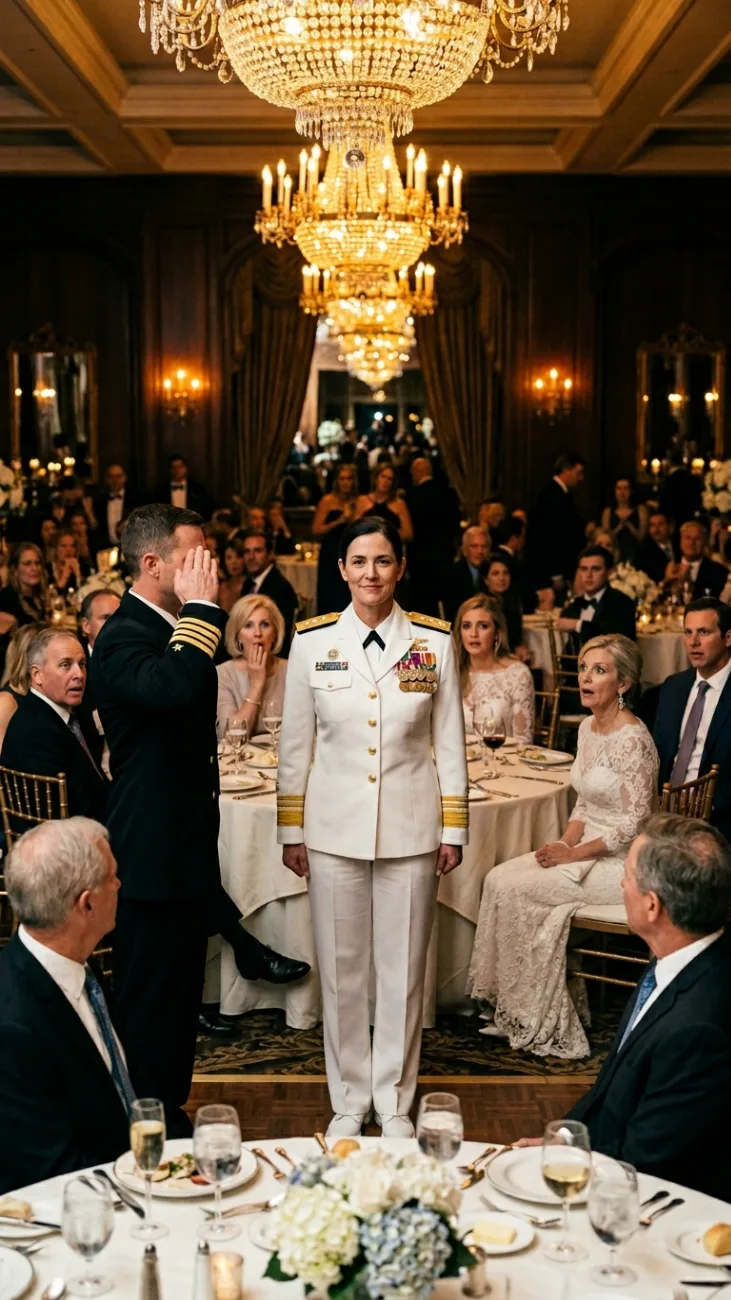
At my sister’s engagement dinner, my mother introduced me as the daughter who had never quite fit the family picture. The room answered with the light, polished laughter people use when they think a remark is harmless. Then my sister’s fiancé — an elite maritime captain everyone admired before dessert even arrived — shook my hand, glanced at the insignia on my uniform, and went completely still. In one breath, the evening changed shape. Because the woman they had spent years reducing to the “career one” was standing there as Fleet Commander Sonia Kent, and suddenly the version of me they had repeated for decades could not survive another second in that room.
I had been overseas when Claire announced the engagement.
The first message I saw was not from family. It came through command channels confirming that my leave had been approved. The second was from my mother, and
even that was less invitation than instruction.
“Make sure you dress appropriately,” she said. “We do not need another uniform moment.”
I stood in my office when she called, one hand resting on the back of a chair, three gray destroyers visible beyond the harbor glass. Outside my door, officers moved with the kind of pace that says every minute belongs somewhere. Inside the room, my name carried weight, decisions traveled outward, and people listened when I spoke.
To my mother, I was still the daughter who had chosen the wrong kind of life.
“I’ll be there,” I told her.
“Claire is so happy,” she continued, ignoring me the way she had perfected over thirty years. “He is a real catch. A decorated maritime captain. A family man. Steady. Present.”
The comparison did not need to be spoken aloud. It was hanging there already, polished and familiar.
I had missed
Claire’s first wedding because I had been in the Gulf overseeing a situation that left no room for sentiment, only judgment. I sent the gift. I made the call. I did everything I could from where I was. It still wasn’t enough.
By the time I landed in Florida, I already knew the role expected of me. Show up. Smile. Be supportive. Do not take up too much space. Do not mention your career unless someone asks directly. Do not correct anyone. Above all, do not accidentally remind the room that you built a life bigger than the one they chose for you.
I rented a car at the airport and drove to the country club through air that smelled like salt and cut grass. The parking lot shimmered with the usual collection of black SUVs, soft luxury sedans, and one classic convertible someone had probably polished that morning for
the occasion. Inside, everything looked exactly the way my mother always wanted the world to look when people were watching: white linens, hydrangeas, soft gold light, polished silver, smiling staff moving quietly enough to seem expensive.
When I stepped into the private dining room, no one noticed right away.
That part was familiar too.
I stood there for a breath, taking in the scene. Claire at the head table in pale blue, glowing in the way brides-to-be glow when the whole room has agreed to reflect light back toward them. My mother standing near her with a glass in hand, already performing warmth. Her future son-in-law beside Claire, tall and composed, wearing the kind of easy military confidence that rooms like that treat as instant prestige.
Then my mother looked up.
“Oh,” she said, with the bright little smile she used when she wanted to entertain a room and dismiss me at the same time. “You actually came.”
A few people turned.
She lifted her hand toward me as if presenting an oddity.
“This,” she said, “is my daughter who never quite followed the family script.”
A few people gave the kind of polished, uncertain laugh that passes for harmless in rooms like that.
Claire looked down at her plate for a second. Not shocked. Not protective. Just hoping the moment would pass quickly if nobody challenged it.
My mother, encouraged, went on.
“She has always been very devoted to work,” she said. “Claire has always kept family closer.”
Someone near the flowers let out another small laugh. A fork touched a glass. A chair shifted. All those tiny sounds that together make a room choose a side.
I walked forward anyway.
Measured. Calm. No rush.
That part of myself had taken years to build. Not the rank. Not the uniform. The calm.
Claire stood to greet me, her hug brief and formal, as if affection might wrinkle the evening.
“I’m glad you made it,” she said.
“Congratulations,” I told her. “You look happy.”
Then her fiancé turned toward me.
“Captain Ryan Hail,” my mother said proudly, as if she were introducing the room to a private miracle. “This is Sonia.”
Not Commander. Not fleet lead. Not any of the things the outside world already knew.
Just Sonia.
He stood and offered his hand with polite courtesy, the kind one officer gives another guest at a social event when he assumes she is peripheral to the main story.
“Ma’am,” he said pleasantly.
His grip was firm, respectful, practiced.
For a fraction of a second, he was just being kind.
Then his gaze lifted.
Not to my face first.
To the uniform.
To the ribbons.
To the insignia.
It is a strange thing to watch recognition arrive in someone else’s body before their mind catches up. His shoulders changed first. Then his jaw. Then his eyes.
He released my hand and stepped back one clean pace.
The room went very quiet.
His heels came together with the kind of instinct you cannot fake.
And then, in a voice clear enough to cut straight through the flowers, the silverware, the polite country-club hush, he said, “Fleet Commander Kent, ma’am.”
The salute that followed was sharp, immediate, and perfect.
For one suspended second, nobody in that room moved.
Not my mother.
Not Claire.
Not the women who had just smiled.
Not the men who had been leaning comfortably into their bourbon glasses.
The only thing that changed was the truth finally taking up the space it had always deserved.
I returned the salute because that is what protocol required.
But what I remember most is not my own motion.
It is my mother’s face.
Not anger. Not even embarrassment yet.
Just the flat, stunned emptiness of someone realizing that the story she had been telling about me for years had collapsed in public before she could finish the sentence.
One of Ryan’s teammates at a nearby table leaned forward so abruptly his chair scraped the floor. He looked at me as if he had just recognized a name from somewhere much larger than the room.
Ryan lowered his hand, but he did not recover his ease.
Claire had gone pale.
My mother opened her mouth, but nothing came out.
And I stood there, in the same white uniform I had worn into briefing rooms, onto flight decks, across piers at sunrise and into nights that asked more of me than any family dinner ever had, thinking one very simple thing:
I had not changed.
The room had.
What followed after that salute no longer belonged to the evening my family had planned...
Chapter complete
You have reached the end of this chapter.
Continue reading
Find your next story
A few more worlds to get lost in after this chapter.