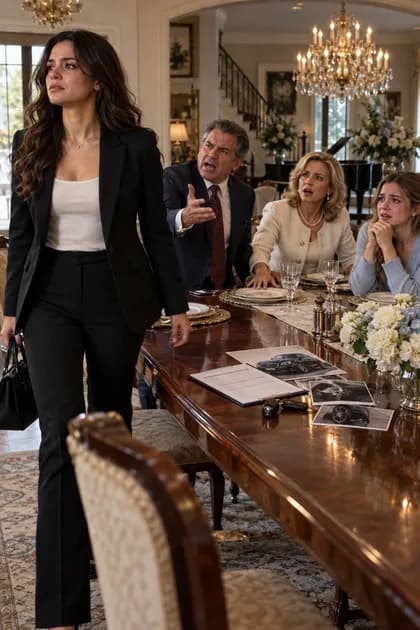
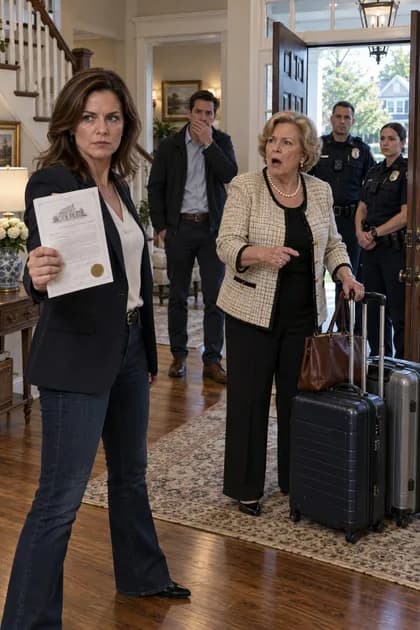
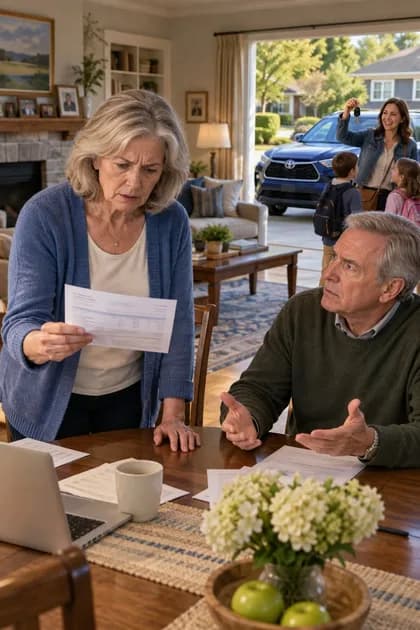
My fiancé’s mother humiliated me in a Manhattan bridal salon by saying white was only for brides with “real families,” and my fiancé lowered his eyes instead of defending me.
Chapter 1
My fiancé’s mother humiliated me in a Manhattan bridal salon by saying white was only for brides with “real families,” and my fiancé lowered his eyes instead of defending me. I walked out without crying, but before sunrise, one email from my penthouse office made his family understand exactly who they had insulted.
1,167 words
I walked out without crying, but before sunrise, one email from my penthouse office made his family understand exactly who they had insulted.
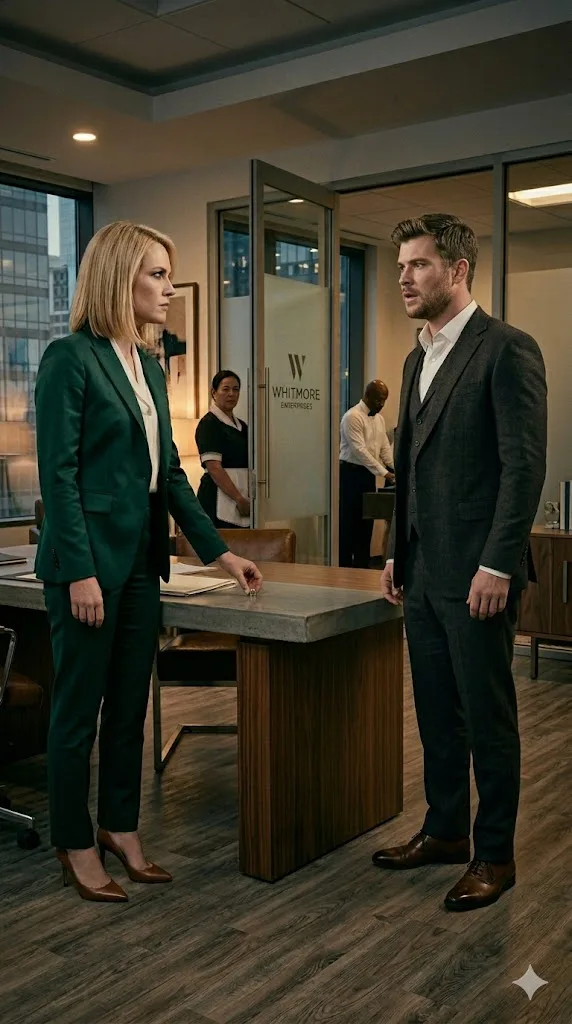
“White is for girls who have a family waiting for them at the end of the aisle.”
Constance Whitmore said it softly enough to sound elegant and loudly enough for every woman in the bridal salon to hear.
For one second, nobody moved.
The Madison Avenue boutique went still around me. A consultant froze beside a rack of veils. A woman near the champagne table lowered her glass. Somewhere behind me, satin whispered as another bride turned to look.
And I stood on a mirrored platform in a fourteen-thousand-dollar gown that looked like it had been made from moonlight.
White silk. Italian lace. Pearl work so delicate it seemed to float over the bodice. A cathedral train spread behind me like something from a fairy tale I
had stopped believing in a long time ago.
My name is Vivian Hale. I was thirty-two years old, founder of a private investment firm that controlled more money than most people in that room could imagine, and yet one sentence from my future mother-in-law sent me straight back to being eight years old in a Newark foster home, watching other children leave with families while I stayed behind.
No one.
That had been the word attached to me for most of my childhood.
No father listed.
Mother deceased.
No permanent placement.
No family available.
I had spent my entire life building a future so solid that no one could ever look at me like I was unwanted again.
Then Constance Whitmore looked me up and down in that gown and did exactly that.
She smiled with her perfect lipstick, her cream silk jacket, and her pearls lined neatly against her
throat.
“I’m only trying to help, Vivian,” she added. “Tradition matters in our circles. White represents purity, family, continuity. It might be better to choose something softer. Champagne, perhaps.”
Something softer.
Less visible.
Less bridal.
Less like I belonged.
My eyes moved to Derek.
He stood a few feet away, handsome in his navy suit, one hand around a champagne flute, his face carefully lowered toward the carpet. The man I was supposed to marry. The man who had told me he admired my strength. The man who had proposed in front of a private terrace view of Central Park and promised I would never feel alone again.
He said nothing.
Not one word.
That silence told me more than Constance’s insult ever could.
His sister Tabitha looked away. His aunt Margot gave a small approving nod. The salon staff looked horrified, but they were strangers. They had more reaction
than the man who claimed to love me.
I smiled.
Not because I was calm.
Because I had learned a long time ago that some rooms only understand power when you refuse to bleed in front of them.
“You’re right,” I said.
Constance blinked. “Excuse me?”
“I’ll change.”
I stepped down from the platform carefully, lifting the gown so the train would not catch under my heels. The consultant, Miranda, rushed after me into the dressing room with tears in her eyes.
“I am so sorry,” she whispered.
“It isn’t your fault.”
My hands were steady as I unfastened the pearl buttons. That steadiness mattered. I had survived too many rooms where people expected me to collapse. Foster interviews. Scholarship dinners. Boardrooms full of men who called me “ambitious” like it was an accusation.
I had not survived by giving cruel people the satisfaction of a scene.
When I changed back into my navy wool dress, I looked at myself in the mirror for a long moment.
The gown had been beautiful.
But belonging had never been in the fabric.
I carried it out over my arms and handed it to Miranda.
“Thank you for your time,” I said.
Derek finally found his voice near the door.
“Vivian, wait.”
I stopped, but I did not turn around.
He lowered his voice. “My mother can be blunt. She didn’t mean it like that.”
I almost laughed.
That was what weak men always said when strong women in their lives behaved badly.
She didn’t mean it.
You’re taking it wrong.
Don’t make this bigger than it has to be.
I turned then and looked at him fully.
“What exactly did she mean?”
His mouth opened.
Closed.
Constance stepped in before he could answer. “Vivian, there’s no need to be theatrical.”
I looked past her at the mirrors, the champagne, the frozen faces of women who had just watched an orphan be publicly reminded she had no one.
“No,” I said softly. “There isn’t.”
Then I walked out.
Outside, Manhattan was cold and bright. Yellow cabs slid along the curb. People hurried past carrying coffee, flowers, shopping bags, lives that had not just cracked open inside a bridal salon.
I did not cry in the car.
I did not call Derek.
I did not call anyone.
I went home to my penthouse office overlooking the city, took off my engagement ring, and placed it beside my laptop.
Then I opened a private file.
Whitmore & Crane Merger Review.
Derek’s father, Charles Whitmore, ran one of Manhattan’s oldest law firms. For six months, his firm had been courting a merger with Ellison Hart, a global legal group that would save Whitmore & Crane from the quiet financial decay nobody in society pages talked about.
What Constance did not know was that my firm controlled a key investment vehicle tied to Ellison Hart’s expansion fund.
What Derek did not know was that I had been the reason the merger was still alive.
At 4:38 a.m., I sent one email.
Not angry.
Not emotional.
Very simple.
Effective immediately, Hale Meridian Capital withdraws all support for Whitmore & Crane’s inclusion in the Ellison Hart merger due to material concerns regarding leadership judgment, reputational exposure, and family governance risk.
I attached three documents.
A due diligence memo.
A risk report.
And a conflict disclosure Charles Whitmore had apparently forgotten to mention.
By 7:12 a.m., Derek called.
I watched his name flash across my phone until it stopped.
At 8:03, Constance called.
At 8:17, Charles Whitmore himself called from a private number.
By lunch, there were eleven missed calls, three voicemails, and one email marked urgent.
The same family who had mocked the orphan now needed her signature to keep their empire from collapsing.
I poured coffee, opened the final voicemail, and listened to Constance’s voice tremble.
“Vivian, darling, I think there’s been a misunderstanding.”
I looked at the engagement ring beside my laptop.
Then I deleted the message.
Because for the first time in my life, I did have someone waiting at the end of the aisle.
Me.
And I was finally done abandoning her.
Chapter complete
You have reached the end of this chapter.
Continue reading
Find your next story
A few more worlds to get lost in after this chapter.