My family spent the birthday dinner I paid for mocking my rent, call-center job, negative $52, and squandered “gifted” potential.
Chapter 1
My family spent the birthday dinner I paid for mocking my rent, call-center job, negative $52, and squandered “gifted” potential.
Dad praised my property-owning cousin, cut me out of the will, and toasted their disappointment. That night, I made three calls; twenty days later, 148 panicked text messages begged me: answer now...
My phone began vibrating at 6:11 a.m., so hard it crawled across the crate I used as a nightstand. Dad’s name flashed first. Then Mom. Then my sister Morgan. Then my brother Caleb. Forty-seven missed calls in fourteen minutes.
I didn’t answer.
The last time I heard their voices, they were laughing over the birthday cake I had bought with the last money in my checking account.
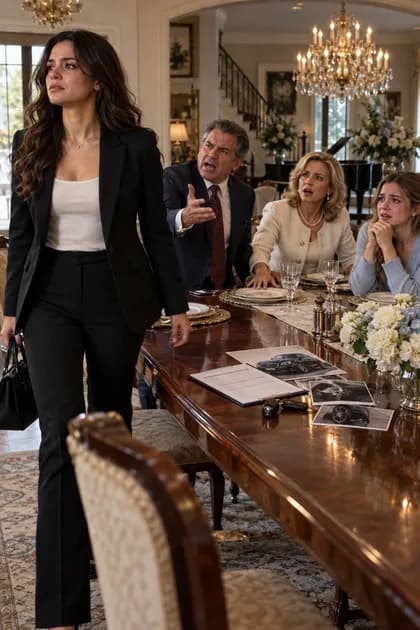
At dinner, Dad stood up with his wineglass and said, “To our biggest disappointment.”
Everyone clinked glasses over my head like I was a stain on the tablecloth.
Mom had smiled at the waiter and whispered, loud enough for me to hear, “We tell people Claire works in tech. It sounds
better than call center.”
Morgan unlocked my phone while I was in the restroom. When I came back, she had my bank app open above the bread basket. “Negative fifty-two dollars,” she announced. “Screenshot this, everyone.”
Caleb laughed and said, “Remember when you were gifted? Now you’re just… this.”
Dad leaned close, his breath sour with bourbon. “We’re changing our will. Everything goes to your siblings. You’d waste it on rent.”
I did not cry. I did not scream. I paid the bill because it was my birthday dinner and somehow still my responsibility. Then I walked out under the restaurant’s gold lights and made three phone calls.
One to my bank’s fraud department.
One to my grandfather’s old attorney.
One to Detective Evan Price, whose card had been sitting in my junk drawer for six months.
Twenty days passed. I worked, slept badly, and ignored every fake-apology text that
arrived after midnight.
Then that morning came.
Dad texted: ANSWER NOW. PLEASE.
Mom: Whatever you told them, undo it.
Morgan: Tell the police you gave me permission.
Caleb: Claire, Dad has a gun.
My stomach turned cold.
A final message arrived from an unknown number: “Do not open your door. They are on the way to you too.”
Then someone pounded on my apartment door.
I thought the dinner was the worst thing they could do to me. I was wrong. By sunrise, the truth was already outside my door, and it was uglier than every insult they had thrown at me.
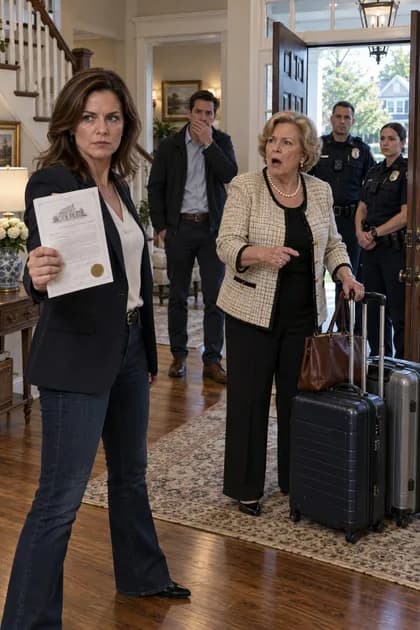
The pounding on my apartment door didn't just rattle the frame; it rattled my spine. "Police! Open up!" A voice I didn't recognize, authoritative and harsh, boomed from the other side.
I moved to the door, my negative-$52 heart hammering against my ribs, and cracked it open just
as far as the chain lock would allow. Detective Price was there, but he wasn't looking at me. He was shouting back over his shoulder.
"Wait! She's here! She's secure!"
He turned back to me, his face a grim mask. "Claire, step out. Now." He didn't ask; he commanded. He used his body to create a narrow channel for me, completely blocking my view of the rest of the hallway.
I unchained the door and stumbled out, still in my pajamas. The moment I crossed the threshold, the world went from the claustrophobia of my apartment to the vast, violent theater of the restaurant's gold-lit entrance.
A Brutal Performance
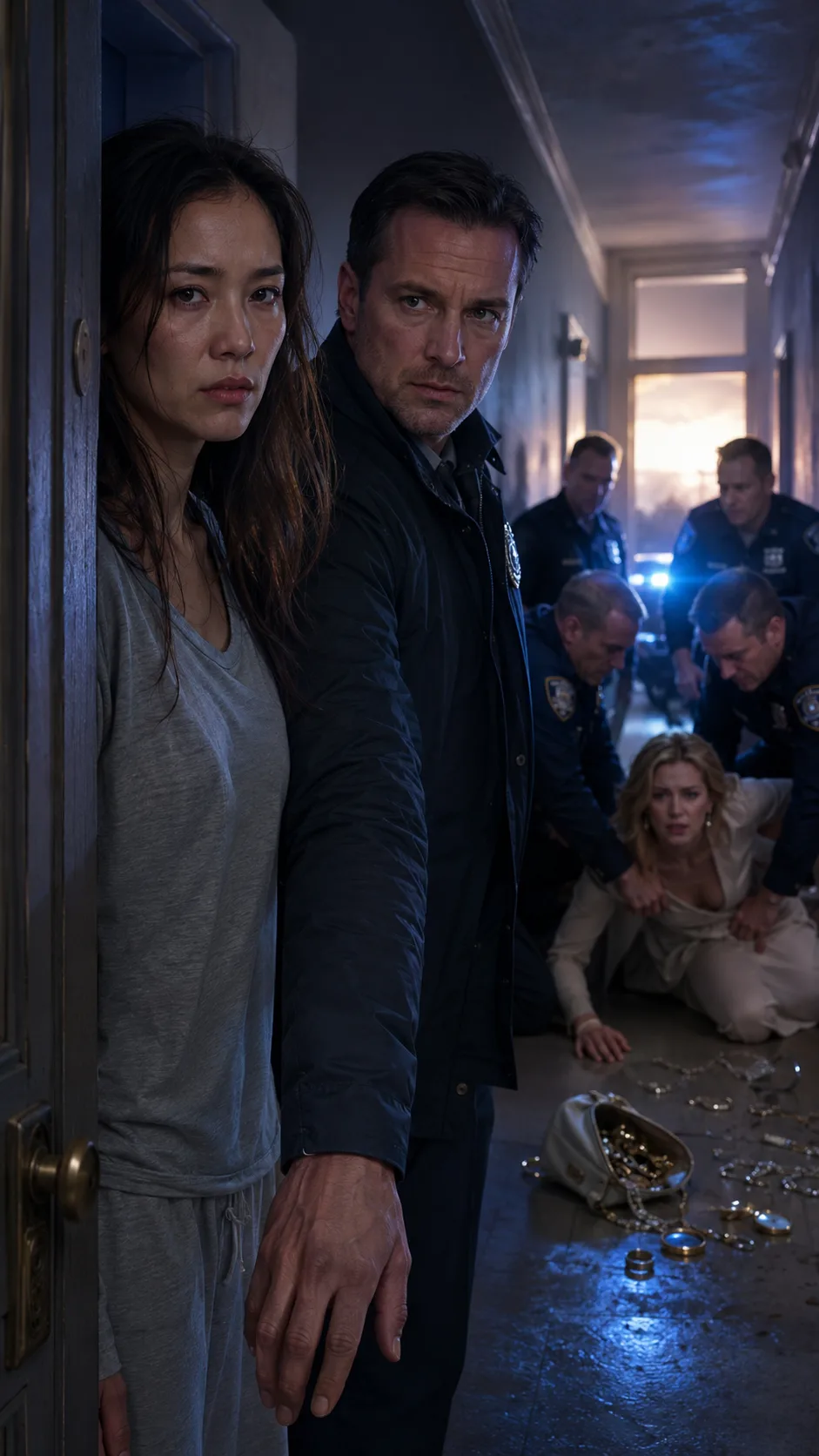
Twenty police cars—no, more—choked the street. Their flashing lights were a rhythmic, sickening blue pulse. In the very spot where I had made my three calls twenty days ago, my family was down. All of them. In the gold light of the entrance, the ground was a canvas of police bodies.
A young male police officer, his face slick with sweat and eyes wide, was positioned at the very front of the line, his taser pointed directly at Caleb, who was face-down on the gold tiles, screaming about a "prank." Another female police officer was wrestling my sister, Morgan, to the ground. Morgan’s purse had burst, spilling a cascade of expensive jewelry and what I recognized as my grandfather's gold watch onto the street.
My mother, her face stripped of its quiet cruelty, was being led in handcuffs toward a squad car. She caught my eye and screamed, "Tell them you gave us permission! Claire, tell them!"
But it was my father I saw last. He was on the very edge of the blue perimeter, pinned by two huge officers. One of them was holding his wrist with impossible strength. The bourbon from dinner was gone, replaced by a raw, primal roar. "I'll kill you! All of you!"
The restaurant, the scene of my birthday dinner and my final, absolute humiliation, was now just a gold-lit backdrop to their public collapse. The expensive suits they had mocked my rent with were being torn. The 'gifted' potential they claimed I had squandered was, in Caleb's case, currently being dragged across pavement.
A second detective I hadn't met, a man with a stern, older face, stepped into the perimeter. He looked at me, then at the scene, and shook his head. "They were trying to liquidate everything and flee, Ms. Reed. Detective Price’s warrant on the bank fraud arrived just in time. But that... that's not all." He looked toward Morgan, where an officer was carefully bagging my grandfather's watch. "The theft charge, that was on you."
The Three Calls
The calls I made weren't an explosion. They were a slow, controlled burn.
To my bank’s fraud department: To report that the "family account" Morgan accessed wasn't just my checking; it was a joint trust my grandfather had set up, from which she had stolen the funds for her jewelry.
To my grandfather’s old attorney: To produce the document that proved Dad’s 'will change' was illegal, as the entire property (the one they PRAISED Caleb's cousin for owning) was actually titled to me, to be delivered on my grandfather's death. They had been squatters.
To Detective Evan Price: To provide the evidence I had silently collected for months—records of their systematic theft, forging my grandfather's signature on mineral rights contracts, and using my identity and call-center employee ID to create ghost accounts to wash the money.
"They are on the way to you too." The message was from a sympathetic bank teller, a friend, warning me. My family wasn't just coming to "fix this," Morgan; they were coming to silence the witness before I could tell the police everything.
I looked at Caleb, his face pressed against the gold-lit tile, and I didn't feel triumph. I felt a cold, deep finality. By sunrise, the truth was already outside my door, and it was uglier than every insult they had thrown at me. But as I watched them being loaded into separate cars, I realized that for the first time in twenty days, the only person NEGATIVE anything was them.
I had spent my birthday dinner paying the bill for my own destruction. But they, twenty days later, were finally about to pay the cost.
Chapter complete
You have reached the end of this chapter.
Continue reading
A few more worlds to get lost in after this chapter.